Engineered Industrial Pallet Racking Portfolio
Explore heavy-duty storage configurations certified to international FEM, RMI, and AS4084 standards for high-density logistics optimization.
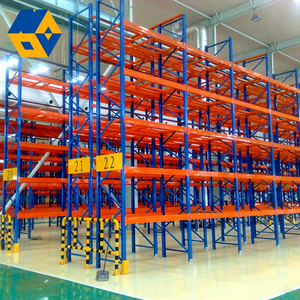
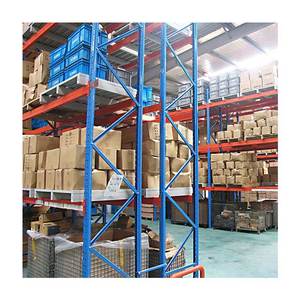
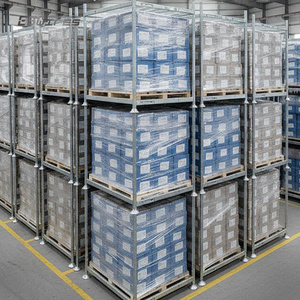
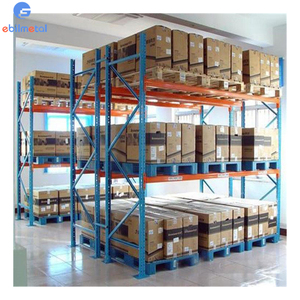
1. Strategic Overview: China's Role in Modern Material Handling Systems
The global logistics and warehousing sector is undergoing a structural transformation driven by e-commerce fulfillment requirements, cold-chain expansion, and industrial automation. At the core of this physical infrastructure is the industrial heavy-duty pallet rack—a structural system subject to extreme static, dynamic, and seismic loads. China has consolidated its position as the global manufacturing epicenter for warehouse storage systems, accounting for over 45% of international structural steel racking production.
Selecting a top China warehouse pallet rack supplier or wholesaler is no longer merely a procurement exercise focused on price per kilogram; it is a critical engineering decision that dictates operational safety, floor space efficiency, and long-term capital efficiency. Leading Chinese manufacturers have evolved from simple cold-roll forming shops into advanced engineering entities utilizing Finite Element Analysis (FEA), automated robotic welding, and high-performance thermosetting powder coating technologies compliant with global design standards such as ANSI/RMI MH16.1 (USA), FEM 10.2.02 (Europe), and AS4084-2012 (Australia).
Raw Material Engineering: Metallurgy and Structural Grades
The mechanical performance of warehouse racking relies heavily on the quality of carbon structural steel feedstocks. Understanding material specifications is essential for global procurement directors evaluating bulk rack quotations:
| Steel Grade (GB/T) | Yield Strength (MPa) | Tensile Strength (MPa) | Equivalent Standard | Primary Racking Application |
|---|---|---|---|---|
| Q235B | ≥ 235 MPa | 370 - 500 MPa | ASTM A36 / S235JR | Standard Uprights, Light/Medium Beams, Bracing, Baseplates |
| Q355B | ≥ 355 MPa | 470 - 630 MPa | ASTM A572 Gr 50 / S355JR | Heavy-Duty Load Beams, Tall AS/RS Columns, High-Seismic Uprights |
| SPCC / SPHC | 170 - 240 MPa | 270 - 370 MPa | JIS G3141 / Commercial Cold-Rolled | Secondary Accessories, Shelf Panels, Light Duty Components |
Upgrading structural components from Q235B to high-strength Q355B steel allows racking engineers to increase beam load capacities by up to 30% while reducing structural deadweight. This directly lowers international freight shipping costs per pallet position, representing a key cost-optimization strategy for enterprise wholesale buyers.
2. Taxonomy of Industrial Racking Systems & Spatial Optimization
Modern distribution centers require custom storage layouts tailored to specific stock-keeping unit (SKU) profiles, inventory turnover rates (FIFO vs. LIFO), and Material Handling Equipment (MHE) constraints. Chinese manufacturers produce a full spectrum of rack configurations engineered for high-density and high-selectivity demands:
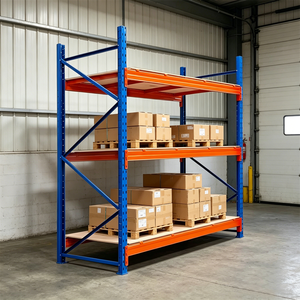
Selective Pallet Racking
Offers 100% direct pallet accessibility and maximum flexibility. Ideal for distribution centers managing diverse SKUs with standard reach trucks. Configurable beam heights with safety locking pins.
Drive-In / Drive-Thru Racking
High-density storage utilizing LIFO/FIFO principles. Forklifts navigate directly into racking lanes. Recommended for seasonal inventory, homogeneous cold-chain products, and high-volume batch storage.
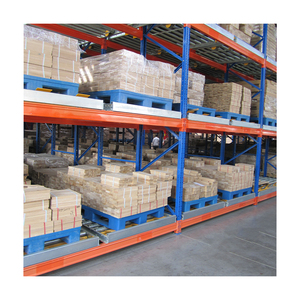
Push-Back & Dynamic Gravity Flow
Nested cart systems and inclined roller beds driven by gravity. Eliminates dead aisle spaces, increasing storage density by up to 75% compared to conventional selective rack setups.
Heavy-Duty Mobile Racking (Electric Track)
Racking blocks mounted on motor-driven mobile bases running on embedded floor rails. Opens individual working aisles via remote control or automated WMS interface, maximizing cube utilization.
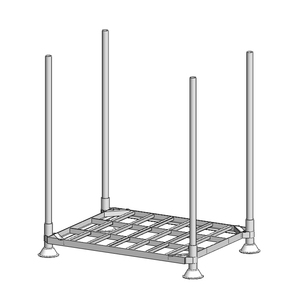
Modular Stacking Post Racks (Manuracks)
Portable, nestable steel post structures designed for flexible, non-permanent storage. Perfectly engineered for textile fabric rolls, tires, irregular industrial components, and rapid warehouse re-configurations.
Automated AS/RS Crane Racking Structures
Ultra-precise structural racking exceeding 30 meters in height, tolerance-engineered for automatic stacker cranes and shuttle cars. Built to precise millimetric standards for high-throughput 24/7 automated facilities.
3. Industry Trends Shaping the Future of Pallet Rack Sourcing (2026+)
As global supply chains transition toward Industry 4.0 paradigms, procurement teams sourcing warehouse storage equipment from China must account for major technological shifts:
1. Automated Shuttle Systems & Autonomous Mobile Robot (AMR) Compatibility
Traditional forklift-operated racks are increasingly being integrated with or replaced by 2D/4D pallet shuttles and AMR-driven systems. Racking structures must now be engineered to ultra-tight deflection limits (often L/400 or stricter) to ensure sensor accuracy and precise alignment for automated optical and laser guided vehicles.
2. Advanced Surface Finishes & Electrostatic Powder Coating
Environmental durability and chemical resistance are critical factors in total cost of ownership (TCO). Leading Chinese manufacturers have upgraded from basic liquid spray painting to automated multi-stage pre-treatment phosphate washing followed by thermosetting epoxy-polyester powder coating (60–90 microns thickness). For sub-zero cold storage facilities down to -30°C and aggressive marine environments, Hot-Dip Galvanizing (HDG) per ISO 1461 standards provides multi-decade zinc-alloy corrosion protection.
3. Sustainable Steel Manufacturing & Decarbonization
With international regulations enforcing Scope 3 emissions reporting, leading Chinese suppliers are adopting recycled steel scrap processing via Electric Arc Furnaces (EAF) and utilizing solar-powered manufacturing plants. Procurement managers can now request Carbon Footprint Verification certificates alongside traditional material quality documentation.
4. Enterprise Advantages: Engineering & Manufacturing Excellence
Our manufacturing facility serves as a flagship model for high-precision steel processing, combining custom engineering capabilities with economies of scale to deliver exceptional value to international enterprise partners:
Continuous Roll-Forming Lines
Operating over 20 continuous automated roll-forming profile lines capable of processing up to 12mm thick structural steel with online automatic punching and laser tracking for consistent hole-pitch accuracy.
Robotic Laser Welding Cells
Utilizing multi-axis ABB and Fanuc robotic welding stations for beam connectors, post bases, and pallet stop components, guaranteeing 100% weld penetration and eliminating human operator error.
Finite Element Analysis (FEA) Verification
Every custom racking project undergoes rigorous FEA computer simulation under static, impact, wind, and seismic loading conditions (up to Zone 4 seismic acceleration values) before physical tooling begins.
Turnkey OEM / ODM Sourcing Solutions
From initial DWG/BIM warehouse layout drafting to custom powder-coat color matching (RAL system), custom structural stamping, export packing, and overseas installation supervision.
5. Procurement FAQ: Expert Guidance for International Buyers
Answers to critical technical, commercial, and quality assurance queries commonly raised during structural racking procurement evaluations:
Optimize Your Warehouse Footprint Today
Connect directly with our structural engineering team to receive custom CAD warehouse layouts, static calculations, and competitive factory-direct wholesale quotations.
Inquire Now