Concrete Slab Specs for High-Bay AS/RS Racking
Understanding F-min tolerances, floor flatness, slab depth, and shear anchor forces required for 30m+ stacker crane structures.
Precision-designed automated pallet storage structures built for 1,500 kg+ unit loads, high-velocity throughput, sub-zero cold chains, and extreme seismic environments engineered to FEM 9.831 and CIRSOC 103 standards.
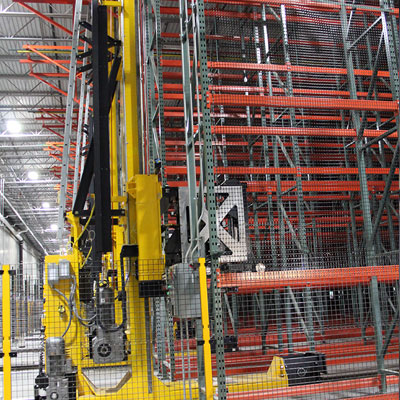
A Unit Load Automated Storage and Retrieval System (AS/RS) is an automated high-bay rack structure engineered to store and retrieve full pallet loads weighing up to 1,500 kg (3,300 lbs) or higher at heights reaching up to 40 meters. Unlike mini-load systems designed for totes or cases, Unit Load AS/RS utilizes automated stacker cranes (SRMs), rail-guided shuttles, or autonomous vertical lifts to move heavy palletized inventory with millimeter precision.
At Plata Metal Shelving S.A., we design, engineer, and fabricate structural steel racking grids that serve as the backbone for top-tier crane and shuttle automation integrations. By eliminating aisle clearance required by traditional reach trucks, Unit Load AS/RS increases vertical cube utilization by up to 85% while slashing labor overhead by up to 70%.
Every facility demands a tailored engineering matrix based on SKU density, turnover rates, building clear heights, and environmental conditions. Review our structural AS/RS structural recommendations below.
Single-deep and double-deep structural racking grids tailored for automated stacker cranes. Engineered for heights up to 40m with zero-drift tolerances.
Explore Crane Systems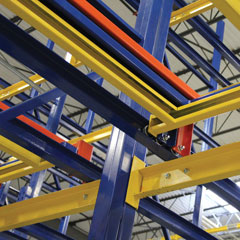
Multi-deep automated shuttle channels combined with vertical lifts. Achieves maximum storage density per square meter for high-volume SKUs.
Shuttle Architecture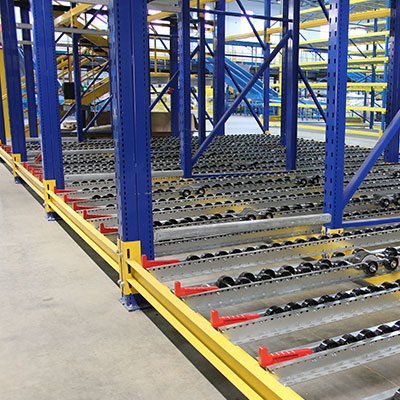
Cold-room structural steel racking operable down to -30°C. Engineered with high-notch-toughness steel to eliminate embrittlement and corrosion.
Cold-Chain Details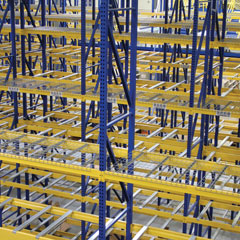
Fabricated using structural C-channels and structural beams for high-impact durability, maximum rigidity, and heavy load carrying capacities.
Structural SpecsThe ultimate structural integration where the Unit Load AS/RS rack structure forms the load-bearing framework for the building’s roof and wall cladding. Eliminates the cost of traditional building columns, maximizes usable internal volume, speeds up construction schedules, and significantly reduces total capital expenditure for greenfield projects.
As global supply chains transition toward AI-managed fulfillment and decarbonization, purchasing decisions for high-bay storage must account for 2025–2035 technological shifts.
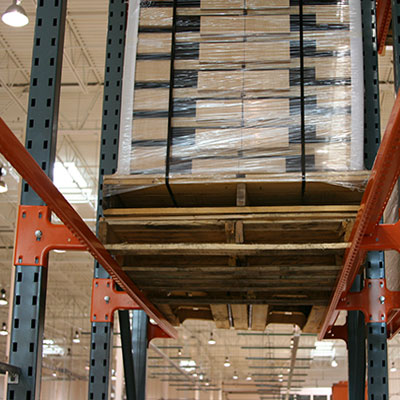
Modern enterprise procurement teams no longer view AS/RS racking as passive steelwork. The latest industry standard requires integrating embedded strain gauges, laser plumbness monitors, and IoT vibration sensors directly into high-bay uprights.
Plata Metal Shelving S.A. works with automation integrators to incorporate structural health telemetry into racking frameworks. This enables predictive alerts for dynamic stress shifts, anchor micro-slippage, or unexpected seismic movements before structural deformation impacts automated crane optical sensors.
Energy efficiency has elevated from a operational detail to a core procurement KPI. Stacker cranes with regenerative braking send power back to the grid during deceleration. To maximize this efficiency, AS/RS rack layouts are being engineered with hyper-compact aisle footprints, reducing cold storage air volumes by up to 40%.
By housing 1,500 kg pallets in ultra-dense 35-meter structures, refrigerated logistics centers operating in high-tariff zones drastically lower kilowatt-hour consumption per pallet position per year.
Analytical comparison of key engineering metrics evaluated by logistics directors and structural engineers.
| Storage Topology | Max Vertical Height | Storage Density (Cube) | Pallet Selectivity | Max Load / Pallet | Direct Labor Requirements |
|---|---|---|---|---|---|
| Unit Load AS/RS (Crane) | 30m – 45m | 90% - 95% | 100% (Single Deep) | 1,500 kg – 3,000 kg | Automated (Zero operators in aisle) |
| Automated Pallet Shuttle AS/RS | 15m – 25m | 92% - 97% | LIFO / Channel FIFO | 1,500 kg | Automated shuttle + AMR/Lift transfer |
| Drive-In Racking (Forklift) | 10m – 12m | 70% - 80% | LIFO (Poor) | 1,200 kg | High operator cost & rack impact risk |
| Selective Pallet Rack | 8m – 12m | 40% - 50% | 100% | 1,000 kg – 1,500 kg | 100% Manual Forklift Dependent |
Over decades of specialized structural rack engineering, we have proven that automated precision begins with rigid, unyielding manufacturing discipline.
Our heavy-gauge structural C-channel columns and beam profiles provide unmatched axial stiffness, resisting mast torque and crane braking dynamics without structural sway.
Millimeter Tolerance StandardsSpecialized seismic bracing and finite element modeling (FEA) designed for seismic zones (including Mendoza and San Juan), ensuring structure safety during major ground accelerations.
INPRES-CIRSOC & RMI MH16.1Engineered for full compatibility across 1000 x 1200 mm ARLOG pallets, 800 x 1200 mm Euro pallets, 40 x 48 inch GMA pallets, and custom industrial metal skids.
Universal Footprint EngineeringFeatures automated multi-stage washing and electrostatic powder coating, guaranteeing impact-resistant finishes that prevent flaking in harsh or cold environments.
Long-Term Corrosion ProtectionFrom initial slab structural checks to final dynamic load testing and signed-off installation handover, our engineers oversee the complete lifecycle.
Complete Engineering OwnershipWe work directly alongside global system integrators, automated crane vendors, and MEP consultants to eliminate mechanical and electrical interface conflicts.
Integrator ReadyCritical structural considerations published by our senior engineering team.
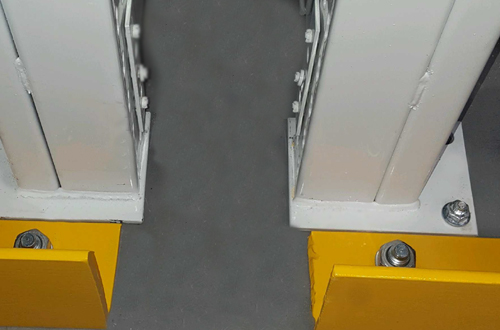
Understanding F-min tolerances, floor flatness, slab depth, and shear anchor forces required for 30m+ stacker crane structures.
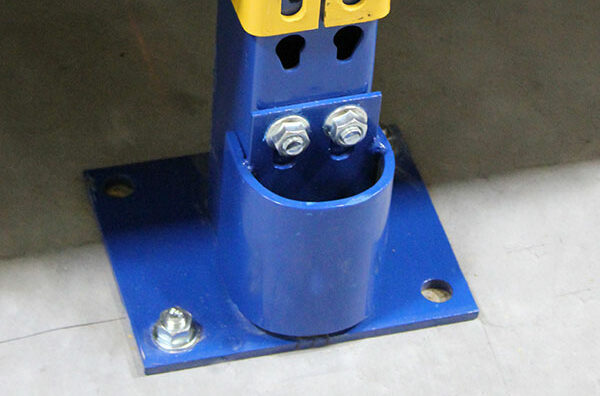
How dynamic crane stopping forces create cyclical stress on upright connections and why structural steel outperforms roll-formed profiles.
Comprehensive technical and strategic answers addressing key questions asked by supply chain executives, warehouse architects, and automated equipment procurement specialists.
Unit Load AS/RS systems require significantly tighter structural tolerances than conventional pallet racking systems. Because stacker cranes (SRMs) and automated shuttles rely on high-precision optical, laser, and encoder position sensors, any frame sway or beam deflection can trigger system fault shutdowns or mechanical collisions.
Plata Metal Shelving S.A. engineers high-bay racking in strict accordance with European FEM 9.831 and EN 15620 Class 100/200 specifications as well as US RMI/ANSI MH16.1 guidelines. Horizontal beam deflections under full static load are restricted to less than L/300 to L/400 of the clear span. Furthermore, vertical frame plumbness tolerances across the entire building height (up to 40+ meters) are held within stringent millimeter-level thresholds, ensuring seamless automated positioning year after year.
In high seismic hazard regions (such as Mendoza, San Juan, or coastal fault lines), high-bay AS/RS rack structures face extreme overturning moments and shear stresses during seismic ground motions. A standard pallet rack design is completely inadequate for these forces at scale.
Our engineering team performs comprehensive dynamic 3D Finite Element Analysis (FEA) in compliance with local seismic code INPRES-CIRSOC 103 and international standard ANSI MH16.1. We incorporate heavy-duty hot-rolled structural steel shapes (C-channels and structural I-beams), oversized baseplates anchored deeply into engineered slab foundations, pre-tensioned diagonal x-bracing towers, and specialized beam-to-column locking mechanisms capable of dissipating lateral seismic acceleration without plastic deformation.
The payback period for a Unit Load AS/RS system typically ranges between 2.5 and 4.5 years, depending on local industrial real estate land costs, labor rates, and energy expenses. Key drivers of financial ROI include:
For heavy unit loads (exceeding 1,000 kg per pallet) and structural heights greater than 20 meters, hot-rolled structural steel (C-channel construction) is universally recommended by structural engineers. Structural steel offers substantial thickness advantages, superior torsional resistance to crane emergency braking forces, and significantly longer fatigue life under 24/7 high-cycle operations.
While cold-rolled form steel can be utilized for lower-height or lighter-duty applications, Plata Metal Shelving S.A. specializes in heavy structural steel configurations that guarantee structural rigidity and dimensional stability over decadal operating lifespans.
Operating an automated high-bay system at sub-zero temperatures (-25°C to -30°C) introduces risk of steel embrittlement and thermal contraction stress. Standard carbon steel can suffer micro-fracturing under impact loading when subjected to cold temperatures.
Plata Metal Shelving S.A. mitigates cold-room risks by specifying certified structural steel alloys with high Charpy V-notch impact toughness. Furthermore, all structural elements undergo our automated powder coating process or hot-dip galvanizing, ensuring complete barrier protection against condensation corrosion during defrost cycles.
Yes. While standard 1000 x 1200 mm ARLOG pallets, 800 x 1200 mm Euro pallets, and 40 x 48 inch North American GMA pallets represent the majority of projects, our custom engineering department routinely designs specialized support runners, pallet bed frames, and guide channels for non-standard industrial containers, heavy metal skids, and custom export crates.
Consult with Plata Metal Shelving S.A. engineers for custom load calculations, structural specs, and layout design.
[email protected]