Industrial Warehouse Racking Systems & OEM Load Beams
Explore our engineered racking assemblies, structural cantilevers, and heavy-duty step/box beam configurations fabricated for global logistics centers and automated distribution hubs.
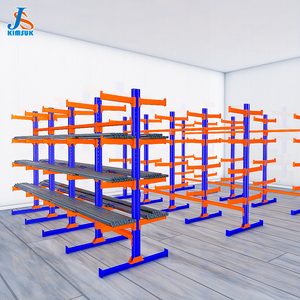
Cantilever Rack Arm Heavy Duty Racking Shelves Heavy Duty Warehouse Pallet Metal Storage Rack
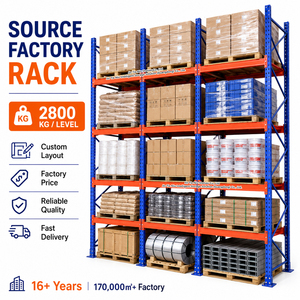
2800KG 5 Levels High Bay Industrial Pallet Racking Heavy Duty Warehouse Rack System
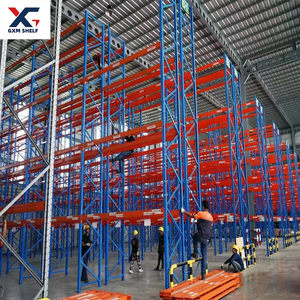
Steel Heavy Duty Industrial Warehouse Pallet Storage Racking System with Boltless Shelving
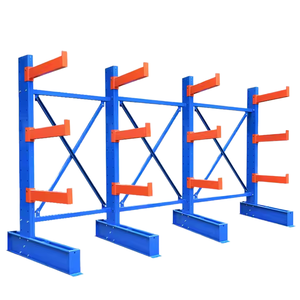
Strong Durable Industrial Cantilever Rack Boltless Heavy Duty Shelving Unit 500-3000kg
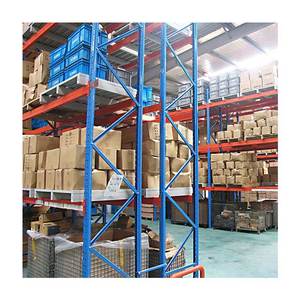
Industrial Heavy Duty Rack Manufacturing Pallet Rack Logistics Equipment Factory Storage
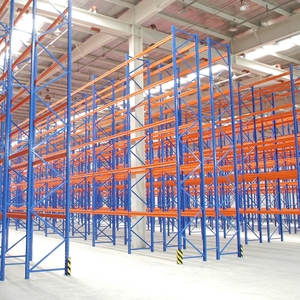
Low Price Custom 2-6 Level High Quality Pallet Racking Warehouse Storage Shelf System
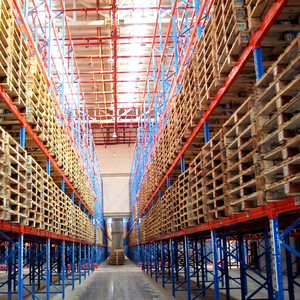
Manufacturer Heavy Duty Warehouse Shelving Storage Pallet Rack Selective Racking System
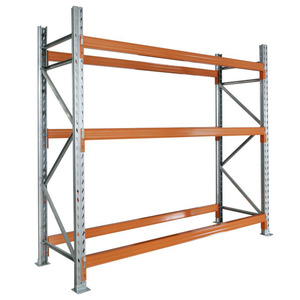
NOVA Full Automatic Warehouse Q235 Steel Boltless Heavy Duty Stacking Pallet Rack System
OEM Racking Beam Manufacturing & Structural Engineering Authority
In modern high-density material handling environments, warehouse racking beams serve as the primary horizontal load-bearing structural member. Understanding beam geometry, yield strength chemistry, and connection physics is critical to warehouse safety and operational continuity.
Advanced Roll-Forming & Step Profiles
Our OEM manufacturing facility utilizes multi-stage continuous cold roll-forming mills to craft step beams and box beams with internal stiffening ribs. Step beam profiles feature 1-5/8 inch steps engineered specifically to hold steel wire decking, bar grates, or drop-in cross ties without increasing overall beam vertical profile.
Automated Robotic Welding & End Claws
Beam-to-column connections are subject to severe shear and torsional forces during pallet loading. We utilize robotic MIG welding cells to join end connectors (3-hook or 4-hook claw plates) to beam profiles. Every weld seam undergoes 100% visual and ultrasonic sampling to prevent fatigue failure under dynamic impact.
RMI & CIRSOC Seismic Verification
Every OEM racking beam batch is designed in compliance with RMI / ANSI MH16.1 specifications and validated through Finite Element Analysis (FEA). For installations in seismic zones, structural calculations incorporate site-specific ground acceleration metrics under INPRES-CIRSOC 103 and Eurocode 8 standards.
Metallurgical Precision & Powder Coating Surface Technology
At Plata Metal Shelving S.A., structural integrity begins at the atomic level. We procure prime structural steel coils (Q235B and Q355B equivalent to ASTM A1011 SS Grade 36 and Grade 50) with documented mill test certificates (MTC). These micro-alloyed carbon steels provide superior yield strength, ensuring that horizontal racking beams flex elastically under maximum uniform distributed load (UDL) without entering permanent plastic deformation.
To combat environmental degradation, humidity, and abrasion caused by constant pallet friction, all OEM beams undergo a 9-stage pre-treatment wash including zinc-phosphate conversion coating, followed by automated electrostatic thermosetting powder coating. The resulting finish yields an average film thickness of 60–90 microns, verified through ASTM B117 salt-spray corrosion tests to withstand over 500 hours of continuous exposure — ideal for dry warehouses, cold storage rooms, and coastal distribution facilities.
Technical Development Trends of Warehouse Racking Beams
The material handling industry is undergoing a structural revolution driven by automation, material science, and digital risk management. Modern warehouse racking beams are evolving from static iron components into precision engineered structural systems.
1. High-Yield Strength Micro-Alloyed Steels (AHSS)
Traditional racking design relied heavily on increasing steel gauge thickness to achieve higher pallet load capacity, resulting in heavier dead weight and higher transportation freight costs. The current technical trend focuses on Advanced High-Strength Steels (AHSS) containing micro-alloying elements such as Niobium (Nb) and Vanadium (V). These alloys allow manufacturers to produce thinner, lighter roll-formed step and box beams that offer equal or higher moment of inertia ($I_x$) and section modulus ($S_x$), significantly reducing steel material consumption while improving load-to-weight ratios.
2. IoT-Integrated Smart Beams & Structural Health Monitoring (SHM)
With the rapid proliferation of automated warehouse facilities, unscheduled downtime due to structural rack damage is unacceptable. Emerging racking beam designs incorporate low-power IoT strain gauges and optical sensor cutouts directly inside the beam profile. These integrated sensors monitor real-time beam deflection, torsional twist, and dynamic impact forces from forklift collisions. Automated telemetry alerts facility managers prior to critical structural yield events, enabling predictive maintenance and enhancing overall workplace safety.
3. Ultra-Tight Tolerance Laser-Cut Connectors for AS/RS
Automated Storage and Retrieval Systems (AS/RS) operating with Autonomous Mobile Robots (AMR) or stacker cranes require millimeter-level beam positioning tolerances. Modern OEM manufacturing has shifted from traditional mechanical punch pressing to 3D fiber laser cutting for end-claw connector lugs. Laser cutting eliminates material burrs and micro-fractures around hook teeth, ensuring a 100% flush fit with upright column teardrop or slot profiles, eliminating rotational slope and frame sway in tall bay systems exceeding 15 meters.
4. Eco-Friendly Circular Manufacturing & Low-VOC Finishes
Global supply chain decarbonization mandates are pushing racking suppliers toward sustainable manufacturing. Modern technical trends focus on fully recyclable steel formulations, energy-efficient closed-loop powder recovery coating booths, and non-toxic, zero-VOC powder chemistry. Furthermore, modular OEM beam designs now emphasize universal compatibility, allowing existing beam structures to be re-engineered, re-punched, or extended via standardized splicing kits, prolonging product lifecycle and minimizing industrial waste.
Future Procurement Trends for Racking Beams & Warehouse Storage
Procurement officers, logistics directors, and supply chain executives must adapt to shifting global market dynamics. Buying warehouse racking is no longer merely about acquiring steel—it is an exercise in risk mitigation, scalability, and long-term capital efficiency.
| Procurement Dimension | Traditional Procurement Approach | Future Strategic Trend (2025–2030) | Strategic Benefit |
|---|---|---|---|
| Primary Buying Metric | Lowest initial unit cost per steel beam / kg. | Total Cost of Ownership (TCO) & Lifecycle Yield. | Reduces long-term maintenance, rack repair downtime, and replacement frequency. |
| OEM Customization | Off-the-shelf standard step beam dimensions. | Fully customized length, gauge, pin profile, and color-coding. | Optimizes warehouse clear height, aisle widths, and SKU velocity profile. |
| Quality & Compliance | Self-certified mill statements from vendor. | Third-party certified FEA, RMI, EN 15512, and CIRSOC load tests. | Ensures safety audit compliance and minimizes corporate legal liability. |
| Supply Chain Resilience | Single-source opportunistic spot buying. | Nearshore OEM partnerships with transparent raw material tracking. | Mitigates volatile sea freight spikes and ensures predictable project timelines. |
Key Insights for Logistics Procurement Decision-Makers:
- Shift Toward Hybrid Selective-Automated Facilities: Warehouse operators are increasingly specifying load beams that can serve dual roles—supporting manual hand-pick wire decks today while remaining rigid and smooth enough for future AMR or shuttle integration tomorrow.
- Stringent Seismic & Environmental Audit Requirements: Regulatory authorities across North America, South America, and Europe are enforcing stricter structural safety audits. Procuring non-certified racking beams lacking structural calculation sheets creates immense audit exposure. Buyers now demand complete calculation dossiers validated by registered professional engineers (PE).
- Color-Coded Visual Inventory Management: Modern procurement guidelines frequently request OEM beam suppliers to deliver custom powder-coated beam colors (e.g., Safety Orange RAL 2004, Traffic Yellow RAL 1023, Signal Blue RAL 5005) to visually demarcate distinct storage zones, weight capacity tiers, or hazardous material locations within massive 50,000+ sqm logistics parks.
Warehouse Racking Beams Procurement FAQ
Detailed technical and commercial answers to common questions faced by structural engineers, warehouse managers, and procurement specialists during racking beam selection.
What is the structural difference between Step Beams, Box Beams, and Structural C-Channel Beams?
Step Beams are roll-formed horizontal profiles featuring an L-shaped "step" along the inside top edge (typically 1-5/8" deep). This step allows wire mesh decking, timber drop-in panels, or pallet support bars to sit flush with the top surface of the beam. Step beams are the industry standard for selective pallet rack systems.
Box Beams consist of two C-channel steel profiles nested and continuous seam-welded together to form a solid rectangular tube. Box beams offer exceptionally high torsional resistance and bending moment capacity, making them ideal for heavy solid pallets, heavy unit loads, or applications where wire decks are not required.
Structural C-Channel Beams are hot-rolled structural steel channels (C-sections) with high flange thickness. They offer maximum impact resistance against forklift strikes and are typically used in rugged industrial manufacturing plants, outdoor cantilever racks, or heavy drive-in rack systems.
How is beam load capacity calculated under the RMI L/180 deflection limit?
Under the Rack Manufacturers Institute (RMI ANSI MH16.1) specification, the allowable beam load capacity is governed by two limits: the maximum allowable bending stress of the steel material (with a safety factor of 1.65 to 1.92 depending on steel yield) and the maximum horizontal deflection under full Uniformly Distributed Load (UDL).
The deflection limit formula is: Maximum Deflection = Clear Span Length (L) / 180. For example, for a standard 96-inch (2438 mm) beam span, the maximum allowable vertical deflection under full load is 96 / 180 = 0.53 inches (13.5 mm). If a beam bends beyond this limit under normal load, it fails safety compliance even if the steel does not permanently yield, as excessive sag creates instability during pallet insertion and extraction.
Can racking beams from different manufacturers be mixed on the same frame upright?
Mixing beams and upright frames from different suppliers is strongly discouraged and generally violates safety standards unless certified by a licensed Professional Engineer (PE). While teardrop connections may appear physically interchangeable, minor variations in hook tooth thickness, slot taper angle, steel gauge, and hole pitch alter the shear center and connector moment capacity. Mixing components voids manufacturer warranties and invalidates structural safety load plaques.
What surface treatment is recommended for cold storage and freezer applications?
For cold storage environments down to -25°C, high-grade electrostatic powder coating over a pre-treated zinc phosphate wash provides robust protection against condensation. However, for deep-freeze environments below -30°C or blast freezers with high ambient humidity, Hot-Dip Galvanizing (HDG) according to ISO 1461 / ASTM A123 is strongly recommended. HDG provides a thick zinc-iron alloy coating (70+ microns) that completely covers internal beam cavities, preventing rust formation caused by freeze-thaw condensation cycles.
How do automatic safety lock clips function on OEM beam connectors?
Beam end connectors feature welded end claw plates with multi-hook teeth that seat into vertical upright column slots. An automatic safety lock clip (such as a spring-loaded steel pin or gravity lock snap) automatically engages into a dedicated hole on the upright column face as the beam is tapped down into position. This safety lock prevents the beam end claw from disengaging if an upward impact force occurs—for instance, if a forklift operator accidentally lifts a pallet before fully clearing the beam structure above.
What custom OEM parameter information is required to receive a formal wholesale quotation?
To prepare an engineering quotation and structural calculation, our OEM engineering team requires the following parameters:
- Clear Beam Length: Standard length between upright column inner faces (e.g., 2300mm, 2700mm, 3300mm, 3600mm, or custom dimensions).
- Load Capacity Required: Maximum weight per pair of beams (e.g., 2000kg UDL per level).
- Pallet Dimensions & Unit Weight: Width, Depth, Height, and overhang specifications.
- Upright Profile Type: Connector hole style (Teardrop, Universal Slot, Structural Bolt-on).
- Environmental Conditions: Dry ambient warehouse, cold room, chemical exposure, outdoor yard, or seismic hazard zone.
Partner with a Leading Custom OEM Racking Beam Manufacturer
Contact our structural engineering team today to review your warehouse floor plans, verify beam load capacities, or request custom wholesale manufacturing quotes.