Product Catalog
Featured Heavy-Duty Industrial Storage & Pallet Racking Systems
Engineered for high-density logistics, extreme load bearing, and certified structural safety across international supply chains.
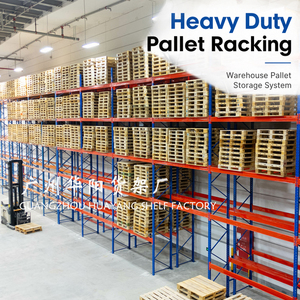
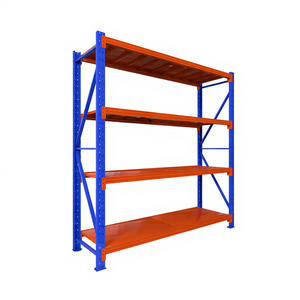
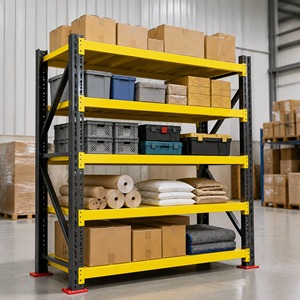
50,000+
Tons Annual Steel Capacity
±0.5mm
Roll-Forming Precision
100%
RMI & FEM Compliance
65+
Countries Exported To
Engineering White Paper
Structural Integrity & Metallurgical Excellence in Custom OEM Rack Manufacturing
In global supply chain management, selecting high-performance custom OEM rack storage shelves demands a deep engineering understanding of steel metallurgy, load-bearing dynamics, finite element analysis (FEA), and seismic compliance. Modern distribution centers operate under strict throughput rates, requiring warehouse racks to withstand severe dynamic impacts from material handling equipment (MHE) alongside massive vertical deadloads.
Primary tier-1 rack manufacturers utilize cold-rolled structural carbon steel grades, notably Q235B (yield strength ≥ 235 MPa) and high-strength Q355B / SS50 (yield strength ≥ 355 MPa). The structural performance of roll-formed upright profiles relies on continuous cold-work hardening, which increases yield stress across multi-ribbed omega profile geometry. This architectural profile distribution provides exceptional resistance to torsional buckling and axial compression under maximum vertical loading conditions.
| Rack Component | Material Grade | Yield Strength (MPa) | Surface Treatment | Design Standard Compliance |
|---|---|---|---|---|
| Heavy-Duty Upright Frames | Q355B Cold-Rolled Steel | ≥ 355 MPa | 80–100μm Electrostatic Epoxy-Polyester | RMI ANSI MH16.1 / FEM 10.2.02 |
| Box & Step Load Beams | Q235B High-Grade Steel | ≥ 235 MPa | Thermosetting Powder Coating | ANSI MH16.1 / EN 15512 |
| Seismic Base Plates | Hot-Rolled Structural Plate | ≥ 275 MPa | Hot-Dip Galvanized / Powder Coated | INPRES-CIRSOC 103 / IBC 2024 |
| Drive-In Support Rails | Structural C-Channel Steel | ≥ 355 MPa | Anti-Abrasion Powder Coating | RMI Structural Specification |
| Pallet Flow Speed Controllers | Reinforced Alloy & Polyurethane | N/A (Dynamic Wear) | Corrosion-Resistant Zinc Plating | ISO 9001 Logistics Standard |
Information Gain Insight: The deflection limit for heavy-duty rack load beams engineered under standard international protocols (such as RMI ANSI MH16.1) must not exceed L/240 (Length divided by 240) under full design load. Premium OEM manufacturing enforces automated robotic welding for 3-hook and 4-hook beam connectors, ensuring zero-gap locking pin engages automatically to eliminate dislodgement during forklift loading cycles.
Enterprise Capabilities
Why Direct Wholesalers & Global Enterprises Partner with Our OEM Factories
Custom OEM Geometry & Structural FEA
Every facility floor plan presents distinct structural constraints. Our engineering division conducts site-specific 3D Finite Element Analysis (FEA) to calculate stress distribution, upright column displacement, and seismic bracing configurations under maximum payload.
Automated Continuous Powder-Coating Lines
Utilizing multi-stage automated washing, iron-phosphate pretreatments, and 200°C curing ovens, our factory applies an ultra-durable 80 to 120-micron electrostatic powder layer that prevents flaking, corrosion, and chemical degradation in cold-storage freezers.
Seismic Compliance & Regional Standard Testing
From North America to high-hazard seismic zones across Latin America (such as Mendoza, Argentina under INPRES-CIRSOC 103), our engineering team designs oversized anchor base plates, custom seismic tie-beams, and specialized floor slab attachment modules.
Standard & Custom Pallet Compatibility
Whether your enterprise utilizes standard ISO 40 x 48 inch pallets, European EUR 1200 x 800 mm pallets, or South American ARLOG 1000 x 1200 mm units, our manufacturing lines deliver customizable beam spans, frame depths, and pallet stop accessories.
Engineered Upright Frame Repair Kits
Minimize warehouse operational downtime and capital replacement costs with our engineered bolt-on frame repair kits. Engineered to replace impacted column sections directly without tearing down entire loaded rack runs or disturbing inventory.
Turnkey OEM/ODM Production & Logistics
Operating dedicated roll-forming mills, automated stamping presses, and continuous robotic welding cells, we offer full OEM brand labeling, white-label packaging, container load optimization, and comprehensive export customs clearance.
Industry Analysis
Future Procurement Trends in OEM Industrial Storage Systems (2025–2030)
The industrial storage manufacturing landscape is undergoing a massive structural evolution driven by automation integration, nearshoring logistics, environmental sustainability, and digitalized supply chain tracking. Procurement officers and B2B buyers sourcing from rack storage shelves factories must align their long-term capital expenditure strategies with the following key industry shifts:
1. Hybrid High-Density Automation Integration
Pure manual selective racking is increasingly being upgraded or converted into hybrid automated structures. Modern factory procurement prioritizes rack frames engineered with high structural tolerances (±0.5mm vertical deviation) to support Autonomous Mobile Robots (AMRs), Automated Guided Vehicles (AGVs), and Pallet Shuttle Runner systems directly within deep-lane channels.
2. Structural Decarbonization & Green Steel Sourcing
Global logistics corporations are requiring OEM rack suppliers to report Scope 1, 2, and 3 embodied carbon metrics. Leading factories are adopting electric arc furnace (EAF) steel produced with recycled scrap steel and powered by renewable energy grids, decreasing the total carbon footprint per storage slot by up to 35%.
3. Modular & Boltless Rapid Reconfiguration
E-commerce SKU velocity demands extreme warehouse adaptability. B2B wholesalers are favoring modular, boltless beam connection mechanisms, drop-in speed lock channels, and adjustable step beams that allow warehouse teams to adjust beam elevation intervals in 50mm or 75mm increments without specialized tools.
Strategic Sourcing Recommendation: When procuring large-scale OEM racking systems, contractually require the manufacturer to provide mill test certificates (MTCs) verifying chemical compositions (Carbon, Manganese, Silicon levels) and mechanical yield stress performance for every steel batch.
Technological Innovations
Next-Generation Storage Technology & Smart Warehousing Integration
The modern warehouse is no longer a static steel shell; it is an integrated computational node in global supply chains. Factories specializing in custom OEM storage solutions are introducing technological breakthroughs that maximize vertical cube utilization while embedding real-time structural health monitoring.
Unit-Load & Miniload AS/RS Systems
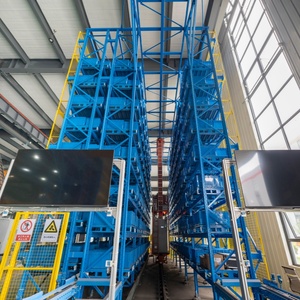
Automated Storage and Retrieval Systems (AS/RS) utilize rack structures as the primary load-bearing matrix for high-speed stacker cranes operating at heights up to 40 meters. Ultra-tight manufacturing tolerances guarantee smooth crane rail integration and zero structural deflection during rapid deceleration.
IoT Structural Strain & Impact Sensors
Leading OEM factories are embedding piezoelectric and wireless strain-gauge sensors into critical upright columns. These IoT devices monitor structural stress, track accidental forklift collisions, and push real-time alerts to facility management systems before structural failure can occur.
Advanced Cold-Chain Thermal Coatings
Operating in temperature-controlled facilities down to -30°C causes conventional paint coatings to crack due to thermal contraction. Specialized OEM epoxy formulations maintain elasticity and adhesion under deep-freeze conditions, preventing subsurface rust formation.
Buyer's Guide
Industrial Procurement & OEM Customization FAQ
Technical clarity on sourcing, structural engineering, ordering procedures, and facility compliance.
What specific technical data is required to request a custom OEM rack factory proposal?
To prepare an accurate engineering drawing and structural quote, our engineering team requires:
- Warehouse floor plan layout including column spacing, building clear height under trusses, and dock door locations.
- Concrete floor slab specifications (slab thickness in mm, concrete compressive strength e.g., C25/C30 grade, and reinforcement type).
- Detailed pallet characteristics: width, depth, height including payload, maximum gross weight per pallet, and pallet type (ARLOG 1000x1200mm, Euro 1200x800mm, or standard ISO 40x48 in).
- Material handling equipment specs: minimum aisle width required for forklift turn radius and maximum lift height reach.
- Environmental conditions: operating temperature range (ambient, chilled, or -30°C freezer) and geographic location for seismic zone verification.
How do OEM factories design racking structures for regional seismic codes?
Seismic rack design is calculated using regional response spectra acceleration values. For instance, installations in high-hazard zones (such as Mendoza, Argentina governed by INPRES-CIRSOC 103 or West Coast USA under IBC/RMI) require thicker base plate footprints, enlarged anchor bolt diameters (e.g., heavy-duty wedge anchors), customized horizontal/diagonal frame bracing ratios, and specialized top tie-beam girders to dissipate kinetic seismic energy.
What is the typical Minimum Order Quantity (MOQ) and production lead time for OEM orders?
Standard OEM custom production typically requires a minimum order volume of one 20ft or 40ft HQ container (approx. 18 to 24 metric tons of processed steel). Production lead times range from 15 to 25 working days depending on beam section profiles, custom color powder coating specifications, and engineering complexity.
Can damaged upright frame columns be repaired without tearing down the entire bay?
Yes. Our factory manufactures custom-engineered, heavy-duty bolt-on upright repair kits. These kits allow certified maintenance teams to cut out the damaged lower portion of a rack upright and secure a heavy-gauge structural steel splice column anchored directly into the slab. Each repair kit is calculated against the original load table, restoring full structural capacity with minimal facility downtime.
What is the difference between Q235B steel and Q355B steel in racking manufacturing?
Q235B is a standard structural carbon steel with a minimum yield strength of 235 MPa, ideal for horizontal load beams and medium-duty shelves. Q355B (equivalent to ASTM A572 Grade 50) features a higher yield strength of 355 MPa, offering superior strength-to-weight performance. Utilizing Q355B for tall upright frames allows engineers to reduce steel wall thickness while maintaining maximum vertical column load capacity, lowering total freight weight.
Direct OEM Sourcing & Manufacturing
Ready to Engineer Your Next Storage Facility Project?
Partner with an established industrial rack storage factory. Request customized 3D CAD layouts, structural engineering calculations, and direct wholesale pricing for your facility worldwide.