Recommended Heavy-Duty OEM Industrial Storage Racks
Explore our primary OEM engineered pallet racking configurations. Manufactured from certified high-tensile steel, engineered for ultimate load capacities, and tailored to global logistics standards.
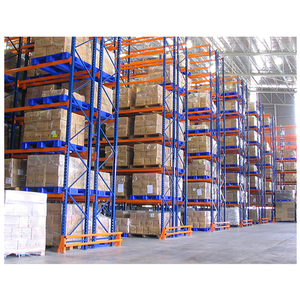
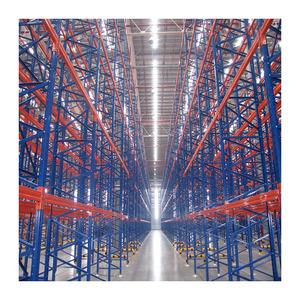
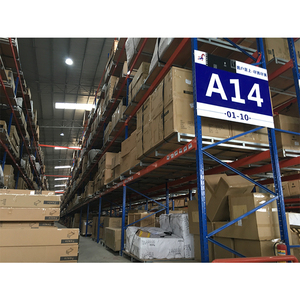
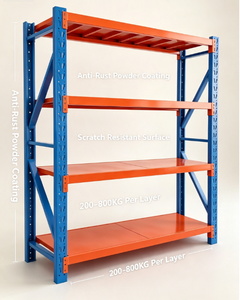
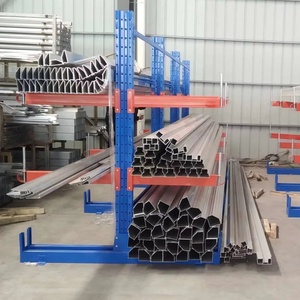
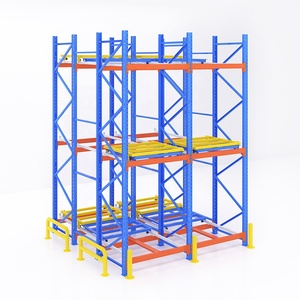

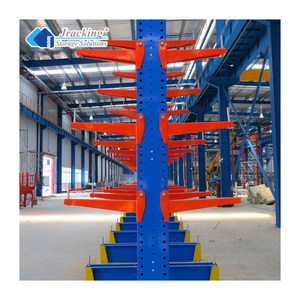
Engineering Excellence in Custom OEM Industrial Pallet Storage Racking
In modern supply chain ecosystems, the physical infrastructure of warehousing dictates operational velocity, safety compliance, and volumetric efficiency. As a leading Custom OEM Industrial Pallet Storage Racks Manufacturer & Factory, our engineering paradigm is centered around structural integrity, metallurgical optimization, and user-intent-driven design. Industrial pallet racks are no longer mere static steel frameworks; they are highly dynamic, load-bearing mechanical assets integrated into complex automated workflows, cold storage environments, and high-seismic industrial hubs globally.
Technical Insight (Information Gain): Structural yield strength ($f_y$) and cold-work hardening phenomena directly impact frame deflection limits under static and dynamic loading. Utilizing certified Q235B, Q355B, and S355 structural steels, our customized OEM profiles achieve optimal strength-to-weight ratios while reducing dead load stress on warehouse concrete slabs.
Structural vs. Roll-Formed Pallet Racking Engineering
Understanding the structural dichotomy between Roll-Formed Steel Racking and Hot-Rolled Structural C-Channel Racking is paramount for procurement teams evaluating Total Cost of Ownership (TCO).
Roll-formed racking utilizes continuous cold-rolling mills to shape high-tensile coil steel into teardrop or slotted column profiles. This provides cost-effective, highly adjustable rack configurations suitable for retail distribution, general warehousing, and fast-paced FMCG environments. Conversely, structural racking is manufactured from hot-rolled structural steel channels, featuring heavy-duty bolted beam-to-frame connections. Structural racking exhibits extreme resistance to fork-truck impact damage, making it the ideal choice for heavy industrial manufacturing, freezer storage (-30°C), and high-turnover 3PL fulfillment centers.
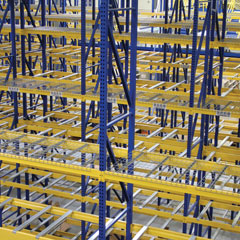
Enterprise Advantages & Manufacturing Capabilities
Automated Roll-Forming Mills
Our state-of-the-art factory operates multi-station continuous roll-forming production lines with inline CNC punching, ensuring precise hole pitch alignment across 12-meter upright posts without material fatigue.
Robotic Welding Matrix
Beam end-connector plates and column baseplates undergo 100% automated pulse-MIG welding by multi-axis robotic cells. Every weld seam strictly satisfies AWS D1.1 and EN ISO 3834 structural welding standards.
Seismic Engineering & FEA
Using Finite Element Analysis (FEA) software, our in-house structural engineers simulate lateral shear forces, seismic accelerations (INPRES-CIRSOC 103, Zone 4), and maximum allowable beam deflections ($L/180$).
Structural Storage Systems: Technical Performance Matrix
Select the correct OEM rack architecture based on storage density, inventory flow philosophy (FIFO/LIFO), and equipment interaction parameters:
| Storage System Type | Volumetric Density | Selectivity Rate | Inventory Flow | Load Capacity Range | Forklift Requirement |
|---|---|---|---|---|---|
| Selective Pallet Rack | Medium (40-50%) | 100% Immediate | FIFO / LIFO | 1,000 kg – 4,500 kg / level | Standard Counterbalance / Reach |
| Push-Back Cart Rack | High (65-75%) | 25-30% (Per Lane) | LIFO | 1,000 kg – 2,500 kg / pallet | Standard Reach Truck |
| Pallet Live Flow Rack | Ultra High (85%+) | Lane Dependent | Strict FIFO | 500 kg – 1,800 kg / pallet | Standard Loading/Unloading Trucks |
| Drive-In / Drive-Thru | Ultra High (75-85%) | Low (Bulk SKUs) | LIFO (Drive-In) / FIFO | 1,000 kg – 2,000 kg / pallet | Narrow-Cabin Drive-In Forklifts |
| Heavy-Duty Cantilever | Variable (Long Goods) | 100% Direct | Any Rotation | 500 kg – 5,000 kg / arm | Side-Loader / Multi-Directional |
| Automated AS/RS Crane Rack | Maximum (90%+) | 100% Automated | Software Controlled | Up to 3,000 kg / position | Automated Stacker Cranes / AGVs |
Future Procurement & Technological Trends in Industrial Storage (2025–2030)
The global warehouse rack procurement landscape is undergoing a monumental shift driven by automation, sustainability mandates, and dynamic supply chain shocks. OEM buyers must evaluate current investments against these emerging industry megatrends:
1. Integration with AS/RS & Autonomous Mobile Robots (AMRs)
Conventional static racks are giving way to high-bay automated structures exceeding 40 meters in height. OEM manufacturing tolerances have tightened from millimeter to sub-millimeter scales to accommodate automated stacker crane tolerances, optical sensors, and rail-guided shuttles.
2. Eco-Friendly Coatings & Green Steel Procurement
Environmental, Social, and Governance (ESG) criteria now directly influence OEM factory selection. Future procurement mandates low-VOC epoxy powder coatings, energy-efficient curing ovens, and steel supply chains verified for carbon-neutral electric arc furnace (EAF) production.
3. Advanced Anti-Seismic & Dynamic Strain Monitoring
Modern facilities are increasingly specifying IoT-enabled strain gauges and seismic dampeners integrated into primary rack uprights. Real-time telemetry detects structural overload, forklift impact events, and ground slab settlement before catastrophic structural collapse occurs.
4. Hybrid Structural-Roll-Formed OEM Hybrid Solutions
To optimize capital expenditure, logistics architects are procuring hybrid systems: structural steel lower columns (combating forklift wheel impacts) seamlessly paired with high-tensile cold-formed upper framing to maximize vertical bay heights cost-effectively.
Technical Sourcing & OEM Procurement FAQs
Which design codes and international standards govern your OEM rack manufacturing?
- North America: RMI (Rack Manufacturers Institute) / ANSI MH16.1 Specification for the Design, Testing, and Utilization of Industrial Steel Storage Racks.
- Europe: FEM 10.2.02 (Federation Europeenne de la Manutention) and EN 15512 / EN 15635 standards for adjustable pallet racking systems.
- Seismic Standards: ASCE 7, IBC (International Building Code), and regional codes such as Argentina's INPRES-CIRSOC 103.
How do you verify beam capacities and factor of safety compliance?
What technical data is required to request a custom OEM rack engineering layout?
- Warehouse architectural floor plan showing column locations, clear height under roof trusses, dock doors, and obstruction zones.
- Concrete slab details: Slab thickness, reinforcement matrix, and concrete compressive strength (e.g., f'c = 28 MPa / 4000 PSI).
- Pallet dimensions ($W \times D \times H$), including overhang, and maximum gross loaded pallet weights.
- Forklift technical specifications: Turning radius, minimum aisle width requirement, maximum lift height, and mast height.
- Environmental conditions (ambient, cold room -25°C, or outdoor yard exposure) and seismic location zone.
Can damaged upright columns be repaired safely without dismantling entire rack bays?
What surface treatments are recommended for high-humidity or cold-chain environments?
Ready to Engineer Your Custom OEM Warehouse Storage System?
Partner directly with a certified industrial pallet rack manufacturer. Our engineering department provides complete structural CAD layouts, FEA load calculations, and global site delivery support.
Get a Quote