Featured Warehouse Heavy-Duty Shelving & Racking Systems
Engineered with high-yield Q235B/Q355B structural steel, conforming to FEM 10.2.02, RMI ANSI MH16.1, and AS4084-2012 quality benchmarks.
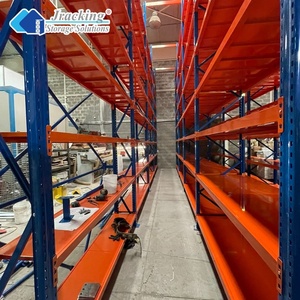
Jracking EURO Standard Warehouse Storage Racks Heavy Duty Steel Pallet Racking System for Distribution
- Standard: EURO & FEM Compliant
- Frame Capacity: Up to 24,000 KG
- Finish: Epoxy Powder Coated
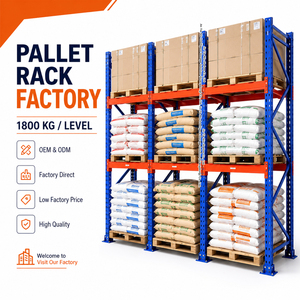
1800KG Heavy Duty Beam Pallet Rack Steel Warehouse Industrial Shelving 3-level Heavy Duty Rack
- Load: 1,800 KG per Level
- Beam Type: Interlocking Box Beam
- Pitch Adjustment: 50mm / 75mm
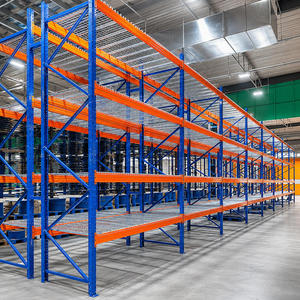
Steel Storage Rack Selective Pallet Racking with 1.5mm Interlocking Box Beam for Bulk Distribution Center
- Beam Gauge: 1.5mm Structural Cold-Rolled
- Access: 100% Direct Selective Access
- Safety: Spring Safety Locks Included
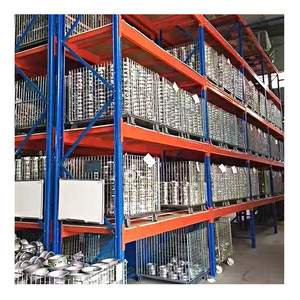
Pallet Racking Warehouse Storage Heavy Duty Industrial Pallet Shelf Narrow Aisle Selective Warehouse Racking System
- Density: VNA High-Density Optimization
- Height Capability: Up to 15 Meters
- Feature: Floor Guide Rail Compatible
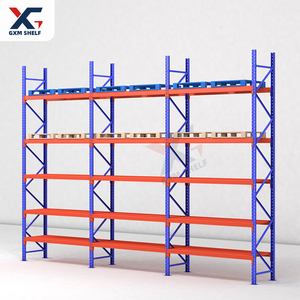
Heavy Duty Pallet Racking Warehouse Pallet System Pallet Storage Rack Heavy Duty Rack Shelf Heavy Duty Racking System
- Material: Premium Grade Q235B Steel
- Configuration: Custom Bays & Heights
- Application: Heavy Industrial Logistics
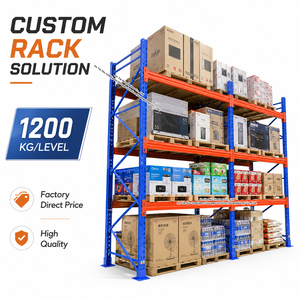
1200KG Steel Heavy Duty Rack Warehouse Pallet Storage Shelving System
- Rating: 1,200 KG Uniform Distributed Load
- Upright Section: 80x60, 90x70 Profile
- Surface: Electrostatic Powder Spray
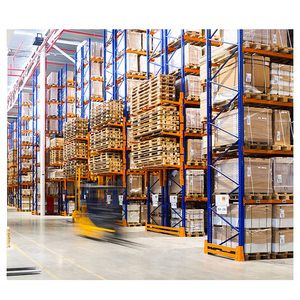
Adjustable Heavy Duty Pallet Rack System Selective Steel Beam Racking for Industrial Warehouse Storage Management
- Versatility: Multi-level Beam Positioning
- Compatibility: Standard Forklifts & Reach Trucks
- Protection: Upright Frame Protectors Optional
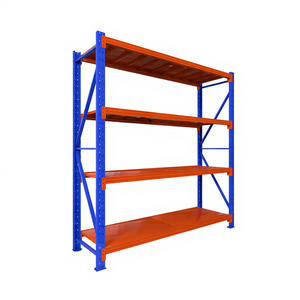
Racking Adjustable Metal Boltless Shelf and Racks Warehouse Storage Medium Duty Metal Rack Shelf
- Assembly: Fast Boltless Interlocking Setup
- Load Range: 300 - 800 KG per Level
- Decking: Steel Panels or MDF Boards
Engineering Authority & Industrial Manufacturing Capabilities
Why leading 3PL integrators, Fortune 500 distribution centers, and global procurement officers source structural steel racking directly from China's premier OEMs.
Structural Steel Metallurgical Integrity
We source prime hot-rolled coils from premier steel mills (Baosteel, Shougang Group) utilizing Q235B and Q355B structural grade steel. Every batch undergoes strict tensile, yield strength (≥355 MPa), and elongation testing, guaranteeing structural ductility under full load capacity.
Cold-Roll Forming & Robotic Precision
Utilizing 18-stage continuous automatic cold-roll forming profile lines, our upright columns feature multi-angle stiffener ribs that amplify section modulus. Robotic laser punching ensures pitch tolerances within ±0.1mm for seamless beam hook engagement.
Automated Epoxy Powder Coating Lines
Our 220-meter automated pre-treatment and powder-coat line incorporates continuous 9-stage phosphate wash and ultrasonic degreasing. Thermosetting pure epoxy-polyester powder is electrostatically applied at 60–80 microns, passing 500-hour salt spray corrosion tests.
FEA & Seismic Resistance Design
Our structural engineering team conducts Finite Element Analysis (FEA) to simulate dynamic, static, and wind load vectors. Racking systems engineered for high seismic risk zones adhere to INPRES-CIRSOC 103, US RMI MH16.1, and AS4084 regulations with heavy-duty baseplates.
Full OEM / ODM Customization
From custom beam profiles, frame depths (400mm to 1500mm), pitch spacing (50mm, 75mm, 76.2mm / 3 inch), to non-standard colors (RAL color chart matched), we deliver tailored warehouse infrastructure optimized for your specific SKU volume and forklift geometry.
Rigorous Factory Quality Assurance
Each production run undergoes ultrasonic weld testing, beam deflection verification (L/200 load limit), coating thickness measurement, and pre-shipment trial assembly. Load plaques and complete mill test certificates (MTC) accompany every container shipped.
Industrial Racking System Comparison Matrix
Evaluate structural parameters, operational inventory flow, load capacity thresholds, and space utilization ratios to select the ideal storage configuration.
| Storage Racking System | Typical Load Capacity | Aisle Width Requirement | Floor Utilization Ratio | Stock Rotation / Access | Primary Industrial Use |
|---|---|---|---|---|---|
| Selective Pallet Racking | 1,000 – 4,000 kg / level | 3.0m – 3.8m (Standard) | 40% - 45% | 100% Direct Access (FIFO) | 3PL, FMCG, E-Commerce distribution, General Logistics |
| Very Narrow Aisle (VNA) | 1,000 – 3,000 kg / level | 1.5m – 1.8m (Turret Truck) | 60% - 70% | 100% Direct Access (FIFO) | High-bay warehouses, Pharmaceutical, High-value SKUs |
| Drive-In / Drive-Thru Rack | 500 – 1,500 kg / pallet | Aisle Eliminated (Truck Enters) | 75% - 85% | LIFO (Drive-In) / FIFO (Drive-Thru) | Cold Storage, Frozen Food, Seasonal Agricultural Goods |
| Push Back Cart System | 1,000 – 1,500 kg / cart | 3.0m – 3.4m | 65% - 75% | LIFO (2 to 6 Pallets Deep) | Beverage Distribution, Cold Rooms, Medium-Rotation SKUs |
| Gravity Pallet Flow Rack | 1,000 – 1,500 kg / pallet | Dedicated Loading / Unloading Aisle | 70% - 80% | Strict FIFO (Gravity Rollers) | Perishable Goods, Dairy, Food Processing, High Throughput |
| Heavy-Duty Cantilever Rack | 500 – 3,000 kg / arm | Variable based on stock length | 50% - 60% | Direct Arm Access | Lumber, Steel Pipes, Extrusions, Building Materials |
Macro Industry Development Trends in Warehouse Racking & Storage Infrastructure
The global warehousing and logistics sector is experiencing an unprecedented structural transformation. Driven by the rapid acceleration of cross-border e-commerce, automated fulfillment networks, and escalating urban land acquisition costs, modern warehouse storage systems are no longer treated as passive steel shelving. Instead, they are engineered as active, load-bearing infrastructure designed to integrate seamlessly with robotic automation systems.
As one of the world's primary steel fabrication and logistics infrastructure hubs, China's racking manufacturing industry has evolved from basic structural roll-forming to high-precision engineering. Key development trends reshaping the industry include:
1. Convergence with AS/RS & Robotic Systems
Modern distribution facilities are rapidly shifting toward Automated Storage and Retrieval Systems (AS/RS), Autonomous Mobile Robots (AMRs), and Shuttle Racking. High-bay clad-rack structures reaching heights over 30 to 40 meters require millimeter-level installation tolerances, precision guide rails, and dynamic vibration damping calculation models.
2. Cold-Chain & Harsh Environment Metallurgy
Global demand for temperature-controlled food logistics and pharmaceuticals has surging reliance on specialized low-temperature alloy steels. Cold-rolled steel utilized in -30°C freezer facilities undergoes micro-alloying with Vanadium/Niobium to prevent embrittlement and catastrophic stress fracturing under constant load.
3. Sustainable Green Steel & Eco-Coating
Procurement teams from multinational corporations now evaluate supplier ESG ratings. Chinese factories are adopting closed-loop zero-VOC powder-coating recovery systems, solar-powered continuous ovens, and high-strength low-alloy (HSLA) steels that reduce total raw material mass while retaining structural load ratings.
Future Procurement Trends for Global B2B Buyers & Sourcing Managers
When sourcing heavy-duty industrial shelving and pallet racking systems from China, global procurement directors are pivoting away from simple per-kilogram price comparisons toward comprehensive Total Cost of Ownership (TCO) and Lifecycle Structural Reliability metrics. Understanding these strategic procurement shifts is vital for supply chain resilience:
Modular Scalability & Future-Proofing
Warehouse managers are prioritizing interlocking teardrop or slotted frame profiles with standardized beam connectors (50mm/75mm adjustment pitch). Sourcing modular racking allows easy height extensions, tier additions, and conversion from selective racking to VNA or carton flow without scrapping structural components.
Strict Standard Standardization (GMA, Euro, ARLOG)
Cross-border distribution networks mandate strict compatibility with varied pallet footprints. Factory OEM capabilities must accommodate 1200x1000mm (ARLOG/UK), 1200x800mm (Euro EPAL), and 48x40 inch (US GMA) standard pallets with tailored cross-beam wire decking or pallet support bars.
Direct Factory Engineering Partnership
Leading buyers are bypassing trading intermediaries to work directly with qualified Chinese factory engineering teams. Direct engagement ensures custom FEA structural reports, structural stamping for localized building permits, and transparent factory acceptance testing (FAT).
Frequently Asked Questions (FAQ)
Essential insights for warehouse engineers, logistics planners, and international procurement specialists.
What steel grades are used in heavy-duty racking, and why do they matter?
We primarily utilize high-tensile cold-rolled steel grades Q235B and Q355B (equivalent to SS400 / S235 and S355 European standards). Q355B steel offers a significantly higher yield strength (≥355 MPa), allowing thinner gauge profiles to hold higher weight capacities safely, reducing total shipping weight while maintaining strict safety factors according to RMI and FEM guidelines.
How do you guarantee racking structural safety in seismic earthquake zones?
Our structural engineering department performs site-specific dynamic structural analysis based on local seismic zone acceleration coefficients (e.g., INPRES-CIRSOC 103, US IBC code). We engineer oversized baseplates, heavy-duty anchor bolt embedments, specialized upright profile cross-bracing, and top-tier frame ties to ensure stability under ground acceleration forces.
What technical parameters are required to generate a custom layout quote?
To produce an optimized CAD layout and structural pricing proposal, we require: (1) Warehouse building DWG drawing showing clear height under trusses, column spacing, and door positions; (2) Concrete slab thickness and compressive strength (e.g., 200mm, 25MPa); (3) Pallet dimensions (L x W x H) including goods overhang; (4) Maximum loaded pallet weight; and (5) Forklift model, turning radius, and maximum lift height.
What surface finish options are available for humid or cold storage applications?
For standard dry ambient warehouses, our automated electrostatic thermosetting epoxy powder coating (60–80 µm thickness) provides superior scratch resistance. For high-humidity, outdoor, or chemical environments, we offer Hot-Dip Galvanizing (HDG) conforming to ISO 1461, providing a durable zinc layer exceeding 65–80 µm that prevents oxidation and rust for decades.
Can damaged racking uprights be repaired without dismantling entire runs?
Yes. We manufacture engineered heavy-duty bolt-on upright repair kits. These allow certified maintenance teams to cut away lower impacted column sections damaged by forklift impacts and bolt in a reinforced replacement leg with heavy-duty internal splice sleeves without unloading adjacent upper bays, significantly minimizing operational downtime.
How are racking components packaged to prevent damage during ocean container transport?
Upright frames and box beams are bundled using steel strapping over protective plastic film wrapping, heavy corrugated corner protectors, and timber skids optimized for forklift unloading. Small components (baseplates, safety pins, bolts, row spacers) are packed in reinforced wooden crates or heavy-duty triple-wall corrugated cartons, ensuring zero movement or surface abrasion inside 20GP/40HQ containers.
Transform Your Warehouse Storage Capacity Today
Partner with China's leading warehouse shelving and pallet racking manufacturer. Contact our structural engineering team for complimentary CAD layout design, FEA load calculations, and competitive direct-factory quotes.