High-Performance Storage Racking Systems
Certified structural integrity, customizable load-bearing capacities, and anti-corrosive powder coatings tailored for global distribution hubs.
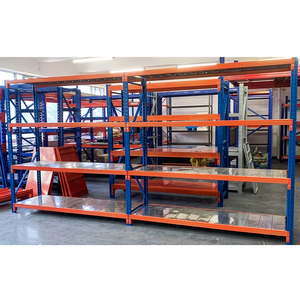
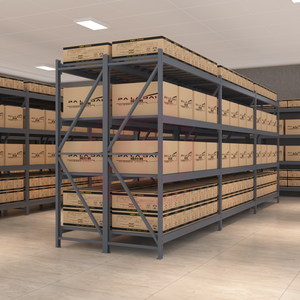
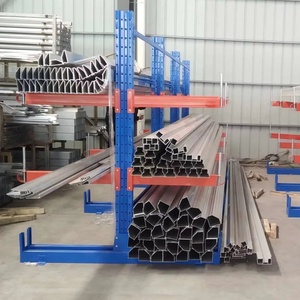
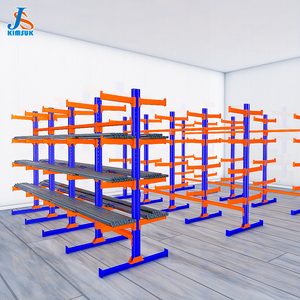
Why Global Logistics Leaders Source Racking from China
By pairing high-grade cold-rolled steel with precision structural engineering, our manufacturing facilities set the standard for load capacity, seismic safety, and operational longevity.
High-Grade Cold-Rolled Steel (Q235B & Q355B)
Our uprights and beams are cold-rolled from certified prime structural steel, offering yield strengths up to 355 MPa. This guarantees zero flex under structural strain and superior resistance against forklift impact.
Seismic Engineering & FEA Stress Modeling
Every industrial racking layout undergoes Finite Element Analysis (FEA) to verify structural safety against dynamic loads and localized seismic zones (compliant with RMI, ANSI MH16.1, and EN 15512 codes).
Automated Epoxy Powder Coating
Utilizing a 12-stage pre-treatment wash and automated electrostatic powder coating lines, our finishes reach a uniform 80-100 μm thickness, ensuring superior scratch resistance and moisture shielding in cold storage.
Custom Structural Engineering (OEM/ODM)
Tailored beam profiles, pitch spacing (50mm, 75mm, 76.2mm), frame depths, and deck configurations (wire mesh, galvanized steel panel, timber) designed specifically around your material handling equipment.
High-Density Space Optimization
From Drive-In to Shuttle and Live Flow systems, our layouts maximize vertical clear height, expanding warehouse storage density by up to 85% without necessitating facility expansion.
Full-Chain Logistics & Export Compliance
Comprehensive export packaging, pre-assembled frame options, customized container loading software, and complete installation blueprints designed to streamline overseas procurement and reduce freight costs.
Industrial Racking System Comparison
Evaluate mechanical parameters, storage efficiency, and SKU access to match your warehouse throughput requirements.
| Racking Architecture | Primary Load Material | Payload Capacity (per Level) | Space Utilization | Inventory Access Method | Ideal Application |
|---|---|---|---|---|---|
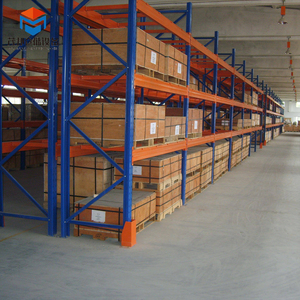
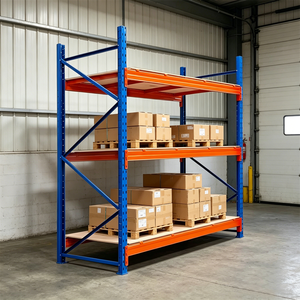
| Selective Pallet Racking | Q235B / Q355B Steel | 1,000 kg – 4,500 kg | 40% – 50% | 100% Direct (FIFO) | High SKU variety, distribution centers, FMCG |
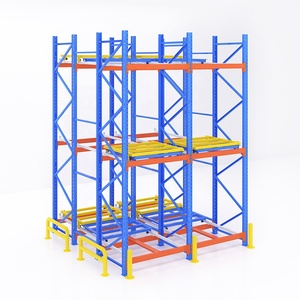
| Push Back Cart Racking | Heavy-Duty Steel Carts | 1,500 kg – 3,000 kg | 65% – 75% | Lane Selective (LIFO) | Cold storage, high-density bulk storage |
| Live Pallet Flow Rack | Gravity Roller Tracks | 1,000 kg – 2,500 kg | 80% – 85% | Automated FIFO | Perishables, pharmaceuticals, high-turnover goods |
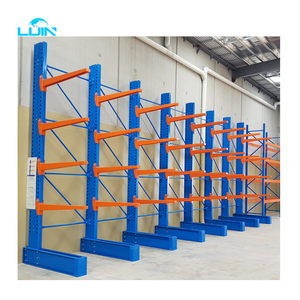
| Structural Cantilever Rack | H-Beam / Structural Steel | 500 kg – 6,000 kg / Arm | 60% – 70% | Direct Arm Access | Pipes, lumber, steel bars, long structural items |
| Drive-In / Drive-Thru Rack | Cold-Rolled Omega Uprights | 1,000 kg – 2,000 kg | 75% – 85% | Deep Lane (LIFO / FIFO) | Homogeneous bulk items, seasonal agricultural stock |
| Heavy Duty Mobile Racking | Motorized Rail Bases | Up to 24,000 kg / Bay | 90% + | Selective via Movable Aisle | High land-cost archives, freezer warehouses |
Engineering Excellence in Modern Industrial Storage Systems
As modern supply chains demand unprecedented speed, accuracy, and space efficiency, industrial racking has evolved from simple static steel frames into highly engineered structural systems. As a leading manufacturer and exporter in China, our production philosophy centers on structural safety, precision tolling, and modular flexibility.
Selecting the right industrial storage partner requires understanding steel metallurgy, cold-roll profiling techniques, load deflection criteria, and local building code compliances. Below is an engineering overview of the factors governing structural integrity in modern warehouses.
Engineering Rule of Thumb: Structural beam deflection under full operational load should never exceed L/180 (where L is the clear span length of the beam). Exceeding this limit compromises safety factors and increases fatigue on beam connector hooks and safety locking pins.
Structural Metallurgy: Q235B vs. Q355B Steel Profiles
The foundation of any heavy-duty industrial shelf lies in the raw steel coil quality. We utilize top-tier structural steel grades subject to strict tensile testing:
- Q235B Cold-Rolled Carbon Steel: Offers exceptional ductility and formability. Ideal for medium-to-heavy selective pallet racking, standard beam spans, and multi-tier mezzanine supports where nominal load demands range from 1,000kg to 2,500kg per beam level.
- Q355B High-Strength Low-Alloy (HSLA) Steel: Boasts a yield strength of 355 MPa, allowing for thinner wall profiles with greater load capacities. Preferred for high-bay racking systems exceeding 10 meters, Automated Storage and Retrieval Systems (AS/RS), and high-load cantilever arms subjected to dynamic dynamic torque.
Precision Cold-Forming and Upright Column Geometry
An upright frame's buckling resistance depends not only on steel thickness, but heavily on the geometric design of its cross-section. Our advanced multi-stage cold-rolling mills form upright columns with up to 13-15 distinct bending rib profiles. These continuous cold-formed bends dramatically increase the moment of inertia, resisting axial compression, torsional twisting, and side-impact forces caused by material handling equipment.
Future Procurement Trends in Global Supply Chain Infrastructure
B2B procurement managers and supply chain directors face changing macroeconomic dynamics. When sourcing industrial racking systems from China, strategic buyers are focusing on four key future trends:
1. Integration with Automated Guided Vehicles (AGVs) and AS/RS
Traditional manual forklift warehouses are rapidly transitioning toward semi-automated or fully automated operations. Racking structures must now be engineered with ultra-tight manufacturing tolerances (down to ±0.5mm structural variance). Upright frames feature integrated sensor tracks, reflective positioning tags, and guide rails for Autonomous Mobile Robots (AMRs) and radio shuttle carts.
2. Sustainable Steel Sourcing and Green Powder Coatings
ESG (Environmental, Social, and Governance) compliance is becoming mandatory for tier-1 multinational logistics operators. Leading Chinese exporters are migrating toward eco-friendly production processes, including VOC-free epoxy powder coatings, closed-loop water recycling systems during pre-treatment chemical washing, and decarbonized steel coil sourcing.
3. Cold Chain Storage Expansion and Specialized Anti-Corrosion
With global demand for frozen food and biopharmaceuticals surging, cold-storage racking must withstand temperatures down to -30°C without suffering hydrogen embrittlement. Pre-galvanized sheet metal, hot-dip galvanizing (HDG according to ISO 1461), and specialized low-temperature powder coatings prevent oxidation and dynamic brittle failure in refrigerated facilities.
4. Modular Modularity and High-Density Resell Value
Flexibility is vital for 3PL logistics providers operating under changing client contracts. Boltless teardrop connection systems, interchangeable beam connectors, and modular upright frame splices allow systems to be reconfigured, expanded vertically, or relocated with minimal operational downtime.
Technology Evolution in Heavy-Duty Rack Manufacturing
The manufacturing landscape for Chinese industrial shelving has transitioned from manual fabrication to Industry 4.0 automated production lines. Key technological milestones include:
- Continuous Automated Punching and Rolling: Fully automated CNC lines punch teardrop or diamond hole patterns into steel strips prior to roll-forming, ensuring sub-millimeter hole alignment along 12-meter continuous upright columns.
- Robotic MIG/TIG Welding Lines: Beam connector plates (2-hook to 5-hook claws) are welded to box beams using multi-axis robotic welding cells, eliminating human error and producing continuous, defect-free weld beads tested via ultrasonic flaw detection.
- Laser-Guided Automated Quality Control: Automated laser measuring sensors scan finished profile dimensions, angle tolerances, and straightness along the entire length of the component before packaging.
Frequently Asked Questions for B2B Importers
Essential guidance on structural safety, international compliance, lead times, and factory-direct ordering.
How do you verify the load-bearing capacity of your racking systems?
Our load capacity calculations are performed using Finite Element Analysis (FEA) software and validated through physical load destructive testing according to ANSI MH16.1 / RMI standards and European EN 15512 codes. Every project is provided with formal load plaque documentation detailing maximum allowable beam unit loads and frame bay weight limits.
What parameters are required to generate an engineering CAD layout and quote?
To provide an accurate structural proposal, we require: (1) Warehouse building CAD drawings showing clear height under trusses, floor slab thickness, and column grid; (2) Pallet dimensions including load overhang (W x D x H) and maximum loaded weight; (3) Forklift model, turning radius, and max lift height; and (4) Desired inventory access type (FIFO vs. LIFO).
Can your racking systems be designed for high seismic active regions?
Yes. We custom engineer heavy-duty baseplates, heavy-gauge floor anchors (expansion or chemical anchors), dynamic cross-bracing ties, and heavy-wall uprights specifically calibrated to withstand local ground acceleration values in seismic zones (e.g., California, Chile, Japan, Turkey).
What is the standard manufacturing lead time and container packing method?
Standard lead time is 14 to 21 days for standard order volumes (up to 5-10 40ft High Cube containers). Upright frames are typically shipped knock-down (KD) to optimize container volume, while beams and decks are bundled on customized steel pallets wrapped in protective stretch film and corrugated corner guards to prevent transit damage.
How do you handle surface finish customization and RAL color matching?
We offer full RAL system color matching for electrostatic powder coating. Standard popular colors include Safety Orange (RAL 2004), Signal Blue (RAL 5005), Dark Grey (RAL 7016), and Warning Yellow (RAL 1023). Dual-color combinations for frames vs. beams can be produced without extra charge.
Transform Your Warehouse Storage Efficiency Today
Consult directly with our structural engineering team. Get custom CAD warehouse layouts, structural load calculations, and competitive FOB/CIF factory direct quotes within 24 hours.