High-Performance Structural Storage & Mezzanine Solutions
Explore our engineering-validated pallet racking, structural platform mezzanines, and industrial shelving designed for extreme load-bearing safety and space optimization.
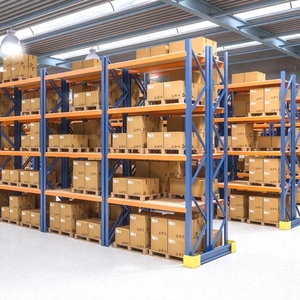
Heavy Duty Industrial Warehouse Steel Pallet Racking System
Heavy-duty structural selective racking with high-tensile steel frame profiles engineered for high-bay logistics operations.
Get a Quote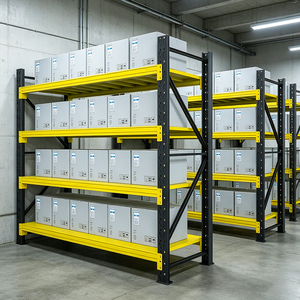
Warehouse Pallet Racks Small Parts Shelves Tires Stacking Racks
Versatile multi-tier hybrid shelving for tire distribution, specialized small parts storage, and modular bin management.
Get a Quote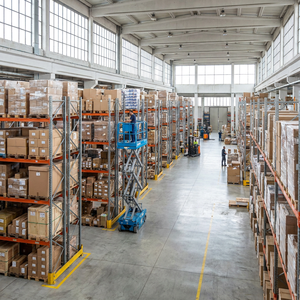
Heavy Duty Pallet Rack Warehouse Storage System Manufacturer
Custom-configured heavy pallet racking designed for harsh warehouse conditions with extreme load capacities per level.
Get a Quote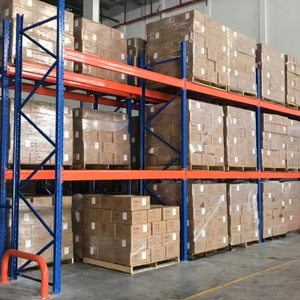
Q235B Steel Metal Industrial Adjustable Storage Pallet Racks
Precision cold-rolled Q235B steel racking featuring 50mm/75mm adjustable pitch beam connectors for variable pallet heights.
Get a Quote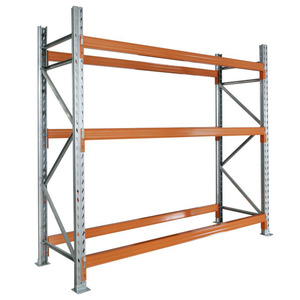
NOVA Full Automatic Boltless Heavy Duty Stacking Pallet Rack System
High-density automated warehouse racking compatible with AS/RS crane shuttles and intelligent inventory management software.
Get a Quote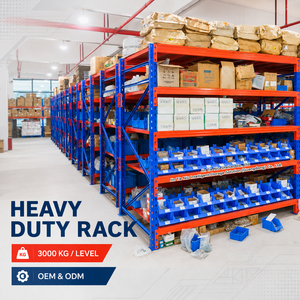
3000KG Per 5 Levels Warehouse Rack System with Steel Shelves
Ultra-rugged 3-ton capacity multi-tier steel shelving system designed for heavy parts, tote boxes, and industrial hardware storage.
Get a Quote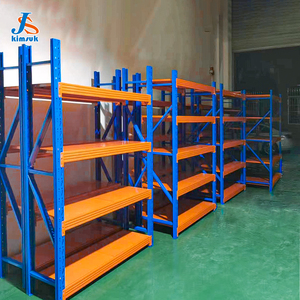
Garage Warehouse Adjustable Metal Shelving Unit
Heavy-gauge modular storage shelving with boltless lock technology, optimal for maintenance bays and light industrial stores.
Get a Quote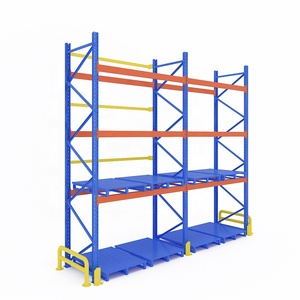
Warehouse Storage Industrial Pallet Rack with Back Stopper
Safety-enhanced pallet racking featuring integrated push-through back stoppers to prevent pallet over-travel and aisle fall risks.
Get a QuoteEngineering Excellence in Heavy-Duty Warehouse Racking & Structural Mezzanine Fabrication
Modern logistics real estate is characterized by skyrocketing land acquisition costs, stringent municipal building codes, and escalating demand for rapid order fulfillment. To maintain operational margins, enterprise logistics directors and supply chain engineers must move beyond primitive floor-level storage and embrace volumetric vertical expansion. As an established direct-factory manufacturer and global supplier, our primary objective is delivering engineered warehouse mezzanine platforms and high-density racking systems that double or triple usable floor space within an existing building footprint.
Selecting the optimal warehouse storage architecture requires deep structural analysis, detailed knowledge of metallurgical standards, and strict adherence to global safety design norms—including ANSI MH16.1 (RMI standard), FEM 10.2.02, EN 15512, and local seismic criteria (such as INPRES-CIRSOC 103 in high-seismicity regions). Whether deploying structural steel mezzanine floors for picking modules or roll-formed heavy-duty pallet racks with automated shuttle interfaces, material quality and mechanical calculations dictate long-term site safety and operational lifecycle.
Core Information Gain: Structural Load Deflection Standards
In high-bay racking and mezzanine systems, allowable vertical deflection of horizontal load-bearing beams under maximum design static load is capped at L/240 (where L is the clear span length) for pallet rack beams, and L/360 for structural mezzanine joists supporting human foot traffic or automated conveyors. Exceeding these engineering thresholds risks weld fatigue, connection disengagement, and premature mechanical failure.
Structural Steel Mezzanines vs. Roll-Formed Pallet Racking: Engineering Differentiation
A critical consideration during facility master planning is determining whether a structural steel mezzanine platform, a rack-supported mezzanine, or a dedicated selective rack system best fulfills operational KPIs. Each architecture possesses unique structural load capabilities and structural load-transfer dynamics onto the underlying concrete slab.
1. Free-Standing Structural Mezzanines (Column & Beam Platforms)
Fabricated using heavy structural hot-rolled steel sections (wide-flange I-beams, structural channels, and structural hollow sections Q355B/Q235B), free-standing mezzanines offer wide column spans (often up to 8 to 12 meters). This wide grid minimizes floor obstructions on the ground level, allowing unhindered forklift maneuvering, packaging lines, or office integration beneath the deck. Floor loading capacities typically range from 300 kg/m² to over 2,000 kg/m², supporting heavy manufacturing equipment and concentrated automated sorting conveyors.
2. Rack-Supported Mezzanines and Multi-Tier Pick Modules
When storage density for high-SKU inventory is the primary driver, rack-supported multi-tier platforms leverage heavy-duty roll-formed rack upright frames as the structural vertical columns for upper walkway levels. By utilizing high-profile upright cold-formed profiles with structural side bracing, rack-supported systems eliminate the need for costly independent structural columns. This yields maximum storage cube efficiency for e-commerce order picking, automotive spare parts, and pharmaceutical fulfilment hubs.
| System Architecture | Primary Material Standard | Typical Column Grid Span | Floor Load Capacity Range | Ideal Operational Intent |
|---|---|---|---|---|
| Free-Standing Mezzanine | Hot-Rolled Structural Steel (Q355B / ASTM A572) | 6.0m × 6.0m to 10.0m × 12.0m | 500 kg/m² - 2,000 kg/m² | Manufacturing decks, office space, bulk staging, heavy machinery platforms |
| Rack-Supported Mezzanine | Cold-Formed High-Tensile Steel (Q235B / S355JR) | 2.7m × 1.1m (Rack Bay Dimensions) | 300 kg/m² - 800 kg/m² (Walkways) | High-density e-commerce picking, bin storage, multi-tier manual pick modules |
| Heavy-Duty Selective Rack | Roll-Formed C/Omega Profile (Q235B Cold-Rolled) | 2.7m × 1.0m (Standard Pallet Bay) | 1,000 kg - 4,500 kg / Level | 100% selective palletized storage, heavy palletized raw materials, cold storage |
| Automated AS/RS Rack Structure | Precision Structural & Cold-Formed Hybrid | Engineered per Crane Shuttle Specs | Up to 3,000 kg / Pallet Slot | Fully automated high-bay distribution centers (Up to 40 meters vertical height) |
Future Procurement Trends in Industrial Racking & Mezzanine Manufacturing (2025–2035)
The global material handling equipment (MHE) procurement landscape is undergoing a structural transition driven by supply chain resilience, ESG sustainability requirements, and rapid integration with warehouse automation robotics. Procurement teams must anticipate these long-term trends to avoid specifying obsolete warehouse physical assets.
1. Automated Guided Vehicle (AGR/AMR) Integration
Traditional structural mezzanine decks with timber or standard bar grating are giving way to ultra-flat steel-decked mezzanine flooring with high-friction epoxy or composite top coats. These specialized floors support Autonomous Mobile Robots (AMRs) operating on elevated mezzanine levels for goods-to-person order fulfillment.
2. Advanced Seismic & Slab Dynamics Engineering
Global logistics hubs are increasingly located in geologically active or alluvial coastal zones. Modern racking and mezzanine procurement mandates full seismic dynamic modal analysis. High-grade base anchor bolts, heavy-duty floor plates, and structural seismic X-bracing are now engineered into standard component packages.
3. Decarbonized Steel & Zero-VOC Powder Coating
Leading enterprise buyers prioritize environmental transparency. Factory manufacturing processes now utilize green steel billets with recycled scrap content, supported by 100% automated electrostatic powder-coating lines that eliminate volatile organic compounds (VOCs) while delivering corrosion protection superior to standard liquid painting.
Industrial Evolution & Next-Gen Factory Manufacturing Capabilities
As a premier direct-factory manufacturer, our production infrastructure bridges metallurgical expertise with advanced robotic fabrication. High-load warehouse racking and structural mezzanine platforms cannot tolerate dimensional inaccuracies, manual welding defects, or inconsistent metal thickness. Our factory capabilities incorporate full-process automation to guarantee structural reliability:
- Automated Continuous Cold-Roll Forming: Precision multi-station rolling mills transform certified Q235B and Q355B cold-rolled steel coils into high-rigidity structural upright columns with stiffened return flanges. Punching patterns (such as teardrop, diamond, or hex connectors) are executed via CNC inline punch presses with tolerances under ±0.1mm.
- Robotic MIG/TIG Structural Welding: Critical load-bearing joints—including beam end-connectors, mezzanine column base plates, and heavy-duty truss joists—are executed using multi-axis robotic welding cells. This guarantees uniform bead penetration, eliminates heat-affected zone embrittlement, and ensures zero weld fatigue failure under dynamic loading cycles.
- Automated Pre-Treatment & Powder Coating: Structural components undergo a 7-stage chemical pre-treatment wash (degreasing, phosphating, and deionized water rinsing) prior to entering continuous thermosetting epoxy-polyester powder-coating lines. This process delivers coating thicknesses ranging from 60 to 90 microns, satisfying 500-hour salt spray corrosion testing for harsh humid or cold-room storage environments.
Enterprise QA/QC Protocol: Mill Test Certification
Every steel coil batch entering our manufacturing plant undergoes rigorous physical testing, including yield strength analysis ($f_y \ge 235\text{ MPa}$ for Q235B, $f_y \ge 355\text{ MPa}$ for Q355B), ultimate tensile strength testing, and Elongation % verification. Structural mill test certificates (MTC) according to EN 10204 3.1 are attached to all client project engineering submittals.
Detailed Structural Application Scenarios
Strategic warehouse layout planning depends on selecting racking and platform architectures mapped to specific operational workflows:
A. High-Bay Cold Storage & Freezer Distribution
Operating cold storage facilities incurs extreme energy expenses. Maximizing cubic thermal space is vital. Heavy-duty drive-in racking, push-back cart systems, and dynamic pallet flow systems increase storage density by up to 85% compared to standard selective racking. Materials specified for sub-zero freezer environments (-30°C) utilize specialized low-temperature impact-resistant steel grades to prevent cold-shortness brittle fracture.
B. E-Commerce Multi-Level Fulfillment Centers
E-commerce operations process high SKU volumes with small pick quantities. Multi-tier rack-supported mezzanine platforms integrated with carton flow lanes enable thousands of order pickers to work simultaneously across 2 to 4 vertical mezzanine levels. Integrated chute systems and vertical reciprocating conveyors (VRCs) seamlessly transfer picked totes down to ground-level packing and shipping bays.
C. Heavy Industrial Manufacturing & Maintenance Stores
Un-palletized raw stock, metal dies, tooling fixtures, and long structural profiles require non-standard storage architectures. Heavy-duty structural cantilever racks feature adjustable un-obstructed arms extending from rigid central columns, providing safe overhead crane loading for lumber, steel tubing, and industrial bar stock.
Frequently Asked Questions by Industrial Procurement Directors
Clear, engineering-backed answers to the most common questions regarding warehouse mezzanine design, racking load capacities, structural permits, and safety compliance.