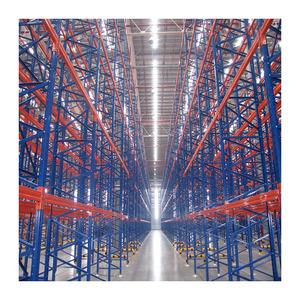
Mracking Heavy Duty Industrial Palletized Racking (1000-4000kg)
View Product Details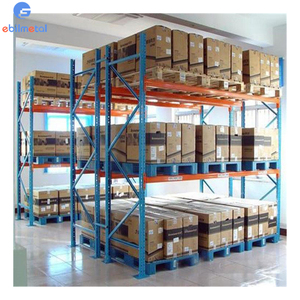
Heavy Duty Steel Warehouse Stacking Pallet Racking System Shelf
View Product Details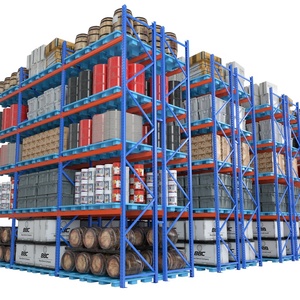
Pallet Multilevel Racking Heavy Duty Warehouse Storage System
View Product Details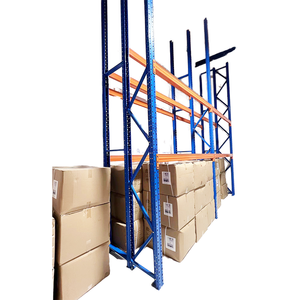
Heavy Duty Industrial Warehouse Adjustable Beam Pallet Rack
View Product Details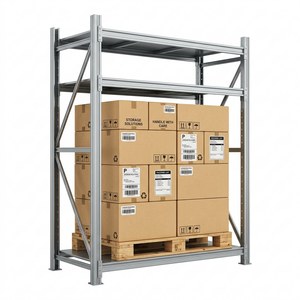
Customized YueYang Cold Rolled Powder Coated Pallet Racking
View Product Details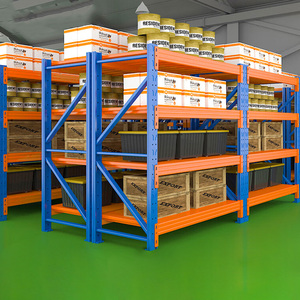
HY Heavy Duty Industrial Warehouse Pallet Storage Racking
View Product Details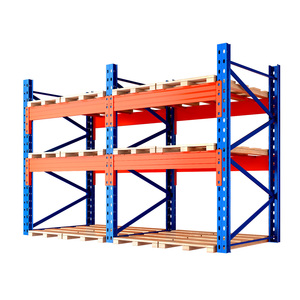
Industrial Heavy Duty Metal Rack Stacking Pallet System
View Product Details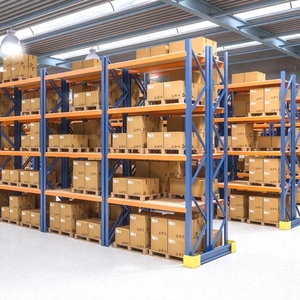
Heavy Duty Industrial Factory Stacking Steel Pallet Racking
View Product DetailsState of Industrial Storage: Selecting Top Trusted Pallet Racking Manufacturers
In modern material handling and intra-logistics operations, selecting a top trusted pallet racking manufacturer and direct factory partner represents a structural decision impacting operational throughput, facility safety, and long-term capital expenditure (CAPEX) efficiency. As global supply chains transition toward higher vertical clear heights, automated storage density, and strict safety compliance frameworks, industrial storage racking systems are no longer treated as passive steel shelving—they are fully engineered, mission-critical load-bearing structures.
This comprehensive industry whitepaper examines the technical criteria, manufacturing benchmarks, metallurgical advances, and safety standards necessary for enterprise procurement teams, warehouse logistics managers, and structural engineers to evaluate top-tier pallet racking factories. Drawing from global engineering standards—including the ANSI MH16.1 specifications established by the Rack Manufacturers Institute (RMI), FEM 10.2.02 standards, and INPRES-CIRSOC 103 seismic codes—this document outlines how advanced manufacturing capabilities directly correlate with structural reliability and risk mitigation.
Enterprise Manufacturing Benchmarks & Metallurgy
A true tier-1 pallet rack factory distinguishes itself through continuous technological investment in metallurgical selection, automated cold roll-forming, precision punching, robotic welding, and specialized surface treatment lines. Standard structural failures in warehouse environments rarely originate from generic overloading; instead, they stem from inconsistent yield strength in structural steel, micro-cracking along roll-formed profiles, or inadequate weld penetration at column-to-beam connectors.
High-Tensile Cold-Rolled Steel
Premier factories utilize premium Q235B and high-yield Q355B cold-rolled steel coils. Advanced roll-forming machines maintain sub-millimeter cross-sectional tolerances across upright profiles up to 15 meters in length without internal stress deformation.
Epoxy Electrostatic Powder Coating
Surface durability relies on automated multi-stage pre-treatment (degreasing, phosphating, and deionized rinsing) followed by thermosetting epoxy powder application (60–80 microns), delivering salt-spray resistance exceeding 500 hours (ISO 9227).
Automated Robotic Welding
Connector brackets and beam ends undergo continuous robotic MIG/MAG welding to eliminate human error. Every joint is engineered to withstand dynamic forklift shear forces and longitudinal braking torque.
Leading manufacturing brands like YueYang, Mracking, and Plata Metal Shelving S.A. integrate state-of-the-art automated manufacturing setups that allow vertical customization—adjusting column punch pitch (e.g., 50mm, 75mm, or 76.2mm custom pitch), beam connector hook configurations (3-hook vs. 4-hook safety locking claws), and custom baseplate thickness based on localized concrete floor slab capacity.
Engineering Analysis: Roll-Formed vs. Structural Steel Pallet Racking
Procurement directors must evaluate the mechanical trade-offs between cold-rolled steel racking and hot-rolled structural C-channel racking. While cold-rolled systems offer exceptional strength-to-weight ratios and economic versatility, heavy-duty industrial environments subject to intense forklift impact demand structural steel alternatives.
| Engineering Criteria | Roll-Formed Steel Racking | Structural C-Channel Racking | Hybrid/Custom Systems |
|---|---|---|---|
| Steel Fabrication Method | Cold-rolled gauge steel (1.5mm – 3.0mm) | Hot-rolled structural steel channels | Cold-rolled uprights with structural beams |
| Load Capacity Range | 1,000 kg – 3,000 kg per beam level | 2,000 kg – 5,000+ kg per beam level | 1,500 kg – 4,000 kg per beam level |
| Forklift Impact Resistance | Moderate (Requires column protectors) | Exceptional (High resistance to torsional abuse) | High (Reinforced lower leg design) |
| Assembly Mechanism | Teardrop / Boltless hook-in connector pins | Heavy-duty bolted structural connections | T-Bolt or custom dual locking mechanism |
| Deflection Limits | L/240 standard beam deflection limit | L/300 tight deflection engineering limit | L/240 – L/300 optimized load balance |
| Optimal Application Fit | FMCG, retail, e-commerce, 3PL logistics | Heavy manufacturing, freezers, outdoor yards | High-density drive-in, push-back, AS/RS setups |
Future Procurement Trends in Industrial Storage (2025–2030)
The global warehouse racking market is undergoing a structural transition driven by automated material handling systems, urban fulfillment land scarcity, and stringent environmental, social, and governance (ESG) mandates. Procurement strategies are rapidly shifting from purchasing off-the-shelf shelving toward co-engineering holistic logistics platforms with manufacturing plants.
- Integration with Automated Guided Vehicles (AGVs) & Autonomous Mobile Robots (AMRs): Traditional aisle widths of 3.2 to 3.8 meters are shrinking to Very Narrow Aisle (VNA) configurations of 1.6 to 1.8 meters, requiring rack factories to achieve millimetric floor-to-top straightness and deflection-free beam tolerances.
- Growth in AS/RS (Automated Storage & Retrieval Systems): Rack-supported buildings (where racking serves as the primary structural frame for walls and roof) are replacing standard civil construction due to tax efficiencies and accelerated construction timelines.
- Seismic Engineering Rigor (INPRES-CIRSOC / ANSI MH16.1): Regional distribution hubs built in active seismic zones (e.g., Cuyo in Argentina, the Pacific Rim, or Southern Europe) demand dynamic finite element analysis (FEA) modeling to verify upright stability under horizontal seismic accelerations.
- Sustainable Metallurgy & Decarbonization: Tier-1 racking manufacturers are adopting zero-VOC electrostatic powder coatings and sourcing green steel processed via electric arc furnaces (EAF) to lower scope 3 embedded carbon footprints for corporate clients.
Product Development Innovations: Smart Racking & Modular Protection
R&D departments within top trusted factories are prioritizing product innovations that extend structural service lifespans and integrate with digital Warehouse Management Systems (WMS). Key innovation areas include:
IoT Load & Strain Sensors
Embedded micro-strain gauges and optical deflection sensors located on critical beam spans alert facility managers in real time if load limits are exceeded or if abnormal frame tilt occurs.
Modular Upright Repair Systems
Instead of dismantling full bays when lower columns experience forklift impacts, engineered bolt-on repair kits allow certified technicians to replace damaged sections while keeping loaded bays structurally sound.
Self-Locking Beam Connectors
Automatic spring-loaded safety locks prevent accidental beam dislodgement caused by upward forklift driver error, meeting international OSHA and EN 15635 inspection mandates.
Factory Direct Advantages: Why Partnering with Original Manufacturers Matters
Procuring directly from verified manufacturing factories like YueYang and Mracking provides distinct advantages over third-party distributors or generic metal fabricators. Direct factory collaboration grants access to full custom engineering design suites, rigorous material traceability, and tailored production schedules.
1. Full Customization & Structural Flexibility
Industrial facilities are rarely identical. Floor slab specifications, ceiling clear heights under trusses, sprinkler placement, and forklift turning radiuses differ across every site. Direct manufacturer engagement enables full customization of frame depth (from 600mm for carton flow to 1500mm for specialized heavy pallets), beam profile dimensions (80mm to 160mm step or box beams), and bespoke powder coating color schemes to align with corporate branding.
2. Quality Control & Steel Traceability
Trusted factories operate under strict ISO 9001:2015 quality management protocols. Every batch of raw steel coil is accompanied by Mill Test Certificates (MTC) verifying yield strength, tensile strength, and chemical composition. From roll-forming to electrostatic powder baking, automated laser measuring tools ensure every component satisfies precise engineering drawings.
3. Total Cost of Ownership (TCO) Optimization
By eliminating middleman distributor markups, enterprise buyers secure factory-direct pricing while receiving certified structural engineering calculations. Factory engineers assist in optimizing layout density—balancing double-deep racking, drive-in systems, push-back carts, or pallet flow lanes to maximize storage capacity per square meter, drastically reducing long-term real estate costs.
Frequently Asked Procurement & Engineering Questions (FAQ)
Consult with Our Senior Structural Racking Engineers
Whether you are planning a greenfield automated distribution center, expanding an existing warehouse, or upgrading high-density storage capacity, our engineering team provides customized CAD layouts, structural load calculations, and factory-direct pricing.