Featured Heavy-Duty Racking Systems
Explore our enterprise-grade warehouse pallet racking inventory engineered for maximum structural integrity, density, and operational throughput.
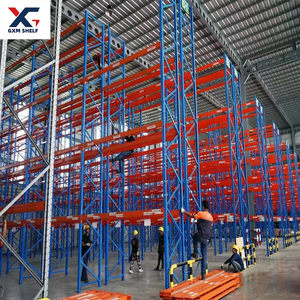
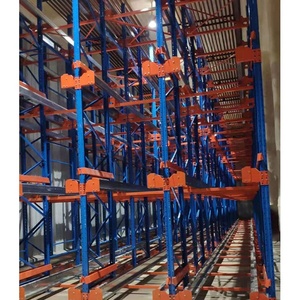
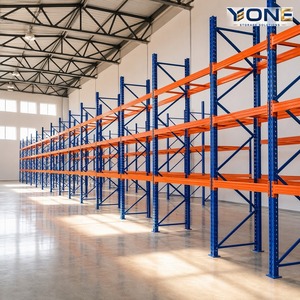
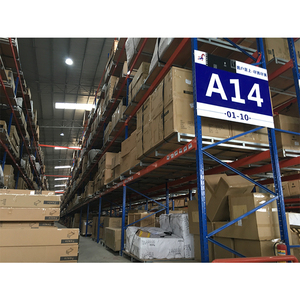
Engineering Excellence in Heavy-Duty Industrial Warehouse Racking
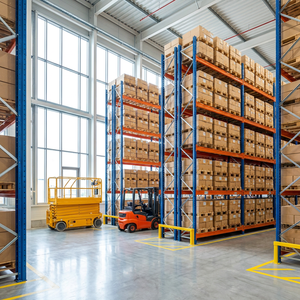
Modern supply chain hubs, third-party logistics (3PL) fulfillment centers, and industrial manufacturing plants demand storage systems designed to maximize cubic space utilization without compromising structural integrity or worker safety. As a global leading industrial warehouse racking supplier and wholesale manufacturer, our racking solutions are custom-engineered from high-tensile Q235B and Q355B cold-rolled structural steel, providing superior strength-to-weight ratios, uniform stress distribution, and resilient dynamic loading capabilities.
Every industrial warehouse space presents unique structural variables including concrete slab load-bearing thresholds, ceiling clear heights, seismic hazard indexing (such as INPRES-CIRSOC 103 standards), temperature parameters, and forklift turning radii. Selecting the appropriate structural rack geometry—whether selective pallet rack, automated radio shuttle, drive-in rack, or cantilever systems—requires granular finite element analysis (FEA) and dynamic stress modeling.
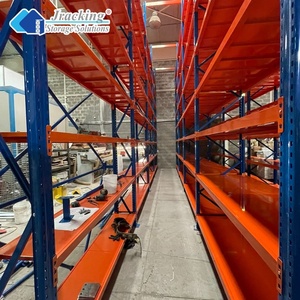
Information Gain Insight: Our cold-formed profile uprights feature continuous teardrop or omega-shaped perforations configured at 50mm to 75mm pitch increments. This design allows tool-less beam pitch adjustments while preserving structural rigidity under asymmetric pallet loading conditions.
Structural Steel Selection & Mechanical Properties Benchmark
The structural load capability of heavy-duty industrial shelving depends directly on the metallurgical specifications of the steel grade utilized. The table below illustrates the mechanical testing metrics and structural benchmarks governing our warehouse racking product lines:
| Steel Grade Standard | Yield Strength ($fy$) | Tensile Strength ($fu$) | Safety Factor Ratio | Recommended Industrial Application |
|---|---|---|---|---|
| Q235B Cold-Rolled Steel | $\ge 235\text{ MPa}$ | $370 - 500\text{ MPa}$ | 1.65 : 1 (ANSI MH16.1) | Standard Selective Pallet Rack, Multi-Tier Mezzanines, Medium-Duty Shelving |
| Q355B High-Tensile Steel | $\ge 355\text{ MPa}$ | $470 - 630\text{ MPa}$ | 1.65 : 1 (ANSI MH16.1) | Heavy-Duty Radio Shuttle Racking, Drive-In Racks, AS/RS High-Bay Structures |
| Hot-Rolled Structural Channels | $\ge 300\text{ MPa}$ | $450 - 610\text{ MPa}$ | 1.80 : 1 (High Impact) | Forklift Impact Protectors, Heavy Pipe Cantilever, Staging Dock Pallet Racks |
Why Enterprise Sourcing Managers Partner With Us
Selecting a wholesale warehouse racking partner requires evaluating more than just raw material pricing. It demands a manufacturer backed by certified engineering capabilities, robust quality assurance protocols, global export compliance, and responsive lifecycle support. Our enterprise infrastructure spans full OEM/ODM manufacturing, robotic welding centers, and automated electrostatic powder coating lines.
Custom CAD & FEA Engineering
Full static and seismic structural calculations provided for every project. CAD layout drawing approvals prior to mass production ensure zero site-fit errors.
Automated Surface Finishing
Pre-treated through a 6-stage phosphate wash followed by 60–80 micron electrostatic epoxy powder coating, offering superior anti-corrosion for cold chain and humid climates.
Global Compliance Standards
Engineered and manufactured strictly under ISO 9001:2015 quality management systems, complying with RMI (USA), FEM 10.2.02 (Europe), and AS4084 (Australia) safety codes.
Key Product Development Trends in Warehouse Racking Systems
Driven by rapid e-commerce expansion, rising urban land costs, and automated logistics technologies, the warehouse racking industry is undergoing a structural design revolution. Sourcing decision-makers must evaluate racking systems not merely as static storage frames, but as foundational building blocks for automated ecosystem integrations.
1. Automated Radio Shuttle & High-Density Pallet Storage Systems
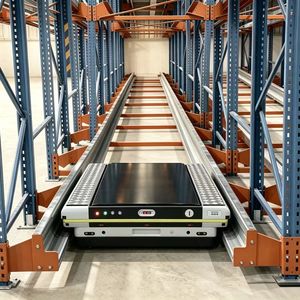
Traditional Drive-In racks offer density but present operational risks due to forklift collisions inside storage channels. Modern product development has shifted toward Automated Radio Shuttle Racking. Battery-powered shuttle carts travel on internal rails within storage channels, guided by RF or Wi-Fi signals from automated WMS/WCS systems. This technology delivers compact FIFO/LIFO storage while drastically reducing material handling damage and vehicle movement times.
2. Seismic-Resilient Profile Design & Structural Bracing
Recent updates to global building codes require enhanced dynamic seismic resistance for industrial storage installations. Advanced racking suppliers now engineer specialized oversized baseplates, heavy-duty floor anchor bolts, and x-bracing frame networks. Utilizing cold-formed steel frames with high moment of inertia profiles ensures structural stability during seismic horizontal ground accelerations without permanent frame buckling.
3. Modular Boltless Assembly & Adjustable Beam Connections
To reduce installation lead times and freight costs, product designs emphasize boltless beam-to-upright connector hooks equipped with safety locking pins. Dual or triple engagement claws lock tightly into column perforations, transferring vertical shear forces directly into the upright member while preventing accidental displacement during high-speed forklift pallet placement.
Future Procurement Trends in Industrial Racking Sourcing (2025–2030)
As global supply chains navigate supply chain shifts, sustainability mandates, and warehouse automation investments, procurement professionals are adapting their RFP specifications. Strategic sourcing models are evolving away from lowest-initial-cost purchases toward holistic Total Cost of Ownership (TCO) evaluations.
Interoperability with AGVs & AMRs
Future racking procurement prioritizes precise structural tolerances ($\pm 1.5\text{mm}$) required for autonomous mobile robots (AMRs) and automated guided vehicles (AGVs) to pick and drop pallets without human intervention.
Green Steel & ESG Compliance
Enterprise procurement teams increasingly favor racking wholesalers utilizing scrap-recycled arc furnace steel, low-VOC powder coatings, and eco-optimized manufacturing facilities aligned with global carbon neutrality benchmarks.
Lifecycle Maintenance & Modularity
Buyers seek modular rack components featuring standardized replacement parts, bolt-on column protectors, and retrofit rack repair kits to lower long-term facility maintenance costs.
Procurement & Engineering FAQ
Addressing core technical questions raised by warehouse managers, logistics engineers, and purchasing officers during project evaluation:
How do I calculate the correct beam load capacity for my pallets?
Beam capacities are calculated per pair based on uniformly distributed load (UDL). Total pallet weight (including product and wooden pallet) multiplied by the number of pallets per level (typically 2 or 3) equals the minimum required pair capacity. Always allow a 15–20% safety margin for dynamic impact during forklift placement.
What concrete slab specifications are required for heavy-duty racking?
Standard heavy-duty racking installations require a minimum reinforced concrete slab thickness of 150mm to 200mm with a compressive concrete strength of at least 20–25 MPa ($C20/25$). Heavy shuttle or high-bay AS/RS systems require detailed slab core-drilling tests prior to anchor selection.
What is the difference between selective racking and radio shuttle racking?
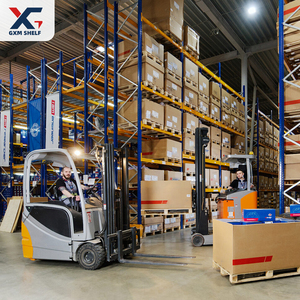
Selective racking offers 100% immediate direct pallet accessibility with lower initial capital cost, making it ideal for high SKU diversity. Radio shuttle racking provides up to 80% higher storage density by eliminating inner aisles, best suited for low SKU counts with high pallet volume per SKU.
How does your racking system resist corrosion in cold storage environments?
For sub-zero freezer and cold storage operations (down to -30°C), we recommend hot-dip galvanized steel finishes or specialized low-temperature epoxy powder coatings applied over pre-treated blast-cleaned steel to prevent rust, condensation flaking, and embrittlement.
Ready to Optimize Your Warehouse Storage Layout?
Consult with our structural engineering team today for custom CAD layouts, load capacity calculations, and factory-direct wholesale pricing tailored to your logistics facility.
Get a Quote