Executive Summary: The Evolution of Chinese Warehouse Storage Manufacturing
In the contemporary landscape of global supply chain management, intra-logistics optimization has transitioned from a routine operational task to a high-stakes strategic imperative. Warehouse managers, 3PL logistics architects, and industrial procurement directors face an unprecedented challenge: maximizing volumetric storage density while maintaining absolute structural integrity, operational safety, and rapid inventory throughput. As the primary epicenter of industrial steel processing and engineering manufacturing, China has established itself as the leading exporter of advanced warehouse racking solutions worldwide.
Modern Chinese racking manufacturers no longer compete solely on unit cost; today, competitive leadership is driven by metallurgical cold-forming precision, Automated Storage and Retrieval Systems (AS/RS) compatibility, dynamic Finite Element Analysis (FEA) modeling, and stringent compliance with international structural codes such as RMI/ANSI MH16.1, EN 15512:2020, and AS4084-2012. This industry whitepaper provides an exhaustive technical and strategic evaluation of top-tier industrial pallet racking systems exported from China, delivering actionable intelligence for procurement stakeholders seeking high-gain storage infrastructure.
Core Procurement Insight: Sourcing industrial racking from certified Chinese manufacturers yields up to 40% operational CAPEX optimization, provided structural engineering specs, steel coil origin, automated powder coating tolerances, and seismic anchoring designs are rigorously validated.
Top-Tier Industrial Storage Solutions
Engineered for High Load Capacities, Structural Resilience, and Modular Scalability
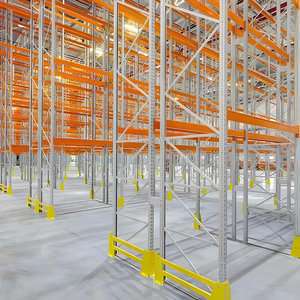
Heavy Duty Pallet Racking System Industrial Storage Shelving Rack
Engineered for heavy-unit palletized inventory, featuring 75mm beam pitch adjustments, interlocking safety pins, and cold-rolled upright frames.
Explore Technical Specs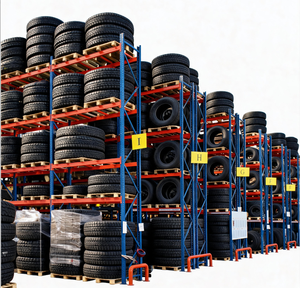
Custom Heavy Duty Industrial Pallet Racking Q235/Q355 Steel Beam
Customizable beam lengths and heavy-load capacities with anti-corrosive electrostatic powder coating for harsh industrial environments.
Explore Technical Specs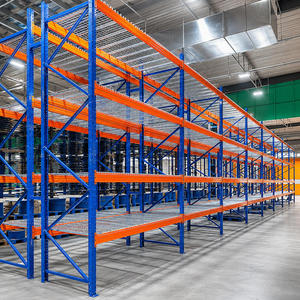
Selective Pallet Racking with 1.5mm Interlocking Box Beam
Specifically designed for bulk distribution hubs requiring 100% direct pallet accessibility and fast forklift handling cycles.
Explore Technical Specs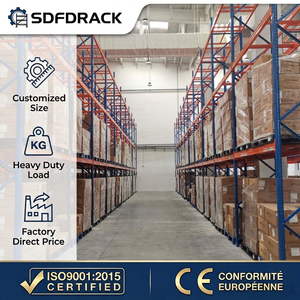
High Load 1000kg-5000kg Selective Steel Pallet Racking System
Heavy-duty structural integrity built to handle extreme point loads, integrated with bottom row column protectors and frame ties.
Explore Technical Specs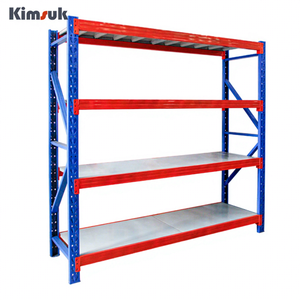
Heavy Duty Metal Warehouse Pallet Shelving Unit Storage System
Versatile modular shelving configuration suitable for automotive parts, heavy manufacturing spares, and retail fulfillment centers.
Explore Technical Specs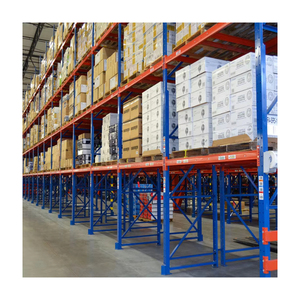
Wholesale Selective Steel Stacking & Pallet Racking Solution
High-volume export grade structural pallet rack system maximizing storage density for regional logistics hubs and fulfillment bays.
Explore Technical Specs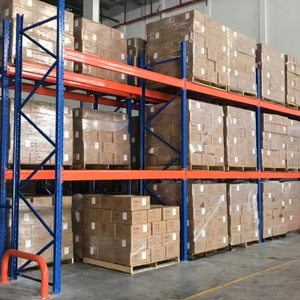
Q235B Steel Industrial Adjustable Warehouse Storage Racks
Certified high-yield Q235B steel profile construction offering high cost-performance ratio for commercial distribution centers.
Explore Technical Specs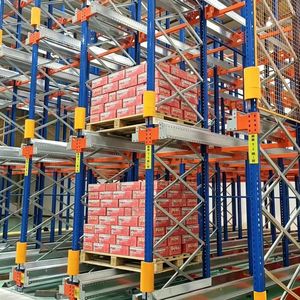
Automated Radio Shuttle High-Density Pallet Racking System
Semi-automated deep-lane storage system utilizing motorized radio shuttles to dramatically increase storage footprint utilization.
Explore Technical SpecsEngineering Differentiation & System Comparison Matrix
Evaluating Operational Parameters across Core Industrial Racking Architectures
| Storage System Type | Volumetric Density Yield | Direct Selectivity | Handling Speed & Throughput | Recommended Application |
|---|---|---|---|---|
| Selective Pallet Rack | 60% - 65% | 100% Direct Access | High (Standard Forklifts) | High-SKU mixed product distribution centers |
| Double-Deep Pallet Rack | 70% - 75% | 50% Immediate Access | Moderate (Pantascope Trucks) | Homogeneous batch manufacturing and storage |
| Drive-In / Drive-Thru | 80% - 85% | LIFO / FIFO (Block) | Lower (Truck enters bay) | Cold storage, food & beverage seasonal stock |
| Radio Shuttle System | 85% - 90% | Automated Lane Access | Very High (Robot Runner) | Deep-lane high-density automated facilities |
| Push-Back Cart System | 75% - 80% | LIFO per Lane (2-6 deep) | High (Gravity Fed) | Medium SKU count with high volume turnover |
| AS/RS Unit Load Crane | 95%+ | 100% Automated Access | Maximum (Continuous) | Fully automated mega distribution centers |
Future Procurement Trends: Sourcing Racking Solutions in 2025 and Beyond
The global warehousing landscape is undergoing a monumental shift driven by labor shortages, rising industrial real estate costs, and technological advancement. Global procurement teams sourcing from top Chinese manufacturers are prioritizing four strategic mega-trends:
1. Seamless Integration with AGVs & AS/RS Automation
Future-proof racking designs require tighter millimetric tolerances (+/- 1.0mm frame deviation) to interface flawlessly with automated guided vehicles (AGVs), autonomous mobile robots (AMRs), and stacker cranes without mechanical interference.
2. Low-Carbon Steel & Eco-Friendly Powder Coatings
Under strict Scope 3 ESG compliance frameworks, European and North American buyers are demanding decarbonized steel coils produced in zero-emission electric arc furnaces (EAF) coupled with VOC-free epoxy powder coatings.
3. IoT-Enabled Structural Health Monitoring
Leading Chinese exporters are co-developing smart upright protectors embedded with micro-strain wireless sensors. These IoT nodes monitor accidental forklift collisions in real time, alerting facility engineers before structural buckling occurs.
Structural Engineering & Manufacturing Innovation Trends
The manufacturing process for high-grade warehouse racking has moved beyond manual steel fabrication into fully automated, continuous roll-forming production lines. China's top tier suppliers leverage advanced metallurgy and robotic automation to deliver superior structural stability:
1. Cold-Formed High-Strength Micro-Alloy Steels (Q355B & Q420B): Modern upright profiles are roll-formed using cold-rolled micro-alloyed structural steel. Upgrading from standard Q235B to Q355B delivers a 35% higher yield strength (up to 355 MPa), allowing thinner profile walls without sacrificing axial compression capacity, effectively reducing overall shipping tonnage and environmental footprint.
2. 18-Stage Surface Pre-Treatment & Continuous Electrostatic Coating: Corrosion protection is vital for cold storage and humid coastal distribution hubs. Export-grade factories utilize automated pre-treatment baths (degreasing, phosphating, nano-zirconium passivation) followed by electrostatic powder deposition cured at 200°C, ensuring a scratch-resistant finish exceeding 500 hours of Salt Spray Testing (ASTM B117).
3. Advanced FEA Seismic Engineering: Seismic hazard mitigation is non-negotiable in regions like South America, Western USA, Japan, and Southeast Asia. Top exporters perform non-linear Finite Element Analysis (FEA) under dynamic seismic load combinations compliant with INPRES-CIRSOC 103, FEM 10.2.02, and ANSI MH16.1, validating frame sway displacement, base-plate shear, and anchor bolt pull-out resistance.
Why Partner with Premier Chinese Racking Manufacturers
End-to-End OEM/ODM Capabilities, Rigorous Quality Control, and Global Logistics Support
Full International Certification Compliance
Factories operating with ISO 9001, ISO 14001, OHSAS 18001, and CE certification, ensuring products pass third-party audits (SGS, TÜV Rheinland, Intertek) upon port entry.
Turnkey Engineering & CAD/BIM Layouts
In-house structural engineering departments providing detailed 2D CAD floor plans, 3D BIM models, load capacity calculation plaques, and structural stamping within 48 hours.
Optimized Export Packaging & Container Loading
Custom steel strapping, protective corner edge wrapping, and automated container stuff-density planning to prevent ocean transit damage and minimize freight costs.
Frequently Asked Questions (FAQ) for Global Buyers
Direct Engineering and Commercial Answers for Sourcing Managers
Q1: How do Chinese racking suppliers guarantee seismic compliance for overseas projects?
Leading Chinese exporters work closely with international engineering consultants to run site-specific seismic calculations based on local building codes (e.g., US IBC/RMI, European EN 15512, Latin American INPRES-CIRSOC). By modeling the ground acceleration zone, soil type, and concrete slab compression strength, suppliers supply enlarged baseplates, high-grade anchor expansion bolts, and specialized cross-diagonal frame bracing.
Q2: What steel grades are standard, and how can buyers verify metallurgical authenticity?
Standard structural cold-rolled steel used is Q235B (equivalent to ASTM A36) for general applications and Q355B (equivalent to ASTM A572 Grade 50) for heavy-load frames and tall uprights. Buyers can demand official Mill Test Certificates (MTC) matching the heat numbers of steel coils sourced from tier-1 steel mills (such as Baosteate, Shougang Group, or Ansteel) along with spectrographic chemical composition analysis.
Q3: How are load capacities calculated, and what safety factor is applied?
Racking load ratings adhere strictly to FEM 10.2.02 and RMI specifications. The structural safety factor typically ranges between 1.50 to 1.65 against steel yield strength. Upright frame capacity depends heavily on the maximum unbraced beam height (first level elevation), while beam load ratings are limited by allowable beam deflection thresholds, capped strictly at L/200 (Span Length divided by 200).
Q4: What is the typical lead time from design approval to container dispatch?
For standard selective pallet rack systems (under 50 container loads), standard manufacturing lead time is approximately 15 to 20 days post-drawing approval. For complex automated Radio Shuttle or custom-engineered AS/RS rack structures requiring specialized tooling and automated testing, lead times range between 30 to 45 days.
Q5: Can existing warehouse racking from other brands be mixed with newly imported Chinese components?
While teardrop profiles or specific universal pitch connections appear visually compatible, mixing components from different manufacturers is strongly discouraged by international safety guidelines (RMI/EN standards). Variations in steel thickness, connector hook geometry, and lock-pin alignment can invalidate manufacturer load guarantees and compromise structural integrity.
Accelerate Your Warehouse Performance Today
Request an engineered layout design, detailed structural calculation sheet, or direct factory quotation from China’s premier racking manufacturing specialists.
Contact Us