Engineered Industrial Storage Racking Catalog
Precision cold-formed structural steel racking systems engineered for high-density warehouse environments, seismic compliance, and automated material handling.
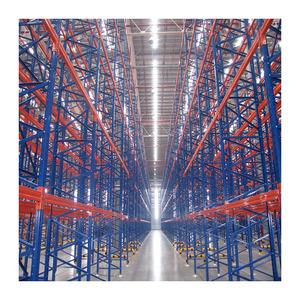
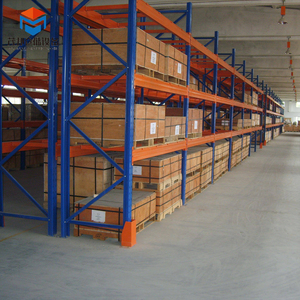
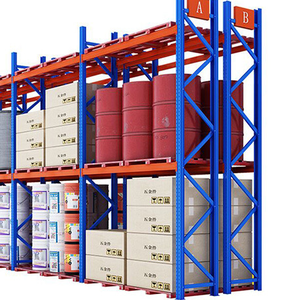
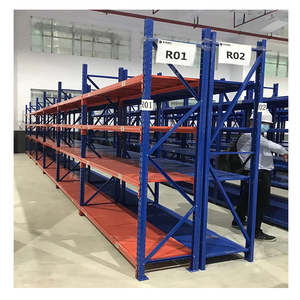
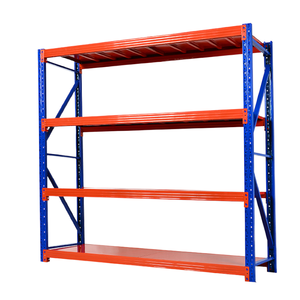
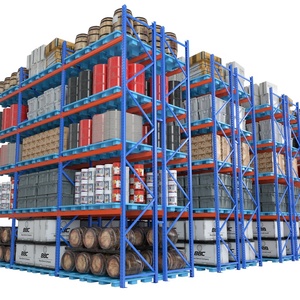
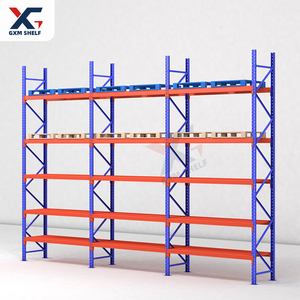
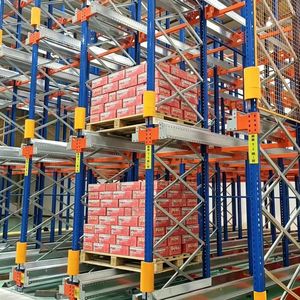
1. Strategic Overview: Navigating China’s Storage Racking Supply Base
The global material handling and warehouse storage market has undergone a fundamental structural shift. Modern supply chain engineering demands unprecedented structural integrity, automated compatibility, and rigorous safety compliance. As enterprises expand distribution networks to support omnichannel logistics, cold-chain infrastructure, and automated manufacturing, evaluating Top China Storage Racking Factories & Suppliers requires a rigorous methodology grounded in metallurgical analysis, manufacturing tolerances, and compliance with structural codes such as RMI ANSI MH16.1, FEM 10.2.02, and AS 4084-2012.
China produces over 60% of the world's industrial steel storage racking systems, leveraging fully integrated supply chains—from raw coil sourcing at premier steel mills like Baosteel and Shougang to advanced automated continuous roll-forming lines. However, the technical quality, structural engineering capabilities, and quality control protocols vary drastically across different manufacturing clusters, primarily situated in Jiangsu (Nanjing, Changzhou), Zhejiang, and Shandong provinces.
High-Yield Steel Sourcing
Direct integration with top-tier steel foundries guarantees fully certified, high-tensile hot-rolled steel coils with traceable mill test certificates (MTC).
Seismic & FEA Engineering
Structural modeling utilizing Finite Element Analysis (FEA) to verify performance under dynamic seismic loading (e.g., INPRES-CIRSOC 103, IBC 2021 criteria).
Robotic Precision Welding
Continuous automated robotic welding lines ensure zero weld defects, maximum joint fatigue strength, and smooth aesthetic finishes.
2. Future Sourcing Trends: Strategic Paradigm Shifts (2025–2030)
The modern logistics ecosystem is shifting rapidly from static storage to dynamic automated storage systems. Sourcing teams must align current capital expenditures with emerging technological transformations to prevent structural obsolescence.
A. Transition from Selective Racking to High-Density Automation
Industrial land scarcity and escalating labor costs globally are pushing warehouse footprints vertically. Forward-thinking enterprise operations are actively transitioning from conventional Selective Pallet Racking (which occupies up to 60% of floor space with aisles) toward Automated Radio Shuttle Racking, Push-Back Carts, and AS/RS (Automated Storage & Retrieval Systems). Shuttle racking systems utilize autonomous motorized carts to navigate deep channels, reducing forklift aisle requirements by over 40% while maximizing volumetric efficiency.
B. Cold-Chain & Sub-Zero Storage Metallurgy
With global cold-chain logistics expanding rapidly in food processing, meat export, and pharmaceuticals, storage racking must withstand extreme thermal stresses. In sub-zero ambient environments (down to -30°C), ordinary carbon steel undergoes embrittlement, significantly lowering impact resistance. Modern OEM Chinese manufacturers specialize in micro-alloyed, low-temperature resistant steel formulations paired with hot-dip galvanizing or high-durability epoxy powder coatings that prevent micro-cracking and structural failure.
C. Smart Rack Health Monitoring & IoT Sensors
Next-generation industrial racking incorporates embedded strain gauges, structural deflection sensors, and tilt indicators linked to warehouse management software (WMS). Real-time telemetry notifies warehouse supervisors of forklift impact damage, overload anomalies, or seismic displacement, enabling preventive maintenance before catastrophic structural collapse occurs.
Comprehensive Racking System Technical Benchmark Matrix
Comparative structural parameters for technical procurement and structural engineering decisions.
| Storage Racking System | Volumetric Density | Pallet Selectivity | Ideal Steel Grade | Primary Application Profile | Automation Compatibility |
|---|---|---|---|---|---|
| Selective Pallet Rack | Medium (40-50%) | 100% Direct Access | Q235B / Q355B Cold-Formed | High SKU counts, 3PL logistics, fast turnover | Standard Forklifts / AGVs |
| Radio Shuttle System | Ultra-High (80-85%) | LIFO / FIFO by Lane | Q355B Precision Structural | Cold storage, food & beverage, high-volume SKUs | Fully Autonomous Shuttle Carts |
| Drive-In / Drive-Thru | High (65-75%) | Low (LIFO / FIFO) | Q235B Heavy Structural | Bulk homogeneous stock, seasonal agro-products | Reach Trucks / Counterbalance |
| Push-Back Rack | High (60-70%) | Medium (Per Lane) | Q235B Nested Cart Assemblies | Medium SKU volume, cold storage, staging areas | Manual Forklift Loading |
| AS/RS High-Bay Racking | Maximum (85-90%+) | 100% Automated Access | Q355B High-Tolerance Structural | Fully automated mega-distribution centers | Stacker Cranes / Automated Grippers |
3. Material Engineering & Structural Manufacturing Excellence
Understanding the metallurgical and mechanical performance of storage rack components is essential when sourcing from overseas factories. The load-bearing capacity of an upright frame or beam depends on advanced roll-forming design, profile section modulus, and precise heat-treatment processes.
Cold-Formed vs. Hot-Rolled Structural Steel Profiles
Chinese manufacturers utilize two primary structural steel production methodologies:
- Cold-Formed Roll-Formed Profiles: Produced by passing continuous strip steel through a series of progressive rollers at room temperature. Cold-forming increases the yield strength of the steel through strain hardening. Upright columns feature complex multi-rib cross-sections (e.g., 11 to 13 bend folds) to increase column buckling resistance while minimizing dead weight.
- Hot-Rolled Structural Profiles (Structural Channels/I-Beams): Hot-rolled structural steel sections are utilized for ultra-heavy-duty applications, high-impact drive-in racking lower columns, and severe industrial environments. Structural steel offers superior resistance to forklift impact due to uniform flange thickness.
Surface Finishing & Pre-Treatment Protocols
Corrosion protection dictates the operational lifespan of industrial racking. Leading Chinese manufacturers operate fully automated, multi-stage pre-treatment coating lines consisting of:
- Automated Shot Blasting (ISO 8501-1 Sa 2.5): Removes all mill scale, rust, and surface contaminants, creating an optimal surface anchor profile.
- Phosphate/Zirconium Conversion Coating: Enhances paint adhesion and inhibits sub-film corrosion spread.
- Thermosetting Electrostatic Powder Coating: Applied at 60–80 micron thickness using premium pure epoxy or polyester-epoxy hybrid powders, cured at 180°C–200°C for exceptional impact and chemical resistance.
- Hot-Dip Galvanizing (HDG): For outdoor cantilever or harsh chemical/freezer applications, components are immersed in molten zinc at 450°C to achieve a coating thickness exceeding 65–85 microns, conforming to ISO 1461.
4. Enterprise Capabilities & Quality Control Frameworks
When establishing direct factory OEM/ODM partnerships in China, structural safety and supply chain traceability are paramount. Tier-1 manufacturing facilities implement fully integrated Quality Management Systems (QMS) backed by rigorous international accreditation.
Full Metallurgical Traceability
Every steel batch receives Mill Test Certificates verifying chemical composition (Carbon, Manganese, Silicon content) and physical properties (Yield strength, Tensile strength, Elongation percentage).
Advanced Finite Element Analysis
In-house structural design teams execute 3D FEA stress simulations under static, dynamic, wind, and dynamic seismic loadings prior to mass production tooling.
In-House Destructive Testing
Universal tensile testing machines and beam-connector stub shear testing rigs continuously validate ultimate load capacities and safety factor ratios (typically 1.65 to 1.92 depending on code requirements).
Frequently Asked Questions for B2B Procurement
Expert engineering answers to critical questions encountered during factory evaluation, quality audits, and structural specification.
How do top Chinese factories verify load capacity ratings under RMI and FEM standards?
Tier-1 Chinese storage rack manufacturers employ structural engineers certified in international design standards including USA RMI (ANSI MH16.1), European FEM 10.2.02, and Australian AS 4084-2012. Load capacities are verified using a combination of Finite Element Analysis (FEA) computer simulations and empirical testing—specifically compression tests on upright frames, stub-column testing, and four-point bending tests on pallet beams to establish actual yield limits and safety factors.
What steel grades are recommended for heavy-duty industrial pallet racking?
The standard benchmark steel grade for light-to-medium structural components is Q235B (equivalent to ASTM A36 or SS400), offering a minimum yield strength of 235 MPa. For heavy-duty upright frames, high-bay racking, and long-span beams, higher strength Q355B (equivalent to ASTM A572 Grade 50) with a yield strength of 355 MPa is specified. Q355B allows for reduced wall thickness without compromising load-bearing capacity, reducing shipping weight and material cost.
How are seismic acceleration risks factored into upright frame calculations?
Seismic design evaluates the geographic site location, soil conditions (Site Class A through F), and local seismic acceleration coefficients (such as USGS or INPRES-CIRSOC 103). Structural engineers calculate base shear forces, horizontal seismic drift, and frame ductility. To accommodate seismic energy dissipation, upright base plates are widened, anchor bolt embedment depths are increased, heavy-duty diagonal bracing is added, and structural steel thickness is increased.
What is the expected service life and corrosion resistance of powder-coated steel racks?
In standard climate-controlled warehouse environments, a high-quality electrostatic epoxy-polyester powder coating (60–80 micron thickness) provides an operational service life exceeding 15 to 20 years. For humid, coastal, cold-storage, or chemical environments, hot-dip galvanizing (HDG) or specialized outdoor-grade polyester powders are specified to prevent oxidation and premature coating failure.
What are the key quality audit checkpoints during Chinese factory inspections?
A comprehensive factory audit evaluates four critical dimensions: 1) Raw Material Control (verification of Mill Test Certificates and steel thickness tolerances using digital micrometers); 2) Roll-Forming & Welding Precision (pitch hole spacing accuracy, beam connector lock engagement, robotic weld seam continuity); 3) Coating Quality (cross-hatch adhesion testing, impact resistance testing, and coating thickness measurement); and 4) Packaging & Container Loading Protection (use of steel strapping, protective edge corner boards, and timber skids to prevent transit damage).
Can Chinese storage racking systems integrate with automated AS/RS and AGV forklifts?
Yes. Leading Chinese manufacturers regularly supply rack structures for fully automated AS/RS and AGV/AMR environments. Automated integration demands ultra-tight manufacturing tolerances—often ±1.0mm over 10-meter vertical spans—and rigid floor deflection limits to ensure laser-guided automated stacker cranes and AMR sensors operate without optical interference or mechanical jams.
How are damaged pallet rack columns safely repaired without full system dismantling?
Column damage caused by forklift impacts can often be repaired using engineered rack repair kits. These kits consist of a heavy-duty structural steel lower upright column section (often featuring integral impact deflectors) welded or bolted to the existing undamaged frame above the impact zone. Engineered repair kits restore full structural capacity in significantly less time and with minimal operational downtime compared to unloading and replacing complete upright bays.
What container packaging methods prevent damage during international ocean freight?
Overseas shipment subjects heavy steel components to significant dynamic forces and humidity. Premier exporters bundle upright frames and beams into heavy timber cradles or steel skids strapped with high-tensile PET strapping. Critical beam connector hooks and frame footplates are wrapped with heavy corrugated corner protectors and plastic stretch film, while desiccant packs are placed inside shipping containers to prevent condensation rust during ocean transit.
What documentation is required for custom compliance and structural safety approval?
To pass municipal building audits and safety compliance reviews, suppliers must provide comprehensive documentation including structural engineering calculation packages signed by a licensed Professional Engineer (PE), detailed CAD layout drawings, Bill of Materials (BOM), Mill Test Certificates (MTC) for steel raw materials, ISO 9001 quality certificates, and official Load Capacity Plaques to be affixed at the end of each racking row.
How do lead times and production cycles compare for standard vs custom OEM storage racks?
Standard selective pallet rack components (utilizing existing tooling dies and standard powder coating colors like orange and blue) typically feature production lead times of 15 to 25 days for multi-container orders. Fully customized OEM projects requiring custom roll-forming dies, specialized automated shuttle rails, or hot-dip galvanizing require approximately 30 to 45 days for tool engineering, prototyping, structural testing, and full mass production run completion.