Industrial Warehouse Storage Engineering Portfolio
Explore top-tier heavy-duty pallet racking systems, precision-engineered cantilever configurations, and specialized logistics storage hardware manufactured to structural compliance standards.
Executive Sourcing Analysis: Sourcing High-Capacity Warehouse Racking from China
In modern industrial logistics, selecting qualified rack storage warehouse manufacturers & factories in China represents a critical decision for supply chain executives, 3PL logistics architects, and procurement managers. China's rack manufacturing infrastructure has evolved from basic cold-roll forming operations into state-of-the-art robotic production hubs capable of delivering structural steel and roll-formed racking systems compliant with international structural codes including ANSI MH16.1 (RMI), FEM 10.2.02, and EN 15512.
When sourcing heavy-duty rack storage, procurement officers must look beyond initial material unit costs and evaluate structural metallurgy, mechanical yield thresholds, electrostatic powder coating longevity, seismic design capabilities, and complete automated storage and retrieval system (AS/RS) structural integration. Leading Chinese industrial rack manufacturers employ continuous cold-roll forming lines, high-precision automated CNC punching, and robotic MIG welding cells to guarantee consistent tolerances across upright frames, load-bearing box beams, and interlocking connectors.
Structural Steel Selection & Metallurgical Integrity
The foundational reliability of any industrial warehouse racking installation relies on steel chemistry and yield strength consistency. Top-tier Chinese manufacturers predominantly utilize premium high-strength cold-rolled structural steel coils, such as Q235B (yield strength ≥ 235 MPa) and Q355B (yield strength ≥ 355 MPa, equivalent to European S355 and ASTM A572 Grade 50). Using high-yield steel profiles allows engineers to optimize frame geometry, reduce dead load while increasing live load payload capacity, and maintain safety margins up to 1.65 to 1.95 structural safety factors.
- Roll-Formed Upright Columns: Manufactured via multi-stage cold-roll forming machines ensuring precise profile geometry, continuous teardrop or omega slot punching, and zero internal stress fracturing.
- Structural Steel Beams: Fabricated from structural C-channels or interlocking welded box beams with heavy-duty 3-prong or 4-prong connectors featuring safety lock pins to prevent accidental dislodgement during forklift operations.
- Automated Pretreatment & Powder Coating: Utilizing a 16-stage chemical washing, phosphating, and electrostatic epoxy-polyester thermosetting powder coating process yielding coating thickness between 80 to 120 microns for enhanced salt-spray corrosion resistance.
Core Engineering Capabilities & Structural Manufacturing Specs
Discover how advanced structural engineering, robotic manufacturing processes, and rigorous Quality Assurance frameworks provide long-term structural integrity for demanding warehouse environments.
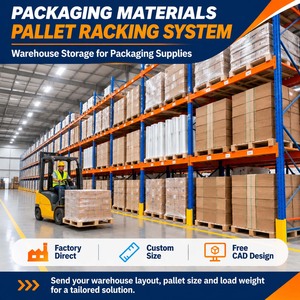
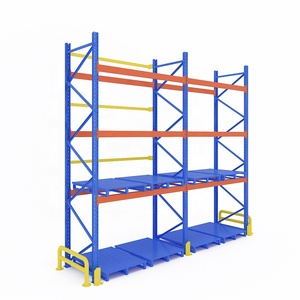
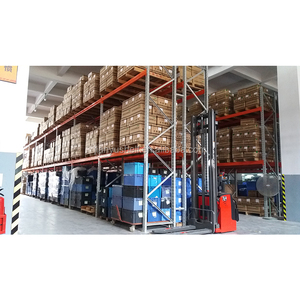
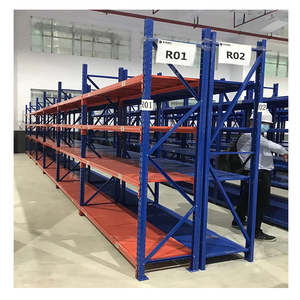
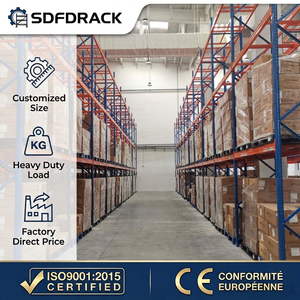
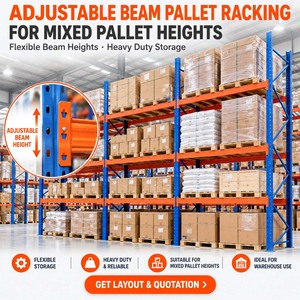
High-Density Selective Racking
Engineered for 100% immediate pallet accessibility. Adjustable beam levels accommodate mixed pallet heights (ARLOG, Euro, ISO), featuring structural back stoppers and frame protectors to minimize forklift impact risks.
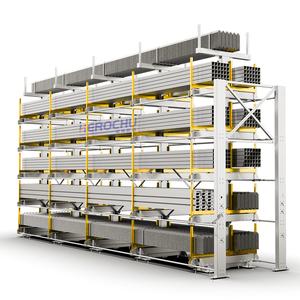
Cantilever Heavy-Duty Systems
Designed for long, bulky, or irregular materials like steel pipes, tubular profiles, timber, and aluminum extrusions. Available in freestanding double-sided and single-sided configurations with load capacities exceeding 3,000kg per arm level.
AS/RS & High-Bay Racking
Precision-engineered racking structures built to millimeter-level tolerances required by automated crane shuttles and AGVs. Supports vertical heights over 30 meters with specialized tie-back roof structures and guide rail integration.
Engineering Benchmark: High-Density Warehouse Storage Systems Comparison
Selecting the right racking structure requires balancing volumetric density against SKU accessibility and throughput velocity. Below is a structural engineering comparison matrix developed by senior logistics architects.
| Racking System Type | Volumetric Efficiency | Pallet Selectivity | Inventory Management Flow | Typical Application Sector |
|---|---|---|---|---|
| Selective Pallet Racks | Medium (40% - 50%) | 100% Direct Access | FIFO / LIFO Flexible | 3PL Logistics, Retail Distribution, FMCG |
| Drive-In / Drive-Thru Racks | Very High (75% - 85%) | Low (Per Lane) | LIFO (Drive-In) / FIFO (Drive-Thru) | Cold Storage, Agricultural Harvest, Batch Goods |
| Push Back Cart Racks | High (65% - 75%) | Medium (2-6 Deep) | LIFO (Last-In, First-Out) | Beverage Processing, Food Cold-Chain, Manufacturing |
| Gravity Pallet Flow Racks | High (70% - 80%) | Medium (Per Dynamic Lane) | Strict FIFO (First-In, First-Out) | Pharmaceuticals, Perishable Foods, Dairy |
| Heavy-Duty Cantilever Racks | Medium (Open Space) | 100% Direct Access | Flexible Loading | Steel Pipe Yards, Lumber, Plastics, Metal Tubing |
| Automated AS/RS Structural High-Bay | Maximum (85% - 95%) | 100% Automated Access | Software Managed (WMS Automated) | Smart Warehouses, Automotive, E-Commerce Hubs |
Future Procurement & Technological Trends in Industrial Rack Manufacturing
1. Integration of Dynamic Seismic Engineering (FEA Analysis)
Global climate variability and regional structural safety mandates have shifted rack engineering toward advanced Finite Element Analysis (FEA). Tier-1 Chinese manufacturers utilize ANSYS and SAP2000 structural software to simulate dynamic ground acceleration under seismic forces (e.g., INPRES-CIRSOC 103, IBC 2024, EU Eurocode 3). Custom baseplates, heavy-duty floor anchors (M12/M16 expansion or chemical anchors), and localized diagonal brace patterns ensure upright frames withstand lateral sway and shear stresses during earthquake events.
2. Transition to Modular & Automated-Ready Storage Infrastructure
Modern distribution centers are rapidly transitioning from purely manual forklift operations to hybrid and fully automated environments. Future-proof rack procurement emphasizes dynamic beam adjustability, pre-punched mounting holes for sensor arrays and conveyor supports, and integration of guide channels for autonomous mobile robots (AMRs). Chinese factories now pre-engineer rack structures with standardized tolerances for crane integration, optical reflector plates, and cable trays.
3. Sustainable Green Metallurgy & Low-VOC Finishes
Global carbon accounting mandates require rack manufacturers to document their supply chain footprint. Premier Chinese factories are adopting zero-discharge chemical pretreatment systems, closed-loop water filtration, and eco-friendly powder coatings free of volatile organic compounds (VOCs) and heavy metals. Additionally, standard Q355B structural steel utilized in heavy-duty rack fabrication is 100% recyclable at the facility end-of-life cycle.
4. Telemetry-Enabled Smart Racking & Protection Hardening
The integration of IoT structural telemetry sensors on racking uprights is transforming warehouse asset maintenance. Sensor nodes detect subtle forklift impact forces, permanent column deflections, and load balance anomalies, alerting operations management prior to catastrophic frame failure. Complemented by heavy-duty floor-anchored steel column guards, wrap-around plastic protectors, and tubular aisle end barriers, smart racking minimizes structural maintenance costs.
Why Partnering with a Certified Chinese OEM/ODM Rack Manufacturer Gives You a Competitive Edge
Working directly with an established Chinese industrial rack factory grants global buyers distinct operational advantages across cost efficiency, engineering customization, and scalability:
- Fully Custom CAD/BIM Layout Design: In-house structural engineering teams create detailed 2D floorplan layouts, 3D BIM models, and load-capacity structural calculations tailored specifically to your building footprint, roof clearance, and slab load rating.
- Strict Material Quality Verification: Mill Test Certificates (MTC) according to EN 10204 3.1 are provided for every steel batch. Raw coil tension, yield, and chemical composition are verified prior to roll-forming.
- Scalable Production Throughput: Multi-line automated production facilities ensure timely delivery for large-scale logistics park installations exceeding 10,000+ pallet positions.
- Comprehensive Export Packaging: Uprights and beams are bundled with steel strapping, heavy protective foam wraps, and corner guards to prevent maritime transit abrasion and corrosion during long-distance shipping.
Frequently Asked Sourcing & Engineering Questions (FAQ)
Clear answers to crucial structural, regulatory, and logistics questions encountered by B2B buyers when procuring warehouse rack storage from China.
What structural codes do your China-manufactured rack systems comply with?
Our engineered racking systems are designed and manufactured in full alignment with major international structural standards, including American RMI (ANSI MH16.1), European FEM 10.2.02 / EN 15512, and Australian AS 4084 standards. Mill test certificates and structural load calculations are provided for engineering verification.
How do I determine the appropriate steel grade (Q235B vs. Q355B) for my project?
Q235B steel is ideal for standard light-to-medium-duty storage applications and lower frame heights. Q355B high-tensile steel provides higher yield strength (≥355 MPa), making it the preferred material for heavy-duty selective racking, high-bay AS/RS structures, seismic-zone installations, and high-load cantilever arms where frame weight optimization is crucial.
Can customized rack designs accommodate specific regional pallet dimensions?
Yes. Beam spans and frame depths are fully customized to support all regional pallet configurations, including standard GMA / ISO pallets (48" x 40"), Euro pallets (1200mm x 800mm), ARLOG pallets (1000mm x 1200mm), and heavy industrial skid sizes.
What floor slab specifications are required for heavy-duty rack anchoring?
Heavy-duty industrial rack installations generally require a reinforced concrete slab thickness of at least 150mm to 250mm, with a minimum concrete compressive strength grade of C20/25 or C30/37. Baseplate design and expansion anchor embedment depths are calculated according to your slab thickness and structural load profile.
What corrosion prevention options are available for cold-room or outdoor applications?
For cold-storage environments (down to -30°C) or high-humidity facilities, we recommend heavy-duty electrostatic thermosetting powder coating or pre-galvanized steel profiles. For outdoor storage yards, hot-dip galvanizing (HDG) per ISO 1461 provides deep metallurgical zinc layer protection against harsh weather exposure.
What details are needed to request a complete warehouse layout proposal?
To prepare an accurate engineering drawing and quotation, please supply: (1) Warehouse building floorplan DWG/PDF showing column grids and clear height; (2) Pallet dimensions including load weight and max height; (3) Forklift model, turning radius, and lift reach; and (4) Operating environmental conditions (ambient, cold room, dynamic seismic zone).