Featured Heavy-Duty Warehouse Storage & Racking Systems
Precision-engineered high-density storage solutions manufactured with high-tensile Q235B/Q355B cold-rolled steel, designed for maximum warehouse cube utilization.
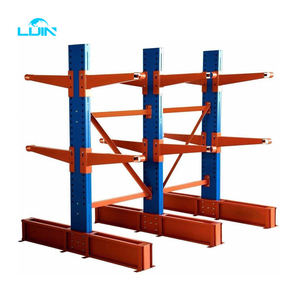
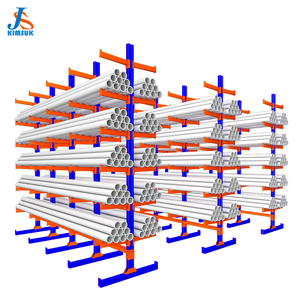
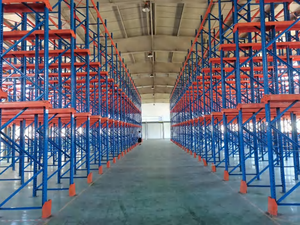
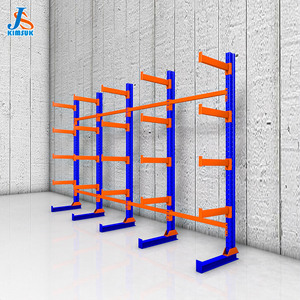
Engineering Push Back Racking Systems: Mechanics, Physics & Structural Dynamics
An in-depth analysis of dynamic cart-on-rail storage technology, load vector management, and seismic safety compliance for global wholesale buyers.
The Mechanics of Nesting Cart Systems
As a leading China Rack Push Back Exporter and Wholesaler, our structural engineering focuses on eliminating the operational bottlenecks inherent in traditional drive-in racking. Push back racking operates via a series of nested, low-profile carts that slide along inclined structural steel rails mounted inside heavy-duty pallet racking frames.
When the first pallet is placed on the top cart by a standard forklift, it occupies position one. When the second pallet is inserted, the forklift operator gently pushes the first pallet backward, exposing the second cart beneath it. This process repeats up to 6 pallets deep. Upon retrieval, gravity gently propels the remaining pallets forward to the aisle pick face at a controlled pitch gradient (typically 2.5% to 3.5%).
- LIFO (Last-In, First-Out) Dynamics: Ideal for high-density, multi-lane storage of medium-turnover SKUs.
- Zero-Driver-Entry Safety: Forklifts remain in the aisle at all times, reducing frame impact risks by over 80% compared to Drive-In racks.
- Independent Lane Operation: Each level operates independently, allowing distinct SKU storage per beam elevation.
Engineering Precision Parameters
Key steel structural metrics engineered into our manufacturing process:
Steel Grade: Structural Steel ASTM A1011 SS Grade 55 or Q355B Hot-Rolled Cold-Formed Channel
Upright Frame Profiles: 80mm to 120mm face widths with 1.8mm–3.0mm structural wall thicknesses
Cart Bearing Spec: Sealed precision steel bearings with high-viscosity synthetic grease rated from -30°C to +50°C
Coating Thickness: 80–120 microns electrostatic thermosetting epoxy-polyester powder coat
Why Global Procurement Managers Choose Our OEM/ODM Racking Manufacturing
Delivering verifiable structural stability, seismic design integration, and direct factory wholesale pricing across international logistics hubs.
ANSI MH16.1 & RMI Standard Compliance
Our engineered push back systems undergo Finite Element Analysis (FEA) testing to meet or exceed Rack Manufacturers Institute (RMI) standards, ANSI MH16.1, and European FEM 10.2.02 codes. All structural calculations factor in localized seismic zone requirements (INPRES-CIRSOC 103 standard compliant).
Automated Production & Coating Lines
Equipped with fully automated CNC roll-forming lines, robotic welding stations (MIG/TIG), and continuous multi-stage pre-treatment powder coating tunnels. We guarantee chemical rust protection, high impact resistance, and flawless paint adhesion for decades of operation.
Custom Geometry & B2B OEM Flexibility
We supply fully customized cart nesting profiles, frame depths, and beam span lengths engineered specifically for non-standard pallet sizes including Euro pallets (800x1200mm), Industrial ARLOG (1000x1200mm), and North American GMA (40x48 inch) pallets.
Push Back Racking vs. Alternative High-Density Systems
Compare mechanical efficiency, throughput speeds, floor-space utilization, and overall capital expenditure (ROI) across primary warehouse racking topologies.
| Storage Topology | Storage Density | Selectivity | Forklift Entry | Pallet Flow Principle | Throughput Speed | Relative ROI |
|---|---|---|---|---|---|---|
| Push Back Racking | Very High (75-85%) | Medium (Per Lane) | Aisle Only (No Entry) | LIFO (Last-In, First-Out) | Fast (< 2 mins / pallet) | High (18-24 Months) |
| Selective Pallet Rack | Low (40-50%) | 100% Immediate | Aisle Only | FIFO / LIFO Flexible | Very Fast | Standard Baseline |
| Drive-In Racking | High (70-80%) | Very Low (Per Bay) | Requires Bay Entry | LIFO Strict | Slow (High Impact Risk) | Moderate |
| Gravity Pallet Flow | Maximum (85-90%) | Medium (Per Lane) | Separate In/Out Aisle | FIFO (First-In, First-Out) | Fast | High Capital Cost |
| Radio Shuttle System | Maximum (85-95%) | Medium (Automated) | Aisle Only (Robotic) | FIFO & LIFO Dual Mode | Automated Speed | Long Term (36+ Months) |
Future Procurement & Development Trends in Dynamic Racking
Key structural and economic shifts shaping global material handling procurement through 2026 and beyond.
1. Cold Chain Storage Expansion & Low-Temp Metallurgy
Global demand for pharmaceutical and frozen food storage is driving procurement toward specialized low-temperature push back rack systems. Cold storage facilities (-25°C to -30°C) incur extreme energy costs, making volumetric density critical. Wholesale buyers are increasingly specifying micro-alloyed structural steel grades that resist cold-temperature embrittlement, combined with synthetic low-viscosity bearing lubes that prevent cart lockup in deep freeze environments.
2. Hybrid Automation Integration (AMR & AGV Co-Existence)
Modern distribution centers are transitioning from pure manual forklift handling to hybrid workflows. Next-generation push back systems are being engineered with target sensors, laser reflector brackets, and magnetic guide tracks integrated into picking faces. This allows Automated Guided Vehicles (AGVs) and Autonomous Mobile Robots (AMRs) with specialized push-plate attachments to interface seamlessly with push back carts, driving down labor overhead.
3. Modular Sustainability & Carbon-Traceable Manufacturing
International enterprise buyers in Europe and North America now require full Supply Chain Carbon Traceability. China exporters leading the industry are adopting green steel production practices, utilizing electric arc furnace (EAF) recycled steel, and implementing eco-friendly zero-VOC powder coating processes. Modular design standards allow rack systems to be disassembled, reconfigured, and expanded without structural cutting or field welding.
4. Smart Structural Deflection Monitoring (IoT Sensors)
Safety compliance regulations are encouraging the adoption of embedded strain gauge sensors and impact detectors inside heavy-duty push back frames. Real-time telemetry notifies facility managers of accidental forklift mast impacts, beam overload deflections, or cart derailments immediately, preventing catastrophic rack collapses and streamlining preventative maintenance programs.
Push Back Racking Procurement & Engineering FAQ
Expert answers to critical engineering, layout design, installation, and shipping questions for global B2B buyers.
How does a push back rack system differ from a traditional drive-in rack system?
Push back racking utilizes nested telescoping carts resting on inclined rails, allowing forklifts to stay exclusively in the main aisle while loading and unloading pallets up to 6 deep. Drive-in racking requires forklift operators to drive physically inside the steel racking structure to place pallets on support rails. Push back systems offer vastly superior handling speeds (up to 3x faster), significantly reduce forklift structural collision damage, and allow different SKUs to be stored on every beam level, whereas drive-in racking typically requires an entire bay dedicated to a single SKU.
What forklift mast tilt and clearance requirements are needed for push back systems?
Because push back rails are installed at an incline (typically 2.5° to 3.5° gradient), forklifts must have sufficient mast tilt capability (generally 3° to 5° backward tilt) to match the angle of the cart when loading and retrieving pallets. Standard counterbalance, reach trucks, and deep-reach forklifts can operate push back racks easily. Lift heights must account for the height of the nested carts, which add approximately 150mm to 200mm of vertical stack height per level compared to standard selective beam elevations.
Can damaged push back upright frames or carts be repaired without dismantling entire bays?
Yes. As an OEM manufacturer, we engineer modular frame legs and heavy-duty bolted upright protectors. If a bottom column section sustains damage from a forklift impact, engineered rack repair kits (heavy-duty structural steel boots) can be bolted or welded into place while holding the rack with hydraulic jacking equipment, eliminating the need to unload adjacent bays or tear down the entire rack assembly. Carts and bearings are also modular and easily replaced by sliding replacement units onto the rail track.
What quality control standards and certifications apply to exported Chinese push back racking?
Our manufacturing facility operates under ISO 9001:2015 quality management systems. All structural racking exported to North America, South America, Australia, and Europe complies with RMI (Rack Manufacturers Institute) ANSI MH16.1 specifications, FEM 10.2.02 European code standards, and AS4084-2012 Australian steel storage racking standards. Mill test certificates (MTC) detailing steel yield strengths (Q235B/Q355B) and chemical compositions are provided with every export shipment.
What information is required to generate a custom warehouse layout and wholesale price quotation?
To provide an accurate engineering proposal and CAD layout, our engineering team requires: (1) Warehouse CAD drawings or floor plan measurements detailing column spacing and clear height under roof trusses; (2) Pallet dimensions (Length x Width x Height including load); (3) Maximum weight per loaded pallet; (4) Forklift model, maximum lift height, and turning radius specs; (5) Environmental conditions (e.g., ambient warehouse vs. cold storage freezer); and (6) Local seismic design requirements if applicable.
How are heavy push back rack components packaged and secured for ocean freight transit?
All upright frames, beams, rails, and push back cart assemblies are bundled using heavy-duty steel strapping, corner protectors, and moisture-proof plastic shrink wrap. Carts and precision bearing components are crated in custom fumigated wooden boxes or metal pallets to prevent transit abrasion and ocean freight corrosion. Package dimensions are optimized for maximum cube utilization inside 40ft High Cube (40HC) ocean containers.
Ready to Optimize Your Warehouse Storage Density?
Contact our Senior Logistics Engineering Team today for CAD layout design, structural load calculations, and direct factory pricing on custom Push Back Rack Systems.