Featured Industrial Pallet Racking Systems
Direct OEM engineered heavy-duty storage configurations certified for high-bay warehousing, cold chain storage, and high-density distribution hubs.
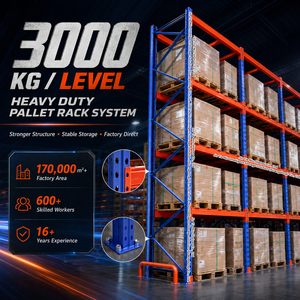
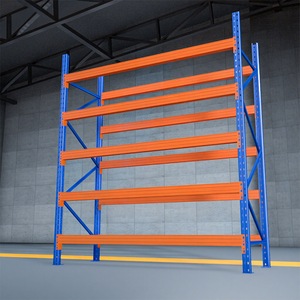
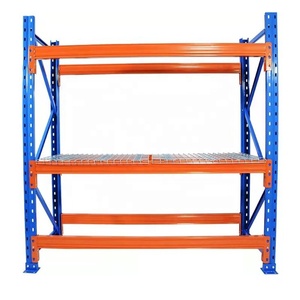
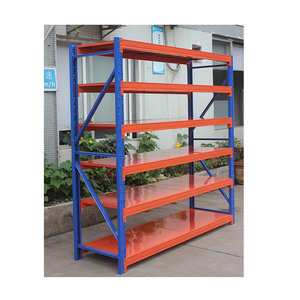
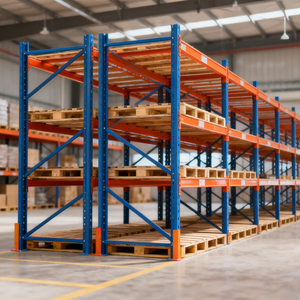
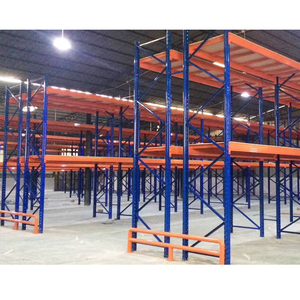
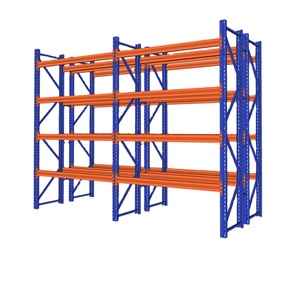
Executive Summary: The Strategic Value of Engineered Storage Systems
In modern industrial logistics, warehouse floor space represents one of the highest fixed operating expenses for enterprise supply chains. With global real estate prices escalating and e-commerce requiring faster order fulfillment, logistics directors can no longer view warehouse pallet storage racks merely as static steel shelves. Today, steel racking infrastructure serves as the dynamic backbone of automated distribution centers, cold chain networks, third-party logistics (3PL) hubs, and heavy manufacturing inventory plants.
Choosing the right warehouse pallet storage racks manufacturer or wholesaler requires navigating complex structural engineering metrics, seismic loading compliance standards (such as RMI / ANSI MH16.1 and FEM 10.2.02), material yield strengths (Q235B vs. Q355 structural steel), and long-term surface protection technologies. A failure in structural integrity or incorrect layout planning leads to catastrophic floor collapses, inventory destruction, severe liability, and costly operational downtime.
Comprehensive Analysis of Top Pallet Storage System Configurations
Industrial storage requirements vary fundamentally based on Stock Keeping Unit (SKU) density, FIFO (First-In, First-Out) versus LIFO (Last-In, First-Out) inventory flow, pallet dimensions (such as standard ARLOG 1000x1200mm or Euro 800x1200mm), and forklift vertical reach. Below is a detailed technical examination of the core systems provided by leading global manufacturers.
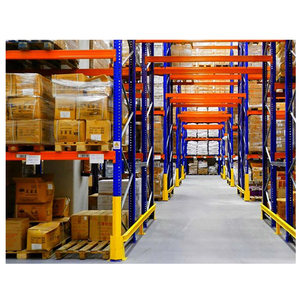
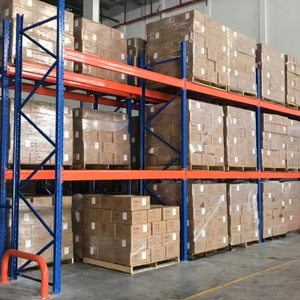
1. Selective Pallet Racking (Roll-Formed & Structural)
Selective racking remains the standard across global warehouses, offering 100% immediate selectivity to every individual pallet position. Utilizing vertical teardrop or slotted upright frames paired with step or box beams, selective systems allow quick adjustment of beam heights at 50mm, 75mm, or 76.2mm (3-inch) pitch increments. Available in cold-rolled Q235B steel for cost-effective operations or hot-rolled structural C-channel steel for high-impact industrial settings.
2. Drive-In & Drive-Thru Racking Systems
Designed for operations with high-density, low-SKU inventory profiles, Drive-In racking maximizes vertical and cubic space utilization by eliminating conventional forklift aisles. Forklifts enter the racking lanes directly to deposit or retrieve pallets resting on continuous side rails. Operating on a LIFO sequence (or FIFO for Drive-Thru configurations), this system increases warehouse capacity by up to 75% compared to standard selective layouts.
3. Dynamic Pallet Flow & Push-Back Systems
Dynamic storage relies on gravity-assisted mechanisms to move pallet loads within racking lanes. Pallet Flow Racks feature full-width or twin-track roller lanes angled at a 3–4% slope, equipped with speed controllers and safety brakes for seamless FIFO stock rotation—essential for perishable food, pharmaceuticals, and fast-moving consumer goods (FMCG). Push-Back Racks use nested sliding carts moving along inclined rails, allowing 2-to-6 pallet deep storage per lane under a LIFO protocol.
4. High-Bay Automated Storage & Retrieval Systems (AS/RS) Racking
As logistics operations transition toward automated intelligent warehousing, AS/RS rack structures serve as the structural framework supporting automated crane rails, shuttle tracks, and guide systems. Engineered to tolerances within millimeters over heights exceeding 30 meters, AS/RS racking utilizes high-tensile steel profiles and precision-machined connection hardware to ensure smooth automated stacker crane operation.
Structural Engineering & Performance Comparison Matrix
Procurement officers and warehouse engineers must weigh multiple trade-offs between storage density, equipment accessibility, structural resilience, and capital investment. The following matrix offers a direct technical evaluation of primary pallet rack structural configurations.
| Racking Architecture | Storage Density | Pallet Accessibility | Steel Profile Material | Load Capacity / Tier | Operational Flow |
|---|---|---|---|---|---|
| Selective Pallet Rack | Standard (40-50%) | 100% Direct Access | Q235B / Q355 Cold-Rolled | 1,000 kg – 4,000 kg | FIFO / LIFO (Flexible) |
| Drive-In Racking | Ultra-High (75-85%) | Low (Lane-Restricted) | Heavy C-Channel / Q235B | 1,000 kg – 2,000 kg | LIFO (Last-In, First-Out) |
| Push-Back Cart System | High (65-75%) | Moderate (Per Lane) | Structural Steel / Roll-Formed | 1,500 kg – 3,000 kg | LIFO (2-6 Deep) |
| Gravity Pallet Flow | High (70-80%) | Moderate (Entry/Exit) | Q355 Steel + Alloy Rollers | 1,000 kg – 2,500 kg | Strict FIFO Flow |
| AS/RS High-Bay Rack | Maximum (85-95%) | 100% Automated Access | High-Tensile Precision Alloy | 500 kg – 3,500 kg | Automated FIFO/LIFO |
| Heavy Cantilever Rack | Specialized (Long Loads) | 100% Open Face | Hot-Rolled Structural H-Beam | 1,000 kg – 6,000 kg+ | Free Access |
Future Procurement & Technology Trends (2025–2030)
The global industrial warehousing sector is undergoing a structural shift driven by supply chain digitalization, labor shortages, and stringent environmental policies. Enterprise B2B purchasers must align their capital expenditure (CAPEX) with the following key technological developments:
1. Integration with Autonomous Mobile Robots (AMRs) and Automated Guided Vehicles (AGVs)
Traditional pallet racking is being retrofitted to accommodate floor-level AMR drive-under clearances, magnetic track embedded baseplates, and optical reflectors for AGV positioning systems. Modern racking manufacturers are shifting beam connector tolerances to zero-play designs, preventing rack sway that can disrupt laser guidance sensors during high-reach pallet placement.
2. Advanced Anti-Corrosion Coating Technologies for Harsh Environments
Cold storage facilities (-30°C) and coastal/chemical warehousing present aggressive corrosion challenges. Leading OEM wholesalers are upgrading from standard single-layer wet painting to electrostatic thermosetting epoxy-polyester powder coating with pre-treatment phosphating processes (8 to 10 automated wash cycles). For outdoor cantilever and aggressive chemical environments, Hot-Dip Galvanizing (HDG) compliant with ISO 1461 guarantees over 30 years of maintenance-free operation.
3. Seismic Resilience Engineering under INPRES-CIRSOC 103 and IBC 2024
Seismic risk mitigation is now mandatory in global warehouse design. High-hazard seismic zones require expanded baseplate footprints, oversized chemical wedge anchors, heavy-duty diagonal frame bracing, and custom moment-resisting beam connections. Advanced Finite Element Analysis (FEA) software allows engineers to simulate multi-axis ground acceleration forces on fully loaded racks before raw steel coil slitting begins.
Manufacturing Excellence & Enterprise Wholesale Advantages
As a vertically integrated OEM manufacturer and global wholesaler of warehouse pallet storage racks, our production infrastructure delivers precision engineering, scalable manufacturing capacity, and certified quality management systems.
Certified Raw Steel Sourcing
We source prime structural coil steel (Q235B, Q355B) directly from tier-1 state-owned steel mills, providing full heat-number mill test certificates (MTC) ensuring verified yield strength and chemical composition.
Automated Cold-Roll Profiling
Our facility operates continuous cold-roll forming lines with integrated online punching units, achieving dimensional tolerances within ±0.5mm across frame lengths up to 15 meters.
Robotic Welding & Inspection
All beam connector plates and structural column bases are welded by 6-axis robotic arm stations, eliminating human error and ensuring deep penetration welds verified via ultrasonic non-destructive testing (NDT).
Essential B2B Procurement FAQ (Frequently Asked Questions)
Below are technical answers to common questions raised by logistics directors, structural engineering consultants, and global wholesale buyers.
How is the maximum load capacity calculated for heavy-duty pallet racks?
Pallet rack load ratings are calculated based on structural engineering standards defined by RMI (Rack Manufacturers Institute) and FEM 10.2.02. The load capacity of a beam pair is determined by maximum permissible deflection (typically span length divided by 240, or L/240) under uniformly distributed load (UDL).
Upright frame capacities depend on unsupported clear height between beam levels, frame depth, diagonal bracing geometry, and floor anchor mechanical shear values. Every project engineered by our team includes certified structural calculation sheets verifying these margins under static and dynamic loading.
What concrete slab specifications are required for anchoring heavy pallet racks?
Standard heavy-duty pallet racking requires an industrial reinforced concrete slab with a minimum thickness of 150mm to 200mm (6 to 8 inches) and a compressive strength of at least 25 to 30 MPa (C25/C30 grade concrete).
For high-bay systems, seismic zones, or upright loads exceeding 10,000 kg per frame, concrete thickness, expansion anchor bolt embedment depth (e.g., M12x100 to M16x140 wedge anchors), and subgrade soil compaction values must be evaluated to prevent anchor pull-out or slab punching shear failure.
Should I choose Cold-Rolled Steel or Hot-Rolled Structural Steel racking?
Cold-rolled steel racking is formed from thin-gauge steel sheet coiled at room temperature. It offers exceptional strength-to-weight ratios, lower purchase costs, and easy height adjustability—making it ideal for standard commercial warehouses and 3PL fulfillment hubs.
Hot-rolled structural steel racking utilizes heavy structural C-channel and structural I-beam sections. It provides superior impact resistance against heavy forklift collisions, making it the preferred choice for freezer warehouses, heavy machinery manufacturing facilities, and outdoor lumber/cantilever yards.
Can damaged pallet rack uprights be repaired safely instead of replaced?
Yes. If forklift impact causes localized denting or twisting on the bottom portion of an upright column, an engineered rack repair kit can be installed. This involves cutting out the damaged column section while supporting loaded bays with hydraulic jacks, and bolting/welding an industrial heavy-gauge structural repair post anchored directly to the concrete floor.
However, if column deflection exceeds RMI safety tolerances or diagonal bracing is torn, complete upright frame replacement is mandatory to restore structural certification.
What lead times and OEM customization options are available for global wholesale orders?
Standard production lead time for full container load (FCL) orders is 15 to 25 business days from technical drawing approval. OEM options include custom beam lengths, non-standard frame depths (ranging from 400mm up to 1500mm), specialized teardrop/hook connector patterns, branded color electrostatic powder coatings, and integrated wire mesh decking or steel shelf panels.
Optimize Your Warehouse Footprint with Certified Racking Systems
Contact our structural engineering team today to receive a complete layout design, structural load calculations, and competitive OEM factory pricing.
Get Catalog