Industrial Pallet Storage Portfolio
Engineered roll-formed and structural steel storage solutions manufactured to international RMI, FEM, and ANSI MH16.1 compliance standards.

Adjustable Steel Pallet Racking System for Heavy Pallet Storage
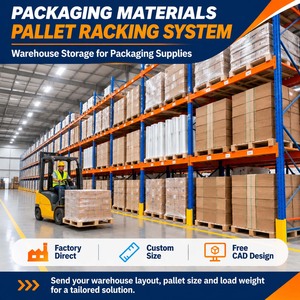
Warehouse Pallet Racking System for Packaging Materials Storage
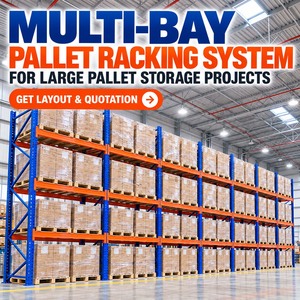
Multi-Bay Pallet Racking System for Large Pallet Storage Projects
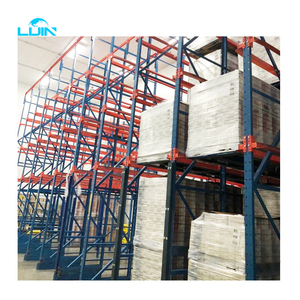
Drive-In Metal Shelves Steel Layer Heavy Duty Warehouse Rack
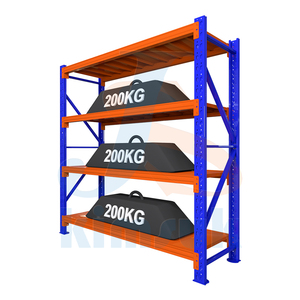
Boltless Adjustable Industrial Heavy Duty Racking System Metal Rack
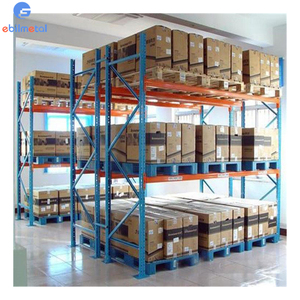
Heavy Duty Steel Warehouse Stacking Pallet Racking System Industrial Shelf
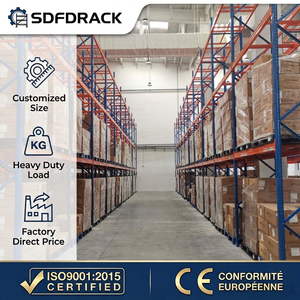
Customized High Load 1000kg-5000kg Selective Steel Pallet Racking
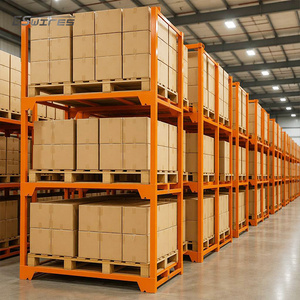
Heavy Duty Nestainer Metal Portable Steel Racks Pallet Stacking Frames
1. Technical Whitepaper: The Architectural Physics of Modern Pallet Storage
Modern material handling and distribution facilities demand far more than static steel shelves. In an era dictated by high-velocity e-commerce throughput, volatile supply chains, and shrinking industrial real estate footprint, selecting the correct structural pallet racking architecture represents a critical operational pivot. As a premier global pallet storage system manufacturer and exporter, our engineering methodologies focus on maximizing cubic space utilization (cube density) while mitigating structural fatigue, seismic risk, and fork-truck impact dynamics.
Pallet racking design operates at the intersection of structural mechanics, metallurgy, and operational logistics. Upright frames must withstand combined axial compressive loads and bending moments induced by structural sway, eccentric loading, and floor slab variations. Beam connections—whether cold-rolled teardrop hooks, structural bolted flanges, or heavy-duty clip-in connectors—must maintain rigid moment connection factors to prevent linear sway under maximum load capacity.
Engineering Core Concept: Information Gain on Structural Deflection ($L/180$)
Standard structural guidelines mandate that under maximum allowable uniformly distributed load (UDL), horizontal beam deflection must not exceed $L/180$, where $L$ is the clear beam length. For automated ASRS integration, premium manufacturers tighten this threshold to $L/240$ or $L/300$ to ensure automatic guided vehicle (AGV) sensor precision and prevent mechanical jam-ups.
Structural Steel Selection: Cold-Formed vs. Hot-Rolled Structural Channels
When engineering high-bay pallet racking systems, material selection dictates both capital expenditure (CAPEX) and longevity under heavy forklift traffic:
- Cold-Formed Roll-Formed Steel (Q235B / Q355B Grade): Manufactured via high-speed continuous roll-forming lines. Cold-formed steel offers exceptional strength-to-weight ratios, dimensional consistency, and cost efficiency. It features teardrop or punch-hole patterns allowing 50mm or 75mm beam adjustability. Best suited for high-density consumer goods, packaging materials, and general 3PL operations.
- Hot-Rolled Structural Channel Steel (C-Channel Structural): Fabricated from heavy-gauge structural channels with bolted beam-to-column connections. Structural rack provides vastly superior resistance to fork-truck impact damage, making it the industry standard for freezer applications, heavy manufacturing, outdoor yards, and high-impact cross-dock facilities.
Top 10 Pallet Storage Systems Evaluation
A comparative engineering matrix mapping system density, SKU selectivity, rotation logic, and mechanical handling requirements.
| System Type | Storage Density | SKU Selectivity | Inventory Logic | Forklift / AGV Requirement | Optimal Application |
|---|---|---|---|---|---|
| 1. Selective Pallet Rack | Standard (40-50%) | 100% Direct Access | FIFO / LIFO | Standard Counterbalance / Reach | High-SKU 3PL, FMCG, Packaging |
| 2. Double-Deep Racking | High (60-65%) | 50% Immediate Access | FILO / LIFO | Pantara / Deep-Reach Truck | Homogeneous dry goods, cold storage |
| 3. Drive-In / Drive-Thru | Very High (75-85%) | Low (Per Lane) | LIFO (Drive-In) / FIFO (Thru) | Standard Reach (Narrow Chassis) | Seasonal bulk goods, agricultural, beverage |
| 4. Push-Back Cart Systems | High (65-75%) | Medium (Per Lane/Level) | LIFO | Standard Counterbalance / Reach | Cold storage, medium-rotation SKUs |
| 5. Gravity Pallet Flow Rack | Maximum (80-90%) | Medium (Per Lane) | Strict FIFO | Standard Load / Unload at Opposing Ends | Perishables, pharmaceuticals, high-throughput |
| 6. Radio Shuttle Racking | Ultra-High (85-95%) | Low to Medium | Programmable FIFO / LIFO | Semi-Automated Shuttle + Standard Truck | Raw materials, high-density distribution |
| 7. Very Narrow Aisle (VNA) | High (70-80%) | 100% Direct Access | FIFO / LIFO | VNA Turret Truck / Wire-Guided | E-commerce fulfillment, high-value parts |
| 8. Heavy-Duty Cantilever Rack | Custom Density | 100% Linear Access | Any | Side Loaders / Heavy Counterbalance | Lumber, steel pipe, extruded profiles |
| 9. Multi-Tier Rack Mezzanine | Vertical Maximum | High Piece Pick | Customized FIFO | Conveyors, Vertical Lifts, Order Pickers | E-commerce piece picking, garment, spare parts |
| 10. Nestainer & Stacking Frames | Flexible / Portable | Medium Block Access | LIFO Dynamic Stack | Standard Counterbalance | Seasonal overflow, dynamic floor loading |
2. Enterprise Manufacturing Competencies & Export Quality Assurance
As an international OEM/ODM manufacturer and exporter of warehouse structural systems, our production facilities utilize state-of-the-art steel processing equipment to ensure strict batch-to-batch structural integrity. From primary steel coil slitting to automated cold roll-forming, robotic welding, and continuous electrostatic powder coating, every stage undergoes stringent Quality Assurance (QA) protocols.
Automated Roll-Forming Precision
Multi-stage cold rolling mills produce upright profiles with microscopic dimensional tolerances, ensuring perfect beam locking clip engagement and structural alignment.
Electrostatic Powder Coating Line
Pre-treated through a multi-stage phosphate washing process, our thermosetting epoxy-polyester coatings provide superior impact resistance and corrosion protection in humid or refrigerated environments.
Finite Element Analysis (FEA)
Every custom engineering proposal undergoes computer-simulated FEA stress mapping to verify buckling load capacities, seismic moment frames, and deflection tolerances prior to fabrication.
Global Seismic Engineering: Compliance Beyond Borders
Racking structures installed in seismically active regions—such as the Pacific Ring of Fire, South American Andean zones (e.g., INPRES-CIRSOC standards), or North American IBC/RMI regions—require specialized structural bracing engineering. Seismic design accounts for horizontal ground acceleration forces ($S_s$ and $S_1$), structural ductilities, and anchor bolt pull-out forces. Our engineering department provides certified calculation packages including heavy-duty oversized baseplates, chemical anchor studs, and horizontal/vertical structural truss bracing.
3. Procurement Strategy & Future Trends in Industrial Storage (2025–2035)
Strategic warehouse procurement directors are shifting focus from lowest initial cost per pallet position toward total cost of ownership (TCO) and multi-decade scalability. Key industry developments driving global procurement decisions include:
A. Integration with Autonomous Mobile Robots (AMRs) and Automated Guided Vehicles (AGVs)
Traditional forklift-operated racks are increasingly giving way to hybrid shuttle-and-AGV networks. Pallet racking frames must now incorporate sensor reflector brackets, bottom-level guide rails, and ultra-flat floor tolerance baseplates to facilitate millimeter-accurate robotic positioning.
B. Dark Warehouse Cold Chain Optimization
Energy costs represent up to 60% of cold storage operational budgets. High-density semi-automated Radio Shuttle and gravity flow systems maximize storage cube density inside refrigerated chambers, reducing energy consumption per pallet position by minimizing cooled air space volume.
C. Structural Health Monitoring (IoT & Digital Twins)
Next-generation racking installations incorporate IoT strain-gauge sensors and impact detectors on critical upright columns. Real-time telemetry alerts facility managers to fork-truck collisions, structural overload events, or foundation settling before catastrophic frame failure can occur.
D. Sustainable Steel & Carbon-Neutral Supply Chains
As global ESG regulations tighten, enterprise buyers require manufacturers to utilize recycled steel feedstocks (EAF scrap-based steel) and non-toxic, volatile organic compound (VOC)-free thermosetting coatings. Our export packing processes utilize recyclable steel banding and optimized container stuffing layouts to reduce global transport emissions.
Need Custom Structural Racking Calculations or Layout Engineering?
Consult with our senior structural engineers to receive a turnkey CAD floorplan proposal, FEA load analysis, and competitive factory-direct export quotation.
4. Procurement & Structural Engineering FAQ
Addressing core technical questions from plant managers, structural engineers, and global procurement officers.
What floor slab specifications (PSI/MPa) are required for heavy-duty selective racking?
Industrial pallet racking typically requires a non-reinforced or reinforced concrete slab with a minimum compressive strength of 3,000 PSI to 4,000 PSI (20 to 28 MPa) and a minimum slab depth of 150mm to 200mm. For high-bay VNA racks exceeding 10 meters in height, slab flatness and levelness (FF/FL numbers per ACI 117) must be strictly surveyed to prevent turret truck lean and anchor pull-out stresses.
How do you calculate safe working loads for racking beams?
Safe working loads are calculated assuming a Uniformly Distributed Load (UDL) across a pair of beams. The beam profile (step height, thickness, and hook connector design) is tested according to ANSI MH16.1 or EN 15512 safety factors. A minimum safety factor of 1.65 to 1.92 relative to the yield point of steel is applied to prevent permanent deformation.
Can roll-formed and structural steel components be mixed in a single system?
Yes. A highly cost-effective hybrid configuration uses heavy-duty hot-rolled structural steel C-channel profiles for the bottom 1.5 to 2 meters of upright frames (where forklift impact is highest) and transitions to precision roll-formed steel profiles for higher beam levels where weight efficiency is paramount.
What are the standard international pallet dimensions supported?
Our racking systems are custom-engineered to accommodate all major global pallet standards: GMA / US Pallets (40 x 48 inches / 1016 x 1219 mm), Euro Pallets (800 x 1200 mm - EUR 1), Industrial Euro Pallets (1000 x 1200 mm - EUR 2 / ARLOG standard), and Australian Standards Pallets (1165 x 1165 mm).
What surface treatment is best for sub-zero freezer applications?
Hot-dip galvanizing (HDG) or specialized cold-zinc high-epoxy powder coatings are recommended for deep-freeze environments (-25°C to -30°C). HDG provides a metallurgical zinc-iron alloy barrier that prevents flaking, rust creep, and structural embrittlement caused by humidity condensation during defrost cycles.
What structural inspection cycles are required for international safety compliance?
Under OSHA, HSE, and European Standard EN 15635 guidelines, racking structures must undergo visual inspections weekly or monthly by internal safety personnel, and a formal annual structural audit by a certified third-party racking engineer. Damaged uprights exceeding 3mm out-of-plumb over a 1-meter section require immediate engineered repair or component replacement.
Ready to Engineer Your Next Warehouse Expansion?
Contact our engineering team today for factory-direct container shipments, custom OEM designs, and technical consultation.
Get a Quote