Heavy-Duty OEM/ODM Racking Engineering & Global Export Logistics
As a tier-1 contract manufacturer and global exporter of industrial storage rack systems, Plata Metal Shelving S.A. delivers high-gain structural solutions engineered to standard and custom specifications. Our automated cold-roll forming, robotic MAG welding, and rigorous FEA structural validation meet strict international standards including RMI (ANSI MH16.1), FEM 10.2.02, and localized seismic codes such as INPRES-CIRSOC 103.
Featured OEM/ODM Industrial Storage Systems
Explore our structural and roll-formed selective, cantilever, and high-density racking configurations tailored for enterprise distribution hubs, cold storage, and heavy material yards.
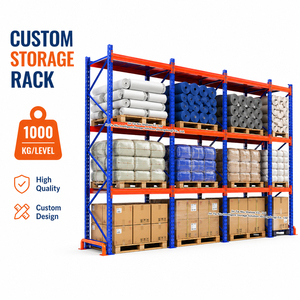
1000KG Warehouse Heavy Duty Pallet Rack Adjustable Storage Racking System Factory Direct
High-load beam profiles with 75mm beam pitch adjustment, engineered for high-density warehouse storage and 100% pallet accessibility.
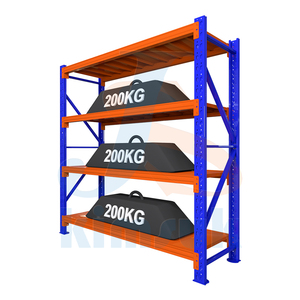
Boltless Adjustable Industrial Garage Heavy Duty Racking System Warehouse Metal Rack Storage Racks Shelving Units Steel Shelf
Tool-free interlocking assembly with cold-rolled steel decking panels designed for rapid maintenance deployment and hand-load picking.
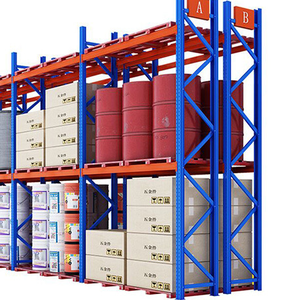
Metal Pallet Racking Warehouse Storage Pallet Racking System Heavy Duty Shelves Rack Unit for Goods Storage
Heavy-grade teardrop and structural frame profiles providing rigidity and impact defense for FMCG distribution hubs.
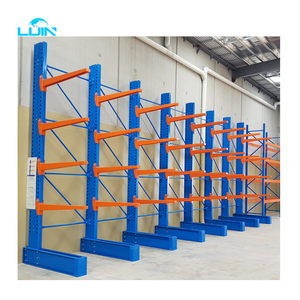
Factory Price Cantilever Rack Heavy Duty Industrial Cantilever Racking Steel Storage
Unobstructed front design specifically engineered for long stock, lumber, steel pipes, and extruded aluminum bundles.
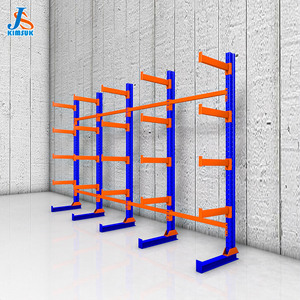
Electric Telescopic Cantilever Rack Heavy Duty Industrial Warehouse Racks Steel Rack Warehouse
Motorized extending cantilever arms for overhead crane access, maximizing floor space utilization by eliminating forklift aisles.
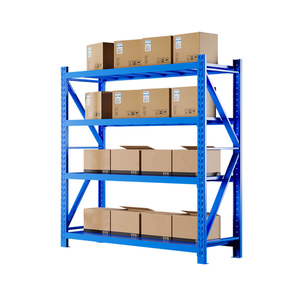
Industrial Warehouse Storage 5-Layer Pallet Racking System with Tire Rack Slotted Angle Rack Stacking Racks & Shelves
Multi-layer modular configuration integrated with slotted angles and tire rack accessories for automotive and spare parts centers.
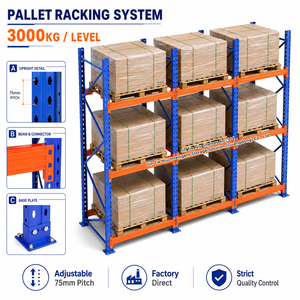
3 Pallet Levels Heavy Duty Steel Warehouse Rack Selective Pallet Racking System 3000KG
Ultra-heavy duty 3000KG capacity per level engineered with safety locking pins and heavy column base plates for bulk cargo.
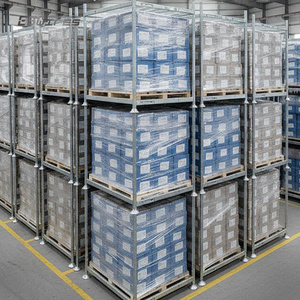
Sturdy Structure Mild Steel Q235 Heavy Duty Steel Detachable Type Stacking Post Pallet Rack
Portable modular stacking frame system providing high flexibility for temporary storage and efficient empty container returns.
Industrial Racking Development & Technological Trends
Modern supply chains require structural storage systems that go beyond basic space optimization. High-density warehousing is driven by structural robotics integration, metallurgical advancements, seismic engineering, and automated surface treatment science.
AS/RS & AMR Integration Compatibility
The global shift toward Automated Storage and Retrieval Systems (AS/RS) and Autonomous Mobile Robots (AMRs) demands precise manufacturing tolerances. OEM/ODM custom racking must maintain strict beam deflection limits (L/180 down to L/300) to allow stacker cranes and top-running shuttles to operate smoothly. Modern frame engineering uses precision-punched teardrop and structural C-channel posts to ensure flawless alignment across 30+ meter vertical installations.
Advanced Anti-Corrosion Chemistry
Storage systems deployed in harsh environments—such as sub-zero cold storage facilities (−30°C) or humid port logistics hubs—require advanced surface chemistry. Modern factory-direct export racking utilizes automated multi-stage iron phosphate pre-treatment followed by electrostatically applied thermosetting epoxy-polyester powder coatings (60–80 µm depth). For extreme marine and chemical exposure, hot-dip galvanizing conforming to ASTM A123 ensures decades of maintenance-free service.
Finite Element Analysis & Seismic Design
Standard static load calculations are no longer sufficient for global logistics compliance. Modern OEM/ODM design applies computer-modeled Finite Element Analysis (FEA) to simulate structural behavior under combined dead, live, wind, and seismic dynamics. Upright frame geometry, diagonal cross-bracing ratios, and heavy-duty base plate anchors are calculated to withstand dynamic horizontal ground acceleration under seismic codes like INPRES-CIRSOC 103 and IBC 2024.
Structural Rack Systems Engineering Comparison
Select the ideal industrial racking profile based on SKU density, load profile, accessibility requirements, and material handling equipment.
| Racking Architecture | Maximum Load Capacity | Pallet Accessibility | Inventory Management | Ideal Application Profile |
|---|---|---|---|---|
| Selective Pallet Racking | Up to 4,000 kg / level | 100% Immediate Access | FIFO / LIFO Flexible | High SKU variety, distribution centers, 3PL logistics |
| Drive-In / Drive-Thru Rack | Up to 1,500 kg / pallet | Low (Per Lane) | Strict LIFO (Drive-In) / FIFO | Homogeneous bulk cargo, seasonal cold storage |
| Push Back Cart System | Up to 1,800 kg / cart | Medium (2–6 Deep) | LIFO Lane System | High-density cold rooms, food & beverage staging |
| Heavy Cantilever Rack | Up to 6,000 kg / arm | 100% Frontal Linear Access | Any Sequence | Steel pipes, timber, aluminum extrusions, long stock |
| Gravity Pallet Flow Rack | Up to 1,200 kg / pallet | High (Dedicated Flow) | Strict Automatic FIFO | Perishable food, pharmaceuticals, fast-rotating FMCG |
Future Procurement Trends for Global Industrial Buyers
Global supply chain disruptions and shifting industrial real estate economics have permanently altered how procurement directors source structural racking systems. Understanding these macroeconomic trends enables buyers to mitigate supply chain risks and achieve optimal Total Cost of Ownership (TCO).
1. Total Cost of Ownership (TCO) vs. Initial CapEx
Procurement teams are shifting focus away from initial cost per pallet position toward lifetime operational value. Low-cost racking built with thin-gauge non-certified steel incurs higher damage rates from forklift impacts, requiring costly unstacking, bay downtime, and frequent upright replacements. Enterprise procurement now prioritizes reinforced column protection, heavy-duty floor anchoring, and modular repair kits that restore rated load capacity without interrupting warehouse operations.
2. Nearshoring & Standardized Global Supply Chains
Multinational operations require supply partners that maintain uniform quality across global manufacturing hubs. OEM/ODM contracts now mandate cross-compatibility between standard American teardrop, European beam connector profiles, and regional pallet standards such as ARLOG (1000×1200mm), Euro (800×1200mm), and GMA (40×48 in). High-yield factory-direct exporters provide standardized containerized knock-down packing to minimize ocean freight costs.
3. Low-Carbon Steel & Sustainable Manufacturing
Scope 3 emissions accounting has reached industrial material handling equipment. Major global retailers and logistics operators require certified green steel procurement, continuous powder recovery finishing systems (minimizing volatile organic compound VOC emissions), and fully recyclable structural components that align with corporate sustainability targets.
4. Custom OEM/ODM Design-for-Manufacturability (DFM)
Off-the-shelf racking rarely maximizes clear ceiling height in modern 12-to-15-meter-tall logistics centers. Enterprise buyers work directly with OEM engineers who offer tailor-made post thickness, custom beam profile heights, specialized deck netting, and customized color powder coating to match corporate branding and warehouse safety zones.
Plata Metal Shelving S.A. Enterprise Advantages
From detailed CAD/BIM facility planning to precision manufacturing and global site delivery, we deliver engineered reliability across every stage of procurement.
In-House Design & FEA Modeling
Our structural engineering team produces customized layout proposals, 3D BIM models for building integration, and verified load calculations mapped against site-specific concrete floor slab depth and seismic hazard ratings.
Certified Raw Metallurgy
We exclusively utilize prime structural steel coils (Q235B, Q355B) from certified steel mills. Every production run includes material test reports (MTR) confirming tensile yield strength, chemistry, and elongation limits.
Rigorous Destructive Quality Testing
Upright frames and beam connectors undergo physical destructive load testing, weld seam ultrasonic inspections, and horizontal beam deflection measurements to guarantee structural safety factors exceed 1.65:1.
Industrial Storage Racks Purchasing FAQs
Get definitive answers from our senior structural engineering team regarding load calculations, installation engineering, safety compliance, and OEM customization options.
How do OEM/ODM suppliers calculate beam load ratings and frame deflection under ANSI MH16.1 standards?
Beam capacities are calculated based on structural yield strength and maximum allowable flexural deflection limits, typically set at L/180 (where deflection cannot exceed the horizontal clear span length divided by 180). Frame load capacities depend on unsupported vertical bay height (distance between beam levels), diagonal bracing geometry, floor base plate contact area, and concrete slab anchoring. All calculations incorporate a minimum structural safety factor of 1.65 to 1.95 according to ANSI MH16.1 practices.
What structural engineering adjustments are required for racking installed in seismic zones?
For installations in high seismic hazard regions (such as Argentina's INPRES-CIRSOC 103 Zone 3/4 or global fault zones), standard base plates are upgraded to heavy-gauge oversized plates with multiple heavy-duty wedge or epoxy anchor bolts. Upright posts utilize thicker steel gauges, reinforced lower bracing patterns, and high-ductility beam connector safety locks to dissipate dynamic horizontal shear forces during seismic acceleration.
Can different brand racking components (beams and uprights) be mixed safely?
While many roll-formed teardrop profiles appear visually interchangeable, mixing components from different manufacturers introduces hidden engineering risks. Minute variations in steel thickness, connector lug tolerances, hole punch pitch, and locking pin engagement can reduce overall frame capacity and void localized safety certification. When retrofitting existing bays, our engineers evaluate structural connection geometry or supply engineered adapter kits to preserve rated load capacity.
How does floor slab thickness and concrete compressive strength impact rack capacity?
An industrial rack frame is only as strong as the concrete floor supporting it. High-capacity rack uprights transfer immense concentrated point loads through the base plates into the concrete. Standard industrial installations require a minimum concrete slab thickness of 150mm to 200mm with a minimum compressive strength of 28-day Fc = 25–30 MPa. If slab thickness or anchor bolt embedment depth is inadequate, punch shear failure or anchor pull-out can occur under full load.
Can damaged racking columns be repaired, or must the whole upright frame be replaced?
Forklift impact damage restricted to the bottom 1.2 meters of an upright can frequently be repaired using engineered structural rack repair kits. These kits feature heavy-duty structural C-channel replacement columns, inner sleeve splices, and floor anchors. Installing an engineered repair sleeve restores original rated capacity in a fraction of the time required to unload, dismantle, and replace an entire continuous bay structure.
What technical data is required to receive an accurate OEM engineering proposal and factory quote?
To provide a fully calculated engineering layout and quote, our technical team requires: (1) Architectural CAD floor plan showing building columns, clear height under roof trusses, dock doors, and obstruction zones; (2) Concrete slab thickness and concrete grade; (3) Pallet dimensions (Length × Width × Height including load) and maximum weight per pallet; (4) Forklift truck operational specifications (minimum aisle width requirement and maximum fork lift height); and (5) Operating environment (ambient warehouse vs. freezer cold storage).
Ready to Optimize Your Warehouse Infrastructure?
Partner directly with a certified global OEM/ODM manufacturer. Our structural engineering team provides custom CAD layout design, technical FEA load analysis, and factory-direct export pricing tailored to your logistics requirements.