Engineered Warehouse Racking Solutions
Explore our heavy-duty industrial rack catalogue manufactured to international ISO, CE, RMI, and CIRSOC structural standards.
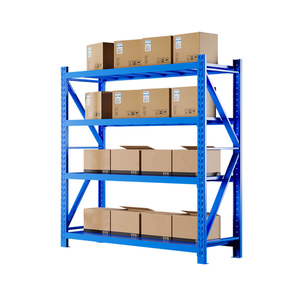
Industrial Warehouse Storage 5-Layer Pallet Racking System
Multi-layer heavy-duty structural frame setup optimized for high cubic utility and tire/slotted angle integration.
View Specifications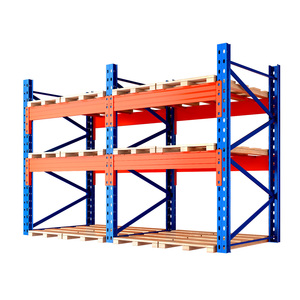
Industrial Heavy Duty Storage Shelves Metal Rack System
High-load capacity modular stacking units engineered for intensive forklift operations and heavy unit loads.
View Specifications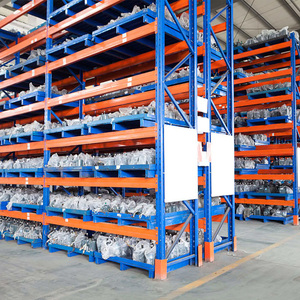
Industrial Selective Racking System for Metal Warehouses
100% pallet accessibility framework engineered for fast-moving SKU management and flexible beam height adjustments.
View Specifications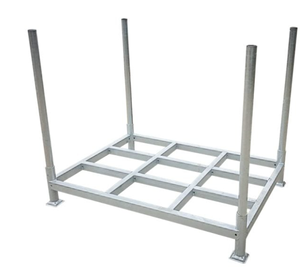
Customized Stackable Post Pallet Steel Stacking Rack
Versatile OEM post pallet solution designed for temporary storage expansion, freight containment, and easy nesting.
View Specifications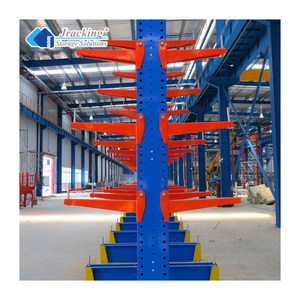
Heavy Duty CE Certified Industrial Cantilever Racking
Unobstructed front-arm architecture dedicated to long profile storage, structural timber, piping, and heavy sheet steel.
View Specifications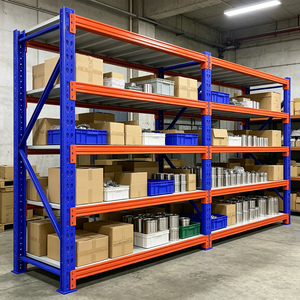
Warehouse Longspan Steel Shelving Racking System
Ergonomic manual picking shelves optimized for archive boxes, e-commerce fulfillment, and light-to-medium carton inventory.
View Specifications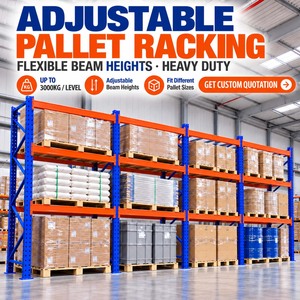
Adjustable Steel Heavy-Duty Pallet Racking System
Precision-engineered structural beams with safety lock pins for flexible heavy pallet distribution and logistics centers.
View Specifications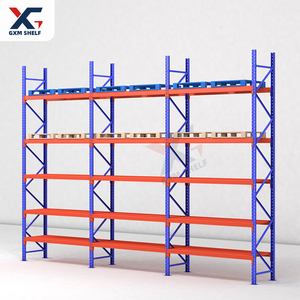
Heavy Duty Warehouse Pallet Storage Racking Architecture
Ultra-robust roll-formed and structural steel storage system built for severe dynamic loading and high-throughput DC operations.
View SpecificationsCustom OEM Push Back Racking Engineering: The Whitepaper Specification Standard
When enterprise distribution centers, cold storage operators, and third-party logistics (3PL) providers seek to maximize volumetric warehouse density without compromising selectivity or operational speed, Custom OEM Push Back Racking Systems represent the definitive structural engineering solution. Operating on a Last-In, First-Out (LIFO) inventory matrix, push back rack technology allows pallets to be stored from 2 to 6 deep on inclined rail systems with nested rolling carts. Unlike traditional drive-in racking, forklift operators never enter the rack structure; every pallet is loaded and unloaded directly from the front aisle, drastically reducing cycle times and eliminating rack frame impact damage.
Information Gain Insight: As an original equipment manufacturer (OEM) and global B2B wholesaler, our custom push back systems are fabricated using high-tensile structural channel steel (C-Channel) or precision roll-formed teardrop components. Every cart assembly features low-profile encapsulated steel bearings, anti-lift safety catches, and self-centering wheel geometry to prevent binding under heavy asymmetric loads up to 3,000 kg per pallet position.
Structural Physics of Nestable Cart Mechanics
The core innovation of an industrial push back racking matrix lies in its nested cart mechanics. A 6-deep push back system consists of 5 nested carts riding on inclined structural steel rails pitched at a calculated gradient (typically 3/8 inch per foot or 3.5% incline). When the first pallet is loaded onto the top cart by a forklift operator, it rests securely inside the front bay guide. To deposit a second pallet, the operator pushes the first pallet backward with the second pallet, exposing the nested cart beneath it. This dynamic push-and-nest sequence continues up to 6 pallets deep.
Upon retrieval, gravity smoothly propels the remaining pallets forward to the pick face as the front pallet is lifted. Crucially, the terminal cart design includes integrated hydraulic or mechanical friction speed decelerators for deep-bay applications, guaranteeing controlled flow velocity and preventing kinetic shock against front stop beams—even in sub-zero freezer environments (-30°C).
Why Enterprise Buyers Partner with Our Wholesale OEM Network
Delivering end-to-end structural reliability, seismic design checks, and custom factory-direct manufacturing.
Seismic Engineering (INPRES-CIRSOC & RMI)
Every custom OEM order undergoes rigorous finite element analysis (FEA) compliant with RMI/ANSI MH16.1 and INPRES-CIRSOC 103 codes, featuring oversized heavy-duty base plates and anchor bolt calculations for high seismic risk zones.
Custom Pallet Dimension Compatibility
We engineer push back cart dimensions to accommodate diverse global pallet standards including ARLOG (1000x1200mm), Euro pallets (1200x800mm), standard US GMA (40x48in), and heavy metal post pallet frames without custom adapter trays.
Automated Epoxy Powder Coating
Utilizing multi-stage automated pretreatment and electrostatic powder-coat lines, our uprights and beams possess high impact resistance, corrosion protection against ambient condensation, and vibrant OSHA high-visibility safety colors.
Cold Chain & Freezer Optimization
Specialized low-temperature steel alloys (Q355D/E) and synthetic cold-temperature lubricants ensure cart wheels operate continuously without freezing, binding, or lubricant crystallization down to ultra-low freezer temperatures.
Zero-Downtime Rack Repair Compatibility
Our OEM manufacturing process ensures exact pitch tolerances and standardization. Upright frames integrate with engineered repair kits and column protectors to mend forklift impact zones without dismantling entire multi-bay runs.
Turnkey Global Wholesale Logistics
From factory floor flat-packing to containerized international freight, custom OEM components arrive pre-assembled in sub-cart matrices, enabling rapid on-site bolted assembly and immediate warehouse commissioning.
High-Density Warehouse System Architectural Comparison
Selecting the optimal storage topology requires balancing floor space optimization, selectivity percentage, forklift capital expenditure, and operational throughput speeds. Below is an engineering evaluation comparing Custom OEM Push Back Racking against traditional high-density configurations.
| Storage System Type | Floor Density Utilization | Pallet Selectivity | Inventory Access Method | Forklift Impact Risk | Cold Chain Suitability |
|---|---|---|---|---|---|
| Custom OEM Push Back Rack | 75% – 85% (High) | Medium (Per Lane) | LIFO (Last-In, First-Out) | Very Low (Outside Aisle Only) | Excellent (-30°C Rated Carts) |
| Standard Selective Rack | 40% – 45% (Low) | 100% (Direct Access) | FIFO / LIFO Flexible | Moderate (Aisle Travel) | Standard (Consumes Excessive Cube) |
| Drive-In / Drive-Thru Rack | 80% – 90% (Maximum) | Low (Per Bay Row) | Strict LIFO / FIFO | High (Forklift Enters Frame) | Good (High Risk of Structural Strikes) |
| Gravity Pallet Flow Rack | 75% – 85% (High) | Medium (Per Lane) | Strict FIFO (First-In, First-Out) | Low (Dedicated Load/Unload Aisle) | Excellent (Requires Brake Rollers) |
| AS/RS Automated Shuttle Rack | 85% – 95% (Ultra High) | High (Automated) | Programmed LIFO / FIFO | Zero (Fully Automated) | Superior (High Initial CapEx) |
Future Procurement & Procurement Trends in High-Density Storage (2025–2030)
As global supply chains navigate volatile demand cycles, rising industrial real estate costs per square meter, and labor shortages, procurement strategies for warehouse rack infrastructure are shifting from standard commodity purchasing to strategic, custom OEM partnerships. Logistics leadership teams must align their capital expenditure with the following four mega-trends reshaping the industrial material handling landscape:
1. OEM Integration with Autonomous Mobile Robots (AMRs) & Automated Forklifts
The rapidly accelerating adoption of Automated Guided Vehicles (AGVs) and AMRs requires custom racking tolerances that traditional roll-formed racks cannot meet. Future OEM push back designs demand millimeter-precise front-rail positioning, laser-guided target retroreflectors on cart faces, and ultra-flat structural beam profiles. Wholesale suppliers capable of custom-engineering cart pickup pockets and sensor-friendly alignment stops will dominate enterprise procurement contracts.
2. Ultra-Low Energy Cold Chain Operations
Energy cost spikes in cold storage and blast-freezer facilities have driven unprecedented demand for push back density. Because thermal efficiency relies on maximizing pallet count per cubic meter of refrigerated space, logistics operators are replacing selective rack aisles with 5-deep and 6-deep structural push back systems. OEM manufacturers are responding with specialized thermal-galvanized finishes, stainless steel axle pins, and synthetic low-drag seal bearings that prevent moisture frosting and operational seizure.
3. High-Strength Low-Alloy (HSLA) Structural Steels
The push toward sustainability and reduced structural deadweight has accelerated the application of advanced HSLA steels (e.g., Q355B/Q355D grade steel) in rack manufacturing. Modern custom OEM suppliers can produce thinner-gauge upright columns and structural carts that offer equal or higher yield strengths (over 50,000 PSI) compared to legacy mild carbon steels, resulting in lower freight shipping weights, reduced carbon footprints, and superior resistance to dynamic seismic shockwaves.
4. Embedded Structural Health Monitoring & IoT Sensors
Next-generation push back systems are transitioning into smart warehouse assets. Wholesalers are introducing OEM cart systems fitted with wireless IoT stress sensors and proximity monitors. These sensors detect abnormal cart impact, frame deflection beyond L/240 design limits, or structural tilt caused by floor slab settling, giving safety managers real-time predictive maintenance telemetry before catastrophic failures occur.
Frequently Asked Questions by Industrial Procurement Managers
Technical guidance covering seismic compliance, pallet variation, floor slab loads, and OEM customization.
What structural slab thickness and concrete grade are required for a 5-deep push back racking installation?
For standard 5-deep push back systems carrying 1,000 kg to 1,500 kg per pallet position, a minimum reinforced concrete slab thickness of 150 mm (6 inches) with a compressive strength of 3,000 PSI (20.6 MPa) is generally required. However, in heavy-duty structural channel applications or high seismic acceleration zones (e.g., INPRES-CIRSOC Zone 3/4), slab thickness requirements may increase to 200 mm (8 inches) with 4,000 PSI concrete to accommodate heavy expansion anchor embedment depths and high localized point loads beneath front upright footplates.
Can custom OEM push back racks accommodate damaged or bottom-broken wood pallets?
Yes. One of the principal operational advantages of nested cart push back racking over pallet flow (roller) racking is its tolerance for imperfect pallets. Because the pallet rests fully supported on a rigid steel cart frame rather than rolling directly over small friction wheels, broken bottom boards or dangling splinters do not cause cart jams. However, severely warped pallets that compromise load symmetry should be audited to maintain uniform weight distribution across all four cart support bearings.
How do OEM manufacturers prevent "cart hang-up" or binding in sub-zero freezer environments?
Cart hang-up is prevented through precise rail gradient calibration (typically 3.5% incline), heavy-duty steel side-thrust rollers, and sealed stainless steel ball bearings packed with low-temperature synthetic grease rated down to -40°C. Additionally, custom OEM rail geometries incorporate self-clearing debris tracks that push frost buildup aside during cart movement, ensuring uninterrupted gravity flow during retrieval.
What is the lead time for custom OEM manufacturing and wholesale shipping?
Standard custom OEM production lead time is typically 4 to 6 weeks from approval of final structural engineering shop drawings. Containerized international ocean shipment ranges from 2 to 4 weeks depending on the target port of entry. For urgent facility expansions, standard roll-formed uprights and popular cart sizes are maintained in stock for expedited dispatch within 10 business days.
Are structural channel push back racks superior to roll-formed teardrop systems?
Structural channel steel (hot-rolled C-channel) offers significantly higher resistance to forklift impact, higher torsional rigidity, and longer operational lifespans in demanding, high-throughput environments like food distribution hubs and cold stores. Roll-formed teardrop systems provide lower initial capital cost, faster beam height adjustability, and reduced deadweight, making them ideal for standard ambient consumer goods warehouses. Our OEM factory manufactures both structural and roll-formed designs to match specific budget and durability targets.
How does push back racking prevent pallets from pushing off the rear of the rack during loading?
Push back rails feature integrated structural rear stops welded directly to the back support beam. Additionally, each cart level is engineered with elevated rear flange lips and anti-lift hooks that catch the adjacent cart, creating a physical physical barrier that prevents the rear-most pallet from over-traveling or dislodging from the cart matrix.
Transform Your Warehouse Storage Density Today
Request a custom OEM engineering consultation, CAD layout proposal, and factory-direct wholesale quote tailored to your specific SKU profiles and building dimensions.
Contact Us