Custom OEM Heavy-Duty Racking Infrastructure: Structural Precision & Manufacturing Capabilities
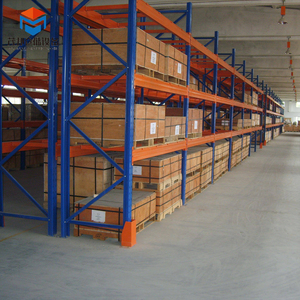
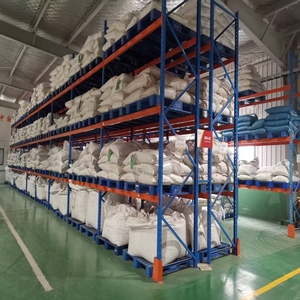
In modern supply chain optimization, industrial pallet racking is no longer viewed merely as passive steel shelving; it is a critical, structural asset designed to withstand dynamic forklift impacts, massive dead loads, and regional seismic activities. As a premier global Custom OEM Pallet Storage Racks Supplier & Exporters, our manufacturing philosophy centers on structural integrity, metallurgical consistency, and rigorous engineering compliance.
Unlike standardized off-the-shelf storage racks, our custom OEM/ODM solutions are calculated using Finite Element Analysis (FEA) software. We simulate complex stress distributions, torsional shear, and beam deflection under full capacity loads (conforming to RMI/ANSI MH16.1, FEM 10.2.02, and EN 15512 specifications). Whether engineered for high-density logistics fulfillment centers in North America, automated cold storage facilities in Europe, or seismic-active industrial hubs across South America, every upright frame and cross beam is precision-rolled from high-tensile certified steel grades such as Q235B, Q355B, and ASTM A1011 SS Grade 50.
Engineering Information Gain: Structural vs. Roll-Formed Pallet Racking Selection
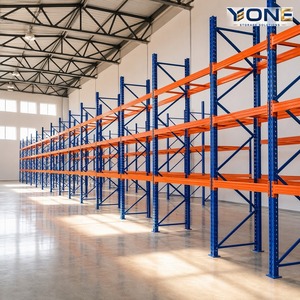
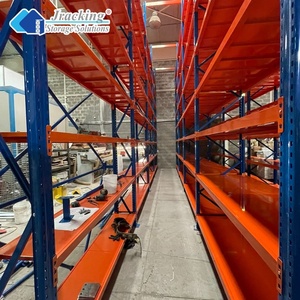
Structural C-Channel racking utilizes hot-rolled structural steel channels offering exceptional impact resistance against heavy forklift collisions, making it mandatory for abusive, fast-paced 3PL and freezer environments. Conversely, Roll-Formed teardrop or punch-hole racking offers highly cost-effective, modular beam adjustability suited for multi-SKU retail and distribution facilities. Our OEM engineering team tailor-blends both methodologies into hybrid racking layouts to minimize client capital expenditure while maximizing durability.
Advanced Metallurgy & Cold Rolling
We source prime hot-rolled steel coils, executing continuous precision cold-roll forming to create upright profiles with optimized stiffening ribs that boost load-to-weight ratios by up to 22% compared to generic structural profiles.
Seismic Engineering & Baseplate Design
Projects deployed in high seismic hazard regions (such as Mendoza, Argentina under INPRES-CIRSOC 103, or California under IBC) receive specialized heavy-duty baseplates, expanded anchor bolt patterns, and custom X/D diagonal frame bracing.
Automated Surface Treatment
Components pass through a 9-stage pre-treatment wash followed by thermosetting electrostatic polyester powder coating. This delivers a uniform 80–120 micron finish resistant to salt spray, chipping, chemicals, and sub-zero humidity.
Product Development & Industry Trends Shaping Industrial Racking
The global warehousing landscape is undergoing a massive transformation driven by land scarcity, rising industrial real estate costs, and the accelerated adoption of supply chain automation. Racking manufacturers are transitioning from simple static storage fabrication to becoming integrated partners in automated material handling ecosystems.
1. Deep Integration with AS/RS and Automated Shuttle Systems
As warehouses move toward vertical optimization, rack heights are exceeding 25 to 40 meters. Automated Storage and Retrieval Systems (AS/RS) and Multi-Directional Radio Shuttle Racks require sub-millimeter manufacturing tolerances. Beam deflection limits are constrained from conventional L/180 down to extreme L/300 or L/400 ratios to prevent robotic crane sensor trips. Our factory manufactures custom cold-formed tolerances guaranteed within ±0.5mm across 12-meter single-piece upright columns.
2. Cold Chain Optimization & Specialized Galvanization
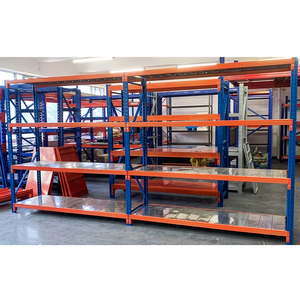
Global food export, pharmaceutical, and meat processing logistics demand stringent climate-controlled environments. In frozen storage environments (-30°C), traditional carbon steel can experience low-temperature embrittlement, while continuous condensation accelerates rust. Modern procurement focuses heavily on hot-dip galvanized (HDG) sheet metal racking and pre-galvanized structural frames that eliminate paint flaking and withstand aggressive wash-down sanitation routines.
3. Modular Rack Protection & Safety Modernization
Forklift damage accounts for over 85% of warehouse structural racking failures. Industry safety updates strongly emphasize structural preventative safety rather than standard repair. Our OEM product designs feature integrated heavy-gauge column protectors, wrap-around post guards, end-of-aisle structural crash barriers, and drop-in straddle protectors engineered directly into the anchor baseplates.
Strategic B2B Procurement Trends (2025–2030)
For enterprise procurement officers, supply chain directors, and logistics facility developers, evaluating a racking supplier based solely on initial price per kilogram is a high-risk approach. Modern international procurement strategies emphasize Total Cost of Ownership (TCO), operational flexibility, and ESG compliance.
| Racking System Type | Space Utilization Efficiency | Pallet Selectivity | Forklift Requirement | Ideal Application / Industry |
|---|---|---|---|---|
| Selective Pallet Rack | 40% – 50% | 100% Direct Access | Standard Counterbalance / Reach | 3PL multi-SKU, distribution, e-commerce |
| Drive-In / Drive-Thru | 75% – 85% | Low (LIFO / FIFO) | Standard Reach / Counterbalance | Cold storage, seasonal bulk, homogeneous SKUs |
| Push Back Cart System | 65% – 75% | Medium (LIFO per lane) | Standard Counterbalance | Food & beverage, medium SKU density, cold rooms |
| Gravity Pallet Flow | 80% – 90% | Medium (Strict FIFO) | Standard Forklift | Perishables, pharmaceuticals, high-turnover FMCG |
| AS/RS High-Bay Racking | 85% – 95% | 100% Automated | SR Cranes / AGV / AMR Shuttles | Automated dark warehouses, high-throughput DCs |
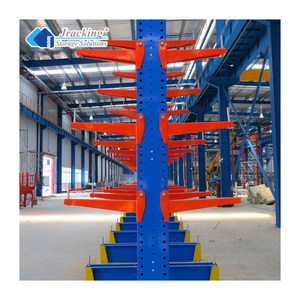
| Heavy-Duty Cantilever | Variable (Long loads) | 100% Frontal Access | Side Loader / Specialized Lift | Lumber, steel pipes, profiles, energy sector |
Key Drivers in Global OEM Racking Procurement:
- Nearshoring and Standard Interchangeability: Multinational enterprises require teardrop and European-standard wedge beam connector designs that seamlessly interlock with existing warehouse infrastructure, eliminating vendor lock-in.
- Sustainable Steel Sourcing & CO2 Auditing: Scope 3 emissions tracking requires racking exporters to furnish environmental product declarations (EPD) and use recycled steel feedstocks processed in zero-emission green powered electric arc furnaces (EAF).
- Modular Upright Repairability: B2B buyers now prioritize systems that utilize engineered modular rack repair kits. Damaged bottom post sections can be replaced under certified load ratings without dismantling upper loaded bays, reducing operational downtime by up to 80%.
Frequently Asked Questions (FAQ) — Industrial Procurement & OEM Engineering
What engineering information is required to receive a structural racking layout proposal?
To produce a certified CAD layout and quotation, our engineering team requires: 1) Architectural floor plans detailing column grids, clear height under trusses, dock door locations, and fire sprinkler clearances; 2) Concrete slab thickness, compressive strength (e.g., 28-day cylinder strength f'c), and rebar layout; 3) Pallet specifications including width, depth, overall height (including load), and maximum weight; 4) Forklift specifications including aisle width requirements, turning radius, and maximum mast lift height; 5) Environmental parameters such as seismic zone rating or sub-zero operating temperatures.
How do you guarantee seismic safety for racking installations in seismic zones?
All seismic designs are site-specific. We perform structural calculations based on local building codes (such as INPRES-CIRSOC 103 in Argentina, RMI/ANSI MH16.1 in North America, or Eurocode 8). Frame engineering incorporates enlarged, heavy-duty floor baseplates, high-embedment wedge or chemical anchor bolts, upgraded diagonal bracing geometry, and increased steel gauge thickness on lower columns to withstand horizontal peak ground acceleration (PGA).
What is the difference between Q235B and Q355B steel in pallet rack manufacturing?
Q235B steel offers a minimum yield strength of 235 MPa (similar to ASTM A36) and is the industry standard for general selective pallet racking beams and frames. Q355B is a high-strength low-alloy structural steel with a yield strength of 355 MPa (similar to ASTM A572 Grade 50). Using Q355B allows us to engineer high-bay uprights and long-span beams that support heavier capacity loads with thinner material walls, reducing structural deadweight and freight transport costs.
Are your teardrop pallet racks interchangeable with standard North American brands?
Yes. Our custom OEM US Teardrop racking system is manufactured to standard North American 2-inch pitch center-to-center hole spacing, making frames and beams fully interchangeable with major teardrop manufacturers across the industry. Spring-loaded safety locks automatically engage into punched teardrop holes to prevent accidental beam dislodgement during forklift lifting.
How do you protect pallet racks against corrosion in cold storage and high-humidity facilities?
For standard cold storage down to -30°C, we utilize heavy-duty thermosetting powder coating with specialized cross-linking polymers that resist thermal shock cracking. For wet, wash-down, or marine environments, we offer Hot-Dip Galvanizing (HDG) where components are submerged in molten zinc to form a zinc-iron alloy protective barrier according to ASTM A123 / ISO 1461, guaranteeing decades of rust-free operation.
What load plaques and certification documentation are supplied with exported racking systems?
Every exported order includes official engineering documentation comprising CAD layout approval drawings, structural calculation reports signed by qualified professional engineers, mill test certificates (MTC) verifying raw material chemistry and yield strength, ISO9001 / CE compliance certificates, and metal load plaques specifying maximum allowed uniformly distributed load (UDL) per shelf level and bay total.
Can damaged upright frames be safely repaired without replacing the entire row?
Yes. We manufacture custom engineered OEM rack repair kits consisting of heavy-gauge structural bottom column sections with built-in impact deflectors. Certified installers use specialized hydraulic jacks to temporarily support loaded upper levels, cut out the damaged bottom leg section, and bolt/weld the heavy-duty structural replacement kit in place, restoring 100% rated load capacity without full bay tear-down.