High-Performance Heavy-Duty Rack Systems
Explore our export-grade pallet racks and custom warehouse shelving solutions, certified to international structural standards including ANSI MH16.1, EN 15512, and ISO 9001.
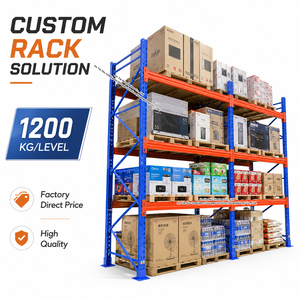
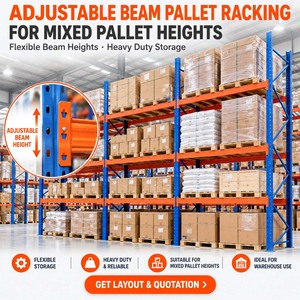
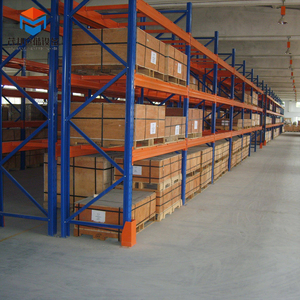
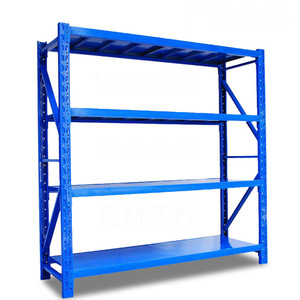
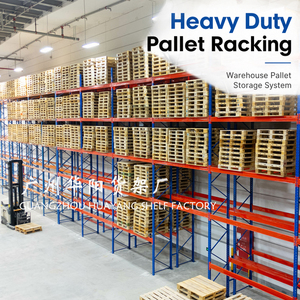
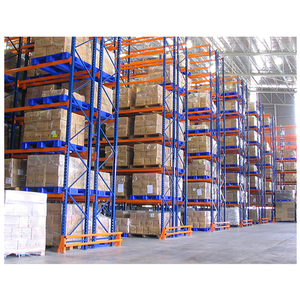
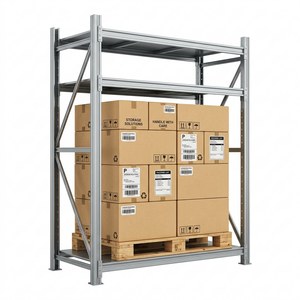
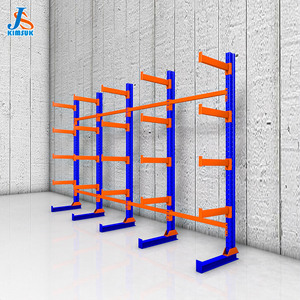
Custom OEM Manufacturing & Metallurgical Rigor
Delivering structural integrity through advanced material selection, finite element stress modeling, automated powder coating, and strict alignment with global engineering frameworks.
High-Yield Cold-Rolled Steel Sourcing
Our OEM manufacturing process utilizes top-tier prime cold-rolled steel coils (Q235B and high-strength Q355B structural grade). This guarantees consistent section modulus values and superior yield strength under dynamic warehouse impact loads.
Finite Element Analysis & Custom Structural Engineering
Every OEM rack component undergoes rigorous Finite Element Analysis (FEA) to simulate localized elastic deformation, beam deflection limits ($L/180$), and critical buckling modes under full rated payloads. Customized upright roll-forming patterns optimize load paths for specialized pallet formats.
Automated Epoxy Powder Coating Treatment
Our automated multi-stage pre-treatment wash and electrostatic epoxy-polyester powder coating lines create a thermosetting barrier against impact, abrasion, moisture, and chemical exposure, ensuring long-term durability in ambient or cold-room environments.
Information Gain Insight: Custom Engineering vs. Generic Market Racks
Unlike commodity racking importers who utilize thin-gauge, unverified sheet steel, high-capacity enterprise logistics hubs require engineered rack structures with explicit safety margins. Our heavy-duty systems incorporate double-welded connector claws, multi-point drop-in locking pins, and heavy-gauge baseplates that distribute vertical column loads across concrete slabs in strict accordance with RMI ANSI MH16.1 and INPRES-CIRSOC 103 seismic specifications.
Comparative Performance Analysis of Heavy-Duty Rack Architectures
Selecting the optimal OEM racking configuration requires balancing volumetric density, individual SKU selectivity, forklift aisle clearance, and structural capital investment.
| System Architecture | Volumetric Cube Utilization | SKU Selectivity Ratio | Structural Profile Type | Typical Load Capacities | Primary Target Environment |
|---|---|---|---|---|---|
| Selective Pallet Racking | 60% - 65% | 100% Direct Access | Roll-Formed or Structural Channel | 1,000kg – 3,500kg / Level | High-SKU 3PL, FMCG, E-Commerce Fulfilment |
| Push-Back Cart Racking | 75% - 85% | LIFO (Per Lane) | Nested Heavy-Duty Steel Carts | 1,200kg – 2,000kg / Pallet | Cold Storage, Food & Beverage Distribution |
| Gravity Pallet Flow Rack | 85% - 90% | FIFO (Per Lane) | Precision Rollers & Speed Controllers | 1,000kg – 1,500kg / Pallet | Perishable Goods, Pharma, High-Turnover Plants |
| High-Density Drive-In Racking | 80% - 88% | LIFO High Density | Structural Cantilever Support Rails | 1,000kg – 1,800kg / Position | Seasonal Agro-Goods, Homogeneous Bulk Stock |
| Heavy Telescopic Cantilever | 70% - 80% | 100% Linear Access | Structural Heavy Steel Columns & Arms | 500kg – 5,000kg / Arm Level | Pipes, Lumber, Extrusions, Vaca Muerta OCTG |
| Automated AS/RS Crane Racks | 90% - 95% | 100% Automated Access | Ultra-Tolerant Cold-Formed Steel | 500kg – 2,000kg / Unit Load | Fully Automated High-Bay Smart Warehouses |
Future Procurement Trends in Industrial Storage Racking
How global procurement directors and enterprise supply chain executives are adapting rack system specifications to automation, sustainability, and dynamic inventory models.
1. Shift Towards High-Bay AS/RS & Shuttle-Compatible Structural Frame Profiles
Land acquisition constraints near major logistics corridors (such as Greater Buenos Aires, São Paulo, or European transport hubs) are driving warehouse heights upwards from traditional 8–10 meter spans to 15 to 30-meter vertical high-bay systems. Global B2B buyers are requiring OEM racking exporters to manufacture upright frames with tighter geometric tolerances ($\pm 1.5\text{mm}$ plumbness deviation) to seamlessly accommodate Autonomous Mobile Robots (AMR), Pallet Shuttles, and AS/RS stacker cranes.
2. Sustainable Steel Procurement & Low-Carbon Powder Coating Compliance
ESG frameworks are reshaping global industrial sourcing. Enterprise wholesalers and regional distributors are scrutinizing the carbon footprint of structural steel manufacturing. Future-ready exporters must offer high-tensile steel options produced via electric arc furnace (EAF) pathways, coupled with zero-VOC, heavy-metal-free electrostatic powder coating processes that meet ISO 14001 environmental standards.
3. Universal Modular Geometry for Heterogeneous Pallet Standards
As international cross-border trade accelerates, distribution centers must handle multiple pallet standards simultaneously—including ARLOG (1000x1200mm), Euro Pallets (800x1200mm), and North American GMA (40x48 in). Procurement trends show a massive demand for OEM rack systems featuring 50mm or 75mm pitch beam adjustments, teardrop or keyhole universal punching, and hybrid wire mesh decking for versatile SKU storage.
4. Integrated Structural Health Monitoring & Smart Racking Technologies
Predictive maintenance is replacing reactive rack repairs. Leading industrial exporters are integrating mounting nodes for optical deflection sensors and Wireless Impact Detectors directly onto critical rack columns. These IoT sensors alert warehouse managers immediately when forklift collisions compromise column buckling resistance.
Advanced Manufacturing & Technological Development Trends
Discover how modern roll-forming technology, automated robotic welding, and specialized surface metallurgy are advancing structural durability across heavy-duty industrial storage racks.
High-Precision Continuous Roll-Forming
Modern manufacturing centers utilize multi-stage automated cold-roll forming mills equipped with live-servo CNC punching units. This ensures perfect alignment of slot patterns across 12-meter continuous upright profiles, eliminating localized residual stresses that weaken vertical column strength.
Robotic Beam End-Connector Welding
To withstand dynamic cyclic loading and severe forklift impact forces, automatic multi-axis robotic arc welding is used to attach steel beam end-connectors to step or box beam sections. This process delivers uniform weld penetration and eliminates human welding defects.
Flat-Pack Export Packaging & Freight Optimization
For international wholesalers and project contractors, freight cost is a key procurement factor. Modern OEM rack exporters design modular frame components that nest tightly inside 40ft High Cube containers, maximizing steel density and reducing ocean freight overhead per pallet position.
Frequently Asked Questions for OEM Racking Procurement
In-depth technical answers addressing core engineering, compliance, seismic loading, and export logistics queries raised by warehouse designers and procurement officers.
What engineering variables dictate the load-bearing capacity of a heavy-duty pallet rack level?
Pallet rack weight capacities (ranging from 1,000kg up to 3,500kg per pair of cross beams) are determined by three structural parameters: beam section profile height and wall thickness, beam connector claw design, and permissible deflection limits. Under RMI and EN 15512 standards, maximum beam deflection under full static load must not exceed 1/180th of the clear beam span ($L/180$). Additionally, upright frame capacity is strongly influenced by unsupported vertical beam level spacing (unbraced length)—larger vertical beam distances increase column slenderness ratios, reducing the overall allowable frame payload.
How do OEM exporters design pallet rack systems for high-risk seismic regions?
In seismic regions (such as Mendoza and San Juan in Argentina, or fault zones across the Pacific Rim), racking systems must be engineered in compliance with regional codes like INPRES-CIRSOC 103 or ANSI MH16.1. Seismic rack engineering involves increasing upright baseplate surface area, using heavy-duty structural anchor bolts with high shear resistance, reinforcing diagonal and horizontal frame bracing profiles, and applying dynamic response spectrum analysis to prevent frame collapse or load discharge during seismic events.
What surface treatment is best for cold storage, freezers, and humid environments?
For ambient warehouses, standard electrostatic epoxy-polyester powder coating offers excellent corrosion protection and mechanical wear resistance. However, for sub-zero freezer applications (temperatures down to -30°C) or highly humid coastal distribution centers, Hot-Dip Galvanizing (HDG) is recommended. Hot-dip galvanizing applies a thick zinc-iron alloy coating via total immersion, protecting internal post cavities and cut edges against oxidation and rust formation.
Can custom OEM components be integrated into existing selective pallet rack structures?
Yes. OEM manufacturers produce interchangeable teardrop, speedrack, or structural punch patterns that mate directly with legacy rack systems. However, certified engineers must conduct structural verification before mixing components from different manufacturers to confirm connector lock engagement, beam section modulus compatibility, and total frame weight ratings.
What essential documentation should enterprise buyers demand from OEM rack exporters?
Enterprise procurement teams should require: 1) Mill Test Certificates (MTC) verifying raw steel mechanical properties and chemical composition; 2) FEA Structural Calculation Reports signed by certified structural engineers; 3) Factory Load-Testing Certificates; 4) ISO 9001 / CE / RMI Quality Compliance Certification; and 5) Official Maximum Load Capacity Signage / Plaques for installation on end-uprights.
What are typical OEM manufacturing lead times, minimum order quantities (MOQ), and shipping density metrics?
Standard export production lead times range from 20 to 30 days following technical drawing approval. While MOQs vary depending on custom roll-forming tooling requirements, typical export orders start at one 40ft High Cube container (approx. 20–24 metric tons of steel). Upright frames are shipped pre-assembled or flat-packed with knocked-down bracing kits to maximize container cube utilization and lower international freight costs.
Optimize Your Warehouse Footprint with Engineered OEM Storage Solutions
Whether you require custom cold-rolled rack profiles, high-density shuttle integration, or seismic-certified selective pallet racking, our global engineering team delivers factory-direct expertise and export reliability.