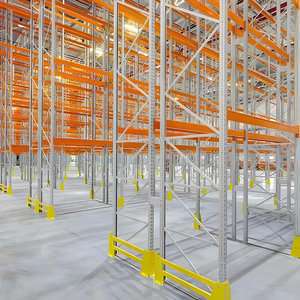
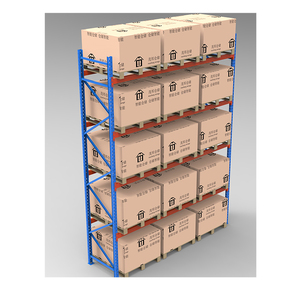
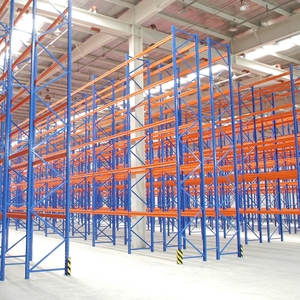
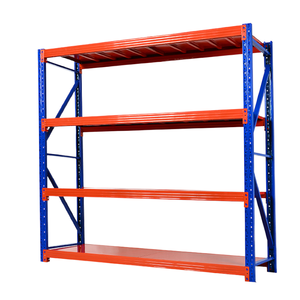
Enterprise Advantages: Why Leading Global 3PLs Partner With Us
Direct from China's premier racking manufacturing hub — providing structural integrity, factory-direct pricing, and complete engineering oversight.
Steel Metallurgy
Premium Q235B & Q355B Steel
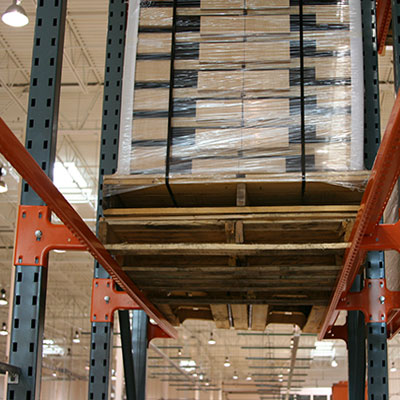
We source certified prime cold-rolled steel coils directly from top-tier mills (Baosteel, Shougang Group). Our structural racking components undergo strict mechanical tensile and yield strength testing, guaranteeing nominal bending stresses far exceeding standard commercial profiles.
Precision Robotics
Automated Manufacturing
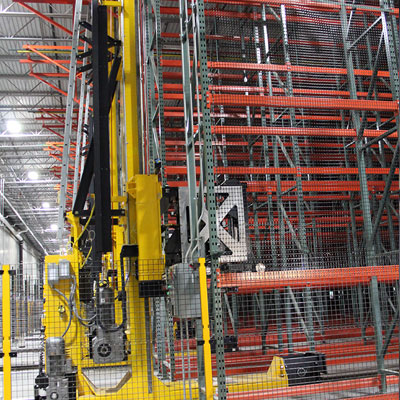
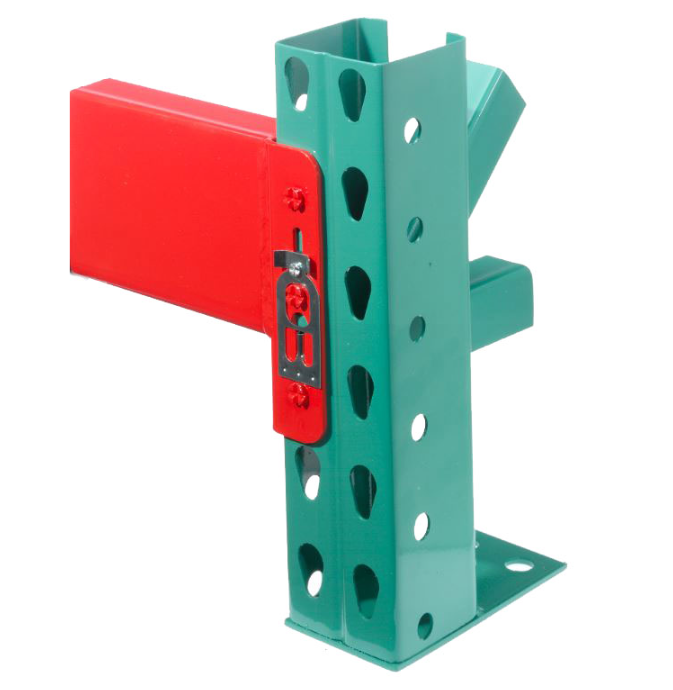
Utilizing high-precision continuous roll-forming lines, OTC robotic welding stations (compliant with ISO 3834-2 welding quality standards), and fully automated CNC laser punching machines to ensure exact beam clip tolerances and consistent hook-to-upright lock engagement.
Surface Treatment
AkzoNobel Powder Coating
Our 180-meter automated electrostatic powder coating lines utilize eco-friendly AkzoNobel non-toxic powders. Featuring a 9-stage pre-treatment wash and phosphating process, our finished racks achieve superior scratch resistance, salt spray durability (>500 hours), and smooth aesthetic appeal.
Future Procurement Trends in Warehouse Racking & Supply Chain Infrastructure
Strategic insights for procurement directors, logistics engineers, and global warehouse developers navigating global supply chain shifts.
As international supply chains evolve toward hyper-efficiency, green compliance, and automation, purchasing industrial pallet warehouse racking directly from established China wholesale exporters has shifted from basic commodity sourcing to strategic engineering collaboration. The next decade will define several transformative trends in warehouse racking procurement:
1. Rapid Convergence of Storage Racking and Automated Handling Systems (AS/RS & AMR)
Traditional static selective racking is rapidly giving way to hybrid automated systems. Global procurement teams are prioritize racking structures engineered to integrate seamlessly with Autonomous Mobile Robots (AMRs), Automated Guided Vehicles (AGVs), and Pallet Shuttle mechanisms. Rack tolerances for automated systems are drastically tighter—requiring deflection limits of $L/300$ or even $L/400$ rather than the conventional $L/200$. Wholesale racking exporters in China are advancing high-precision cold-roll forming machinery to produce upright columns with millimeter-level straightness over 15-meter vertical spans.
2. Cold Chain Logistics Expansion and Galvanized Corrosion Mitigation
With global demand for fresh produce, biologics, and frozen food soaring, cold chain warehouse investments are experiencing exponential growth. Procurement strategy now mandates specialized anti-corrosion finishes. Hot-dip galvanizing (HDG) and pre-galvanized high-yield steel are replacing standard powder coatings in sub-zero environments (-30°C). Structural components must maintain mechanical ductility without cold-temperature embrittlement, driving demand for specialized steel chemistries and zinc-alloy protective coatings.
3. Sustainability, ESG Compliance, and Carbon Footprint Traceability
International buyers from Europe, North America, and Australia now demand Environmental Product Declarations (EPDs) and Low-Carbon Steel certifications from Chinese manufacturing partners. Modern green manufacturing practices—such as zero-VOC electrostatic powder coatings, closed-loop water recycling in chemical phosphating lines, and solar-powered manufacturing plants—are becoming core prerequisites for winning enterprise procurement tenders.
4. Modular Scalability and Turnkey OEM/ODM Standardization
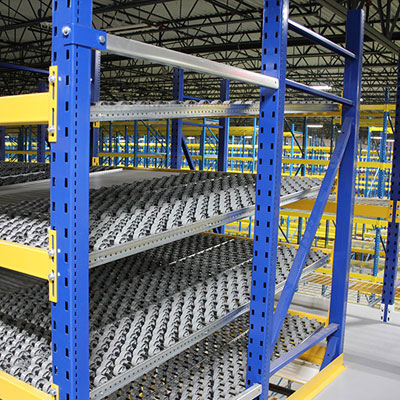
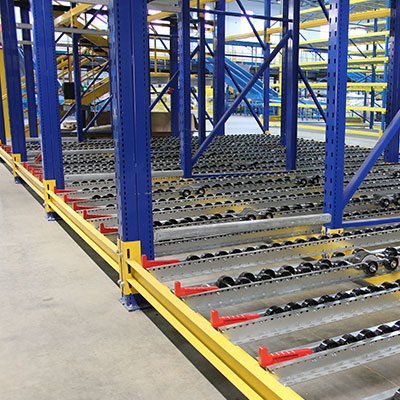
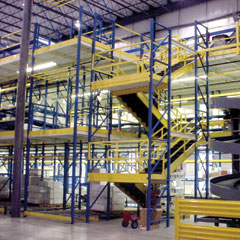
Warehouse operational lifecycles are shrinking as e-commerce demand shifts rapidly. Enterprise buyers prefer modular racking architectures that allow seamless expansion, mezzanine overhead additions, or conversion from manual picking racks into carton-flow or push-back dynamic systems. Working directly with Chinese original equipment manufacturers (OEMs) who offer modular component standardization reduces total cost of ownership (TCO) and simplifies global spare-parts supply lines.
Development Trends: The Next Generation of Racking Engineering
Innovation in material science, AI structural modeling, and IoT monitoring driving warehouse racking performance.
High-Strength Low-Alloy (HSLA) Steels
Advancements in micro-alloyed steel formulations allow racking manufacturers to reduce structural weight by 15-20% while maintaining equivalent load bearing capacity. High yield strength grades (such as Q355B, Q460, and advanced HSLA steels) enable thinner profiles without sacrificing safety margins, significantly reducing cross-border maritime shipping freight costs.
AI Generative Structural CAD Optimization
Using cloud-based finite element analysis (FEA) and machine learning algorithms, structural engineers can calculate stress distribution across beam connectors, footplates, and column perforations under dynamic loading. Generative design optimizes metal placement, reinforcing critical stress points while minimizing unneeded weight.
IoT Sensor-Integrated Smart Racks
The rise of the Internet of Things (IoT) is transforming static steel racks into intelligent monitoring nodes. Embedded strain gauges, wireless vibration sensors, and tilt sensors detect accidental forklift impacts in real-time, alerting safety managers to structural overload or out-of-plumb frame displacement before catastrophic rack collapse occurs.