Engineered Industrial Pallet Racking Catalogue
Direct-from-factory wholesale storage solutions designed for automated logistics, cold storage, 3PL distribution centers, and high-density industrial warehouses.
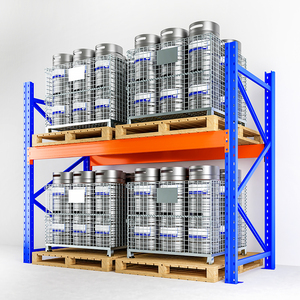
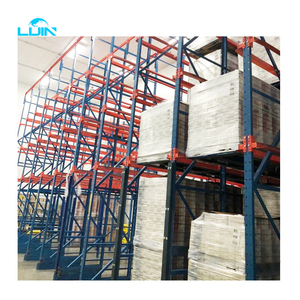
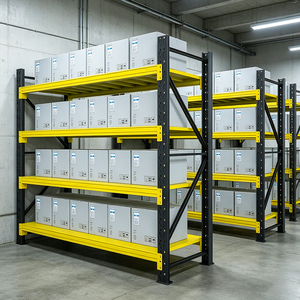
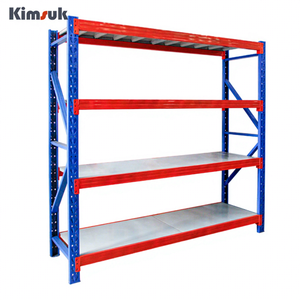
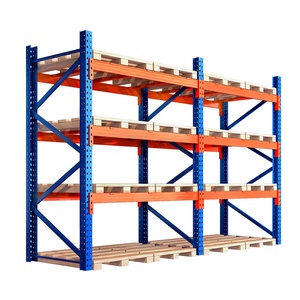
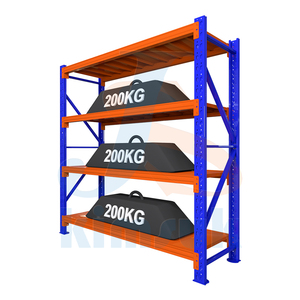
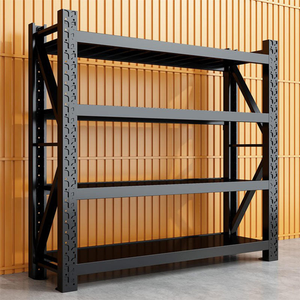
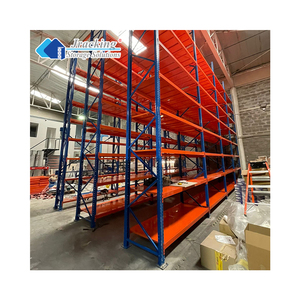
Whitepaper: Engineering Architectural Foundations of Industrial Pallet Racking
An Executive Guide to Structural Mechanics, Metallurgical Standards, and Risk-Mitigated B2B Procurement for Global Logistics Infrastructure
In modern industrial logistics, selecting a qualified China wholesale pallet racking industrial manufacturer & supplier transcends simple price-per-kilogram calculations. It requires a rigorous assessment of metallurgical properties, structural dynamic behavior under extreme load conditions, seismic resilience engineering, and total cost of ownership (TCO). Warehouse racking systems serve as the structural backbone for multi-billion-dollar global supply chains. A single structural failure due to substandard yield strengths, deficient weld penetration, or incorrect anchor embedment can trigger catastrophic linear collapses, resulting in severe inventory loss, facility downtime, and human safety risks.
As global supply chains transition toward high-density automated facilities, cold storage hubs, and omni-channel distribution networks, the demand for precision cold-rolled and hot-rolled structural steel racking has escalated. China's manufacturing ecosystem leads this global sector by integrating fully automated continuous roll-forming mills, robotic metal inert gas (MIG) welding cells, and eco-friendly electrostatic thermosetting powder coating lines. This whitepaper analyzes technical parameters, future procurement models, structural engineering guidelines, and quality assurance benchmarks necessary to evaluate high-grade pallet racking systems.
Core Technical Specifications & Metallurgical Standards
High-performance racking relies on certified steel chemistry. Primary structural members—specifically vertical upright frames and horizontal load-bearing beams—are fabricated using high-yield structural steel grades Q235B and Q355B (equivalent to ASTM A36 and ASTM A572 Grade 50). Q355B steel provides a minimum yield strength ($\sigma_y$) of 355 MPa and a minimum tensile strength ($\sigma_u$) of 470–630 MPa, allowing for higher load capacities with reduced steel deadweight.
| Structural Component | Steel Grade Specification | Yield Strength ($\sigma_y$) | Tensile Strength ($\sigma_u$) | Engineering Safety Factor |
|---|---|---|---|---|
| Heavy-Duty Upright Profiles | Q355B Cold-Rolled Steel | $\ge$ 355 N/mm² | 470 - 630 N/mm² | 1.65 to 1.95 (ANSI MH16.1) |
| Box Beams / Step Beams | Q235B / Q355B Double-C Locked | $\ge$ 235 - 355 N/mm² | 370 - 500 N/mm² | L / 200 Max Deflection Limit |
| Heavy Duty Base Plates | Hot-Rolled Steel Plate (Q235B) | $\ge$ 235 N/mm² | 370 - 500 N/mm² | Anchor Embedment Certified |
| Horizontal & Diagonal Bracing | Q195 / Q235 High-Ductility Steel | $\ge$ 195 N/mm² | 315 - 430 N/mm² | Buckling Resistance Optimized |
Every batch of raw coil material undergoes rigorous mechanical testing, including Charpy V-notch impact tests, elongation measurements (minimum 20% gauge length), and chemical composition spectro-analysis to verify carbon equivalent values ($CEV \le 0.38\%$), ensuring structural weldability without hydrogen-induced cracking.
Roll-Formed vs. Hot-Rolled Structural Channel Steel: Comparative Analysis
When engineering high-capacity storage facilities, selecting between cold-rolled teardrop/interchangeable profiles and structural C-channel steel is a critical capital expenditure decision:
Cold-Rolled Steel Racking
Utilizes continuous precision cold-roll forming to create multi-ribbed upright columns (e.g., 80x60, 90x70, 100x67, 120x95mm). Offers exceptional strength-to-weight ratios, adjustable 50mm/75mm pitch increments, cost efficiency, and fast modular installation. Ideal for standard 3PL warehouses, e-commerce centers, and FMCG operations.
Structural Steel C-Channel Racking
Fabricated from hot-rolled structural steel channels with heavy-gauge bolted connections. Designed for extreme durability and impact resistance against fork truck collision forces. Essential for harsh freezer applications, heavy manufacturing yards, and high-impact industrial operations.
Seismic Engineering & Anchorage
Calculated per INPRES-CIRSOC 103, IBC, and RMI standards. Incorporates enlarged heavy-duty footplates, double-anchor expansion bolts, sway bracing trusses, and moment-resisting beam-to-column connectors designed to dissipate dynamic energy during seismic events.
Enterprise Advantages: Why Direct OEM Manufacturing Matters
Combining world-class production infrastructure with custom structural engineering for international distributors and tier-1 logistics operators.
Fully Automated Manufacturing Lines
Our production facilities operate automatic CNC punching lines, 30-pass continuous roll-forming mills, and robotic laser welding stations that guarantee dimensional tolerances within $\pm 0.5\text{mm}$, ensuring seamless field assembly and structurally sound beam engagement.
Advanced Surface Treatment & Finish
All steel elements undergo a 7-stage pre-treatment process (degreasing, phosphating, passivation, and multi-stage RO water rinsing) followed by thermosetting epoxy-polyester powder coating cured at 200°C. Delivers 500+ hours of salt-spray corrosion resistance (ASTM B117).
International Quality Compliance
Fully compliant with European standard EN 15512:2020, RMI ANSI MH16.1 (USA), Australian standard AS 4084:2012, and ISO 9001:2015 quality management systems. Load ratings are validated via destructive physical stress testing and Finite Element Analysis (FEA).
Future Procurement Trends in Industrial Pallet Racking (2025–2030)
Strategic Shifts in Global Sourcing, Automation Integration, and Environmental Lifecycle Compliance
The global industrial racking procurement landscape is undergoing structural changes driven by geopolitical realignments, supply chain diversification, and accelerated logistics automation. Procurement directors and supply chain executives must adapt their sourcing frameworks to account for the following macro trends:
1. Automated Storage and Retrieval System (AS/RS) Integration Readiness
Traditional static storage is increasingly giving way to semi-automated and fully automated warehouse environments. Modern pallet racking designs must accommodate automated guided vehicles (AGVs), autonomous mobile robots (AMRs), and crane-based AS/RS systems. This requires tighter manufacturing tolerances ($\le \pm 0.3\text{mm}$ deflection variances), integrated guide rail systems, and specialized rack-supported building structures (clad-rack structures) where the racking frames support the facility walls and roof, maximizing land usage efficiency.
2. Total Cost of Ownership (TCO) vs. Initial Capital Expenditure
Leading global buyers are moving away from evaluating suppliers purely on initial purchase price per pallet position. A strategic TCO model incorporates operational durability, structural modularity, maintenance overhead, and damage repair capabilities. Investing in heavy-gauge upright column protectors, reinforced bottom frame legs, and modular rack repair sleeves significantly lowers long-term operational expenditure caused by frequent forklift impacts in fast-paced distribution centers.
3. Sustainable Manufacturing & Green Supply Chain Standards
Environmental, Social, and Governance (ESG) mandates are transforming industrial material procurement. Global enterprises require environmental product declarations (EPDs) detailing the embodied carbon footprint of steel storage systems. China's leading wholesale manufacturers are responding by shifting toward electric arc furnace (EAF) recycled steel coils, energy-efficient powder coating curing ovens, and zero-VOC solvent-free coating materials to comply with global scope 3 emission targets.
4. Container Load Optimization and Freight Engineering
With volatile international ocean freight rates, optimizing packaging density for 40ft High Cube (40HC) sea containers is critical. Advanced manufacturers utilize nested upright frame profiles, knock-down (KD) bolted frame structures, and customized bundle steel strapping. This allows up to 26–28 metric tons of high-density precision steel racking to be safely packed per container, reducing per-unit freight costs by up to 22% compared to fully welded sub-assemblies.
Technology & Structural Development Trends
Innovations in Metallurgical Engineering, Modular Design, and Digital Twin Rack Management
Smart IoT Load Monitoring Sensors
Integration of real-time strain gauge sensors and wireless IoT tilt accelerometers directly into rack uprights. Provides immediate alerts if structural deflection exceeds critical L/200 limits or if impact energy thresholds are breached during operations.
High-Density Four-Way Shuttle Systems
Evolution of traditional drive-in and push-back rack systems into intelligent 4-way radio shuttle channels. Multiplies cubic space utilization up to 85% while eliminating forklift entry into storage aisles, reducing structural collision risks.
Ultra-Corrosion Resistant Galvanized Coatings
Growth in pre-galvanized (Sendzimir process) and hot-dip galvanized (HDG) post-fabrication treatments for cold-chain, pharmaceutical, and chemical storage facilities operating under extreme humidity or ambient temperatures as low as -30°C.
Frequently Asked Questions (FAQ) for B2B Procurement
Essential Answers for Project Engineers, Logistics Managers, and Purchasing Directors
Our heavy-duty pallet racking systems are engineered primarily using high-tensile cold-rolled structural steel grades Q355B (yield strength $\ge 355\text{ MPa}$) and Q235B (yield strength $\ge 235\text{ MPa}$). These steel grades are equivalent to ASTM A572 Grade 50 and ASTM A36 respectively, delivering optimal ductility, weldability, and structural load capacities certified to RMI ANSI MH16.1 and European EN 15512 specifications.
Load capacities are determined through finite element structural analysis (FEA) combined with empirical destructive testing under FEM 10.2.02 and RMI standards. Beam capacities are calculated based on uniformly distributed loads (UDL) with a maximum permissible vertical deflection limit of $L/200$ (where $L$ is the clear span beam length). Upright frame load capacities account for unsupported vertical height (unbraced length), beam level spacing, and seismic ground acceleration coefficients.
Yes. Our engineering department performs site-specific seismic calculations according to localized building codes (including IBC, INPRES-CIRSOC 103, and Eurocode 8). Custom seismic designs include enlarged footplates, high-embedment heavy-duty mechanical or chemical anchor bolts, custom horizontal/diagonal frame bracing patterns, and heavy-duty beam connector locks engineered to resist seismic uplift and lateral shear forces.
Standard production lead time ranges from 14 to 25 days depending on total tonnage and custom color requirements. Utilizing knock-down (KD) bolted upright frames and optimized nestable beam packaging, a standard 40-foot High Cube (40HC) container typically accommodates 22 to 26 metric tons of steel storage components, maximizing freight density and lowering per-pallet shipping overhead.
Yes. As a direct wholesale manufacturer, we support complete OEM/ODM customization. Upright profile depths (600mm to 1500mm), beam lengths, pitch increments (50mm, 75mm, 76.2mm teardrop interchangeable), profile gauges (1.5mm to 3.0mm), and custom RAL electrostatic powder coating colors can be tailored precisely to match your facility requirements or existing racking infrastructure.
Request an Engineered Layout & Wholesale Quotation
Connect directly with our structural engineering team. Submit your warehouse floor plan, clear height specifications, and pallet load requirements for a complimentary CAD layout and competitive wholesale manufacturer quote.