Engineering-Grade Cantilever Storage Solutions
Explore our primary industrial cantilever racking configurations manufactured in accordance with FEM 10.2.09, ANSI MH16.1, and ISO 9001 quality management standards.
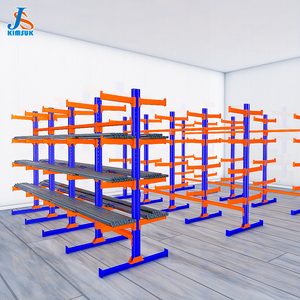
Cantilever Rack Arm Heavy Duty Racking Shelves Heavy Duty Warehouse Pallet Metal Storage Rack
View Specifications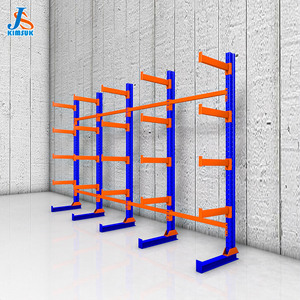
Electric Telescopic Cantilever Rack Heavy Duty Industrial Warehouse Racks Steel Rack Warehouse
View Specifications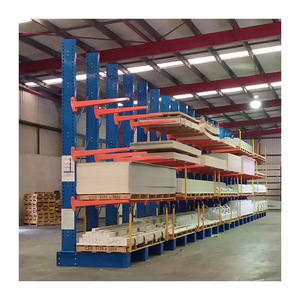
Mracking Adjustable Corrosion Protection Steel Pipe Storage Shelf Custom Warehouse Cantilever Rack System
View Specifications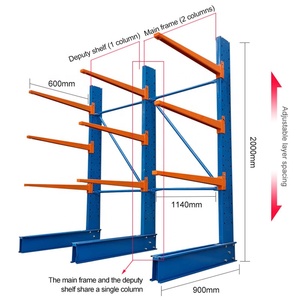
Topeasy Customized Powder Coated Indoor Storage Heavy Duty Rack Cantilever Shelving Cantilever Racking
View Specifications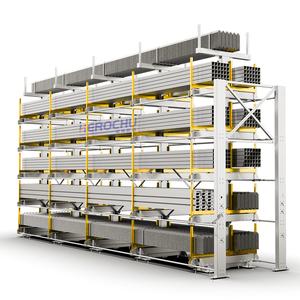
Highly Efficient Safe Industrial-grade Heavy-duty Foldable Cantilever Warehouse Rack 3T/Layer Capacity Anti-Rust for Tubular
View Specifications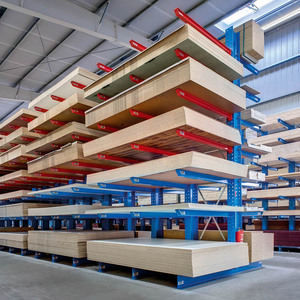
Nesrack Double Sided Rack Galvanizing Warehouse Cantilever Racking for Rebar
View Specifications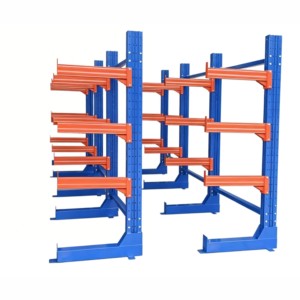
Stock Cold-Rolled Steel Cantilever Shelf Warehouse Storage Double-Sided Bracket Arm Cantilever Rack
View Specifications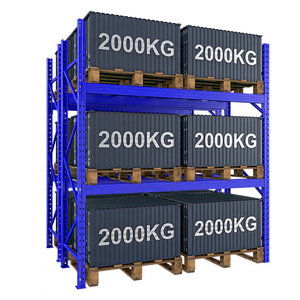
Industrial Heavy Duty Cantilever Rack High Capacity Warehouse Racking System Roll Out Telescopic Pipe Storage Rack
View SpecificationsStructural Engineering & Sourcing Whitepaper: Heavy-Duty Cantilever Racking Systems
Cantilever racking systems represent the engineering pinnacle for handling non-standard, long, bulky, or linear inventory. Unlike conventional selective pallet racks that rely on front vertical columns—which restrict longitudinal handling—cantilever structures feature an unobstructed front access corridor supported by structural upright towers and rigid cantilever arms. This structural mechanics paradigm is engineered specifically to eliminate horizontal obstruction, permitting continuous storage of steel profiles, PVC and copper piping, timber bundles, aluminum extrusions, sheet metal, and heavy industrial tubing.
Why Global Procurement Officers Partner with Our Factory
As a primary Chinese OEM/ODM manufacturing facility, we integrate structural steel rolling, robotic plasma cutting, continuous automated welding, and advanced surface passivation into a unified supply chain.
Precision Metallurgy & Structural Steel Grade
We source certified high-tensile hot-rolled steel profiles (Q235B and Q355B equivalent to ASTM A36 and S355JR). Our heavy-duty systems use hot-rolled H-beams (WF profiles) for upright columns and arms, delivering superior section modulus ($Z_x$) and moment resistance compared to cold-formed sheet metals under dynamic forklift impact.
Advanced Load Testing & Quality Control
Every cantilever connection—including our patented taper-wedge and pin locking systems—undergoes finite element analysis (FEA) and physical destructive load testing. We verify deflection ratios ($L/180$ limits) under full design load to eliminate permanent plastic deformation during operation.
Dual Surface Passivation & Galvanizing
For harsh chemical, outdoor timber, or saline coastal environments, we provide hot-dip galvanizing according to ISO 1461, delivering over 65–85μm zinc coating. Indoor applications receive an electrostatic epoxy-polyester powder coat, cured at 200°C for high impact and scratch resistance.
Cantilever Racking Architectural Taxonomy
Cantilever structures are broadly classified by structural profile manufacturing method and operation type. Selecting the correct classification depends on payload weight per arm, handling equipment radius, and indoor vs. outdoor storage environments.
| System Type | Structural Profile | Max Load per Arm | Key Operational Advantages | Target Inventory Applications |
|---|---|---|---|---|
| Light/Medium Duty | Cold-Rolled C-Section Steel | 100 kg – 600 kg | Cost-effective, highly adjustable arm intervals (50mm/75mm pitch), quick boltless or pin assembly. | Light plastic tubing, furniture, copper pipes, PVC extrusions, moldings. |
| Heavy-Duty Structural | Hot-Rolled H-Beam / WF Steel | 800 kg – 3,500+ kg | High moment capacity, high resistance to forklift impact, suitable for high-bay crane storage. | Steel coils, structural rebar, heavy timber, structural plates, oil OCTG pipes. |
| Roll-Out / Telescopic | Motorized / Manual Crank Arm | 1,000 kg – 5,000 kg | Arms extend 100% outward. Allows direct overhead crane loading, reducing aisle width requirements by 50%. | Specialty alloy bars, expensive rod stock, tooling dies, high-density metal sheet packs. |
| Double-Sided Column | Dual-Flange Central H-Beam | Up to 12,000 kg (Total Tower) | Symmetrical load balance eliminates bending strain on central columns, maximizing vertical density. | Central warehouse aisles, open stockyards, bulk distribution centers. |
Future Procurement Trends for Cantilever Warehouse Racking
The global industrial storage landscape is undergoing structural changes driven by logistics automation, tighter safety regulations, and supply chain rationalization. Industrial procurement leaders should plan around these core trends:
1. Shift from Cold-Formed to Structural Hot-Rolled Steel
While cold-formed cantilever racks offer lower upfront material costs, major enterprise buyers are shifting toward hot-rolled structural steel (I-beams and H-beams) for heavy applications. The higher impact resistance of hot-rolled profiles significantly reduces ongoing repair costs and structural risk from forklift impacts in fast-paced distribution hubs.
2. Adoption of Automated Roll-Out & Crank Systems
Warehouse space costs in urban manufacturing hubs are forcing facilities to minimize forklift aisle allowances. Automated and crank-operated telescopic cantilever racks allow overhead bridge cranes to hoist long goods directly from open arms. This eliminates the 5 to 6-meter turning radius needed by side-loading forklifts, increasing floor space efficiency by 40–60%.
3. Dynamic Load Monitoring & Smart Warehouse Integration
Modern racking installations are increasingly spec'd with embedded strain gauges and IoT deflection sensors. These connected safety systems notify warehouse managers of uneven weight distribution, accidental arm overload, or structural tilt during seismic activity—reducing liability and protecting inventory.
Development Trends in Industrial Heavy-Duty Cantilever Racking
Manufacturing advancements in China's steel fabrication sector are setting new global performance benchmarks for cantilever warehouse storage. Key technological developments include:
- Modularity & Toolless Adjustability: Modern cantilever systems use self-locking pin joints, curved taper sockets, and wedge connectors. These designs allow arm height adjustments in 50mm or 75mm increments without needing specialized field welding or heavy bolting, cutting installation labor costs.
- Hybrid Storage Configurations: Integrating removable steel or wire mesh decking onto cantilever arms allows the rack to store both extra-long profiles and standard pallets on the same level. This offers flexible hybrid storage for high-SKU distribution centers.
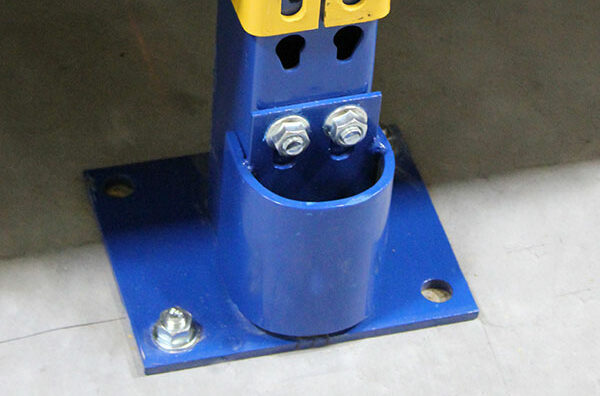
- Seismic & Wind Resistance Engineering: Advanced finite element structural analysis (FEA) software allows custom column bracing designs tailored to local seismic zones (e.g., US West Coast, Cuyo Argentina, New Zealand). Custom base-plate layouts ensure proper load distribution across varying concrete slab depths and concrete strengths (e.g., C20/25 to C35/40).
- Eco-Friendly Powder Coating & Zero-VOC Finishes: Factory production lines are shifting to zero-emission electrostatic powder recovery systems, closed-loop water treatment, and chromate-free zinc pre-treatments—helping multinational corporate buyers meet scope 3 ESG sustainability metrics.
Frequently Asked Questions (FAQ) for Cantilever Racking Sourcing
Technical answers to help logistics engineers, plant managers, and procurement officers specify the right equipment.
1. How do you calculate the required cantilever arm load capacity?
Arm capacity is calculated by dividing the maximum expected weight per level by the number of supporting arms under the load, assuming uniformly distributed weight (UDL). For example, if a 6-meter steel profile bundle weighs 3,000 kg and rests evenly on 3 arms, each arm must have a certified minimum load rating of 1,000 kg ($3000 / 3$). Bending moment limits and point load adjustments must also be calculated to prevent tip overload.
2. What is the difference between single-sided and double-sided cantilever racks?
Single-sided cantilever racks feature arms extending from only one side of the vertical column tower, designed to sit flush against warehouse walls or boundary perimeters. Double-sided racks feature central structural columns with cantilever arms extending from both the front and back. Double-sided systems offer higher structural stability under balanced loads and double storage capacity within central aisle footprints.
3. How do I determine the correct arm pitch and arm spacing to prevent material sagging?
To prevent material deflection or permanent sagging, stored goods should overhang the outer arms by no more than half the distance between the arms ($S/2$). For example, if arm spacing ($S$) is 1.5 meters, the maximum allowed end overhang is 0.75 meters. Testing non-rigid materials (such as flexible plastic tubing or thin timber) on ground blocks first helps determine if additional supporting arms are required.
4. What concrete floor slab specifications are required for heavy-duty cantilever racking?
Heavy-duty structural cantilever systems typically require reinforced concrete slabs with a minimum thickness of 150mm to 250mm, delivering a compressive strength of at least 20–25 MPa (C25 concrete grade). High-bay, heavy-moment designs may require isolated concrete footings or chemical anchor studs engineered for specific overturning moment calculations.
5. Can cantilever racks be safely installed in outdoor lumber or steel yards?
Yes, outdoor cantilever racking is widely used in steel distribution, oil/gas pipe storage, and lumber yards. Outdoor systems should use hot-dip galvanized steel (ISO 1461) to protect against rust and environmental corrosion. Outdoor designs must also factor in wind shear loads, soil conditions, runoff drainage, and snow load allowances per local structural engineering codes.
6. What safety accessories should be added to cantilever storage systems?
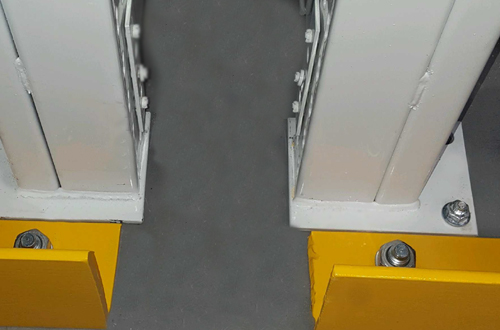
Common safety accessories include removable vertical pipe stops (to prevent cylindrical stock from rolling off arms), welded end lips, guide rails for side-loading or narrow-aisle forklifts, heavy-duty column base guards, and full-length timber or steel decking panels for short or variable-length items.
7. What documentation and certifications are provided for international customs export clearance?
As an established Chinese exporter, we provide mill test certificates (MTC per EN 10204 3.1), raw material physical analysis, mill test reports, CE compliance declarations, ISO 9001 quality audits, detailed AutoCAD approval drawings, structural FEA calculation reports, and complete container packing lists for fast customs clearance in North America, Europe, Australia, and South America.
Structural Risk Mitigation & Safety Compliance
System failures in heavy industrial storage are almost always caused by improper column-to-beam connection, missing anchor bolts, unverified component mixing, or uncalculated forklift impact forces. Our factory engineering team performs full load path modeling to eliminate structural single-point failure risks.