Featured Industrial Cantilever & Heavy-Duty Storage Racks
Engineered to support heavy, linear, and oversized materials including steel tubes, plastic pipes, lumber, structural profiles, and industrial automotive components.
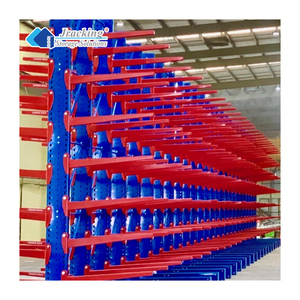
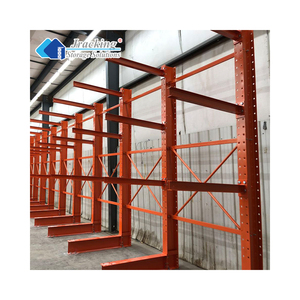
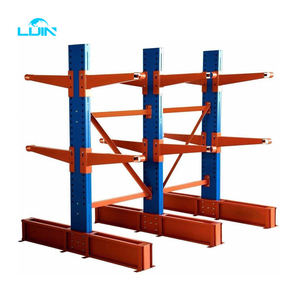
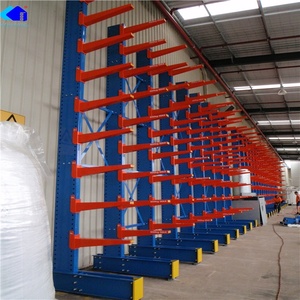
Technical Engineering Analysis: Cantilever Structural Architecture & Load Dynamics
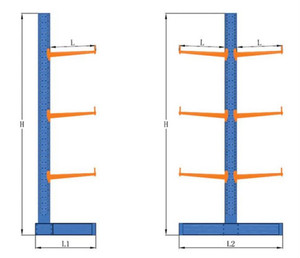
Selecting the optimal heavy-duty cantilever racking system requires a rigorous structural analysis of load distributions, mechanical moment arms, and steel material grade performance. Unlike traditional pallet racking systems that rely on front vertical columns, cantilever racks feature an open-front design utilizing central vertical columns fitted with extended horizontal arms. This architecture provides unobstructed horizontal storage channels essential for handling long, bulky, or irregularly shaped material profiles such as extruded aluminum, PVC and steel piping, structural timber, sheet metal packs, and heavy bar stock.
Key Information Gain: Structural vs. Roll-Formed Cantilever Systems
In industrial procurement, distinguishing between cold-rolled light-duty profiles and hot-rolled structural steel (H-beams/I-beams) is vital for structural safety and long-term ROI. Structural cantilever systems utilize heavy-gauge hot-rolled structural steel columns (typically Q355B or ASTM A572 Grade 50) that offer exceptional resistance to forklift impacts and torsional strain, maintaining an dynamic safety factor greater than 1.65 under maximum allowable deflection (L/200).
| Structural Parameter | Roll-Formed Cantilever Racks | Structural H-Beam Cantilever Racks | Engineering Compliance Standards |
|---|---|---|---|
| Primary Material Grade | Q235B Cold-Rolled Carbon Steel | Q355B Hot-Rolled Structural Steel | GB/T 1591, ASTM A572, EN 10025 |
| Load Capacity Range | 100 kg to 500 kg per arm | 500 kg to over 3,000 kg per arm | ANSI MH16.1, FEM 10.2.09 |
| Impact Resistance | Moderate; suitable for manual loading | Extreme; resilient to forklift impacts | RMI Structural Specification |
| Arm Adjustment Pitch | 75mm or 100mm pin connection | 100mm or 150mm bolted connection | ISO 9001 Quality System |
| Corrosion Resistance | Electrostatic Epoxy Powder Coat | Hot-Dip Galvanized (HDG, >85μm) | ISO 1461, C4/C5 Cold Storage Specs |
Why Partner With Us: Direct Factory Manufacturing & Global Export Leadership
As a premier China wholesale cantilever racking exporter and manufacturer, our production infrastructure integrates advanced robotic fabrication, automated electrostatic coating lines, and finite element analysis (FEA) testing protocols.
Advanced FEA Structural Verification
Every cantilever project undergoes rigorous Finite Element Analysis modeling to simulate complex loading conditions, wind shear for outdoor installations, and seismic ground acceleration in accordance with international building codes.
International Quality Certifications
Our manufacturing facilities operate under strict ISO 9001 and ISO 14001 quality management systems. All structural cantilever product lines carry official CE compliance certification for European logistics markets.
Optimized Export Packaging & Logistics
Specialized export bundle packaging guarantees zero component damage during ocean transit. Our engineering team custom-calculates container loading plans (20GP/40HQ) to maximize volumetric efficiency and reduce freight costs per ton.
Future Procurement Trends: Global Warehouse Automation & Sustainable Storage Strategies
The global supply chain landscape is undergoing rapid modernization driven by Industry 5.0 principles, smart warehouse integration, and heightened sustainability mandates. B2B procurement directors and warehouse operations executives must align their capital expenditure strategies with the following emerging industry trends:
AGV & AS/RS Automation Compatibility
Modern cantilever infrastructure is evolving from purely passive storage into automated storage and retrieval systems (AS/RS). Dynamic cantilever systems equipped with guided Automated Guided Vehicles (AGVs) and specialized side-loader stacker cranes enable dense vertical storage up to 15 meters while maintaining millimetric arm positioning accuracy.
Green Steel & Eco-Coating Initiatives
Global procurement teams are prioritizing low-carbon supply chains. Leading Chinese manufacturers are transitioning to 100% recyclable structural steel, closed-loop water treatment system factories, and zero-VOC organic powder coatings that dramatically lower product lifecycle carbon footprints without compromising corrosion resistance.
High-Density Mobile Cantilever Platforms
Floor space optimization is accelerating the adoption of motorized mobile cantilever racking. By mounting heavy-duty cantilever columns on floor-guided rail platforms, warehouses eliminate fixed aisles, achieving up to 85% higher storage density while maintaining 100% direct access to every inventory arm.
Product Development Trends: Engineering Innovation in Metal Storage Racking
Continuous research and development in metal fabrication technology have yielded significant breakthroughs in structural reliability, safety, and modular versatility for heavy-duty warehouse applications:
-
1Smart Pin Connection & Toolless Arm Adjustment Modern heavy-duty arms feature proprietary self-locking tapered pin designs. This eliminates tedious bolting operations while providing a secure connection that actually tightens as load weight increases, reducing installation time by up to 60%.
-
2Modular Pipe and Tubing Retention Accessories To prevent cylindrical items such as plastic pipes or copper tubes from rolling off, arms are engineered with integrated vertical retaining end-stops, drop-in sockets, and protective rubber lining to guard polished metal surfaces against abrasion.
-
3Advanced C5-M Anti-Corrosion Coatings for Harsh Environments For cold storage facilities, chemical warehousing, and outdoor coastal pipe yards, double-sided hot-dip galvanizing complying with ISO 1461 ensures full structural steel protection against atmospheric oxidation and moisture penetration.
Frequently Asked Questions (Procurement & Technical FAQ)
Expert technical guidance to assist B2B procurement managers, structural engineers, and logistics planners during racking project design and vendor evaluation.
Ready to Optimize Your Warehouse Heavy-Duty Storage Space?
Consult with our structural racking engineers for free CAD layout design, technical structural calculations, and competitive factory-direct wholesale pricing.
Contact Us