Featured Industrial Warehouse Storage Systems
Strategic Procurement Guide: Industrial Warehouse Racking Sourcing from China
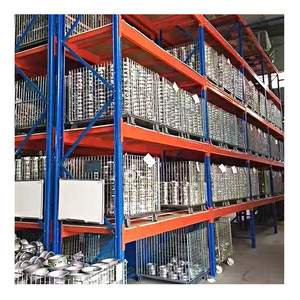
In modern global supply chain logistics, space utilization, volumetric efficiency, and structural safety form the bedrock of operational profitability. As enterprise distribution centers scale to accommodate expanding SKUs and accelerated fulfillment cycles, selecting a world-class China Top Warehouse Racking Supplier & Wholesaler becomes a critical strategic imperative. Chinese heavy-duty industrial storage manufacturing has evolved beyond cost competitiveness into a realm of advanced metallurgical engineering, precision roll-forming automation, and compliance with rigorous international structural codes such as RMI ANSI MH16.1, FEM 10.2.02, and EN 15512.
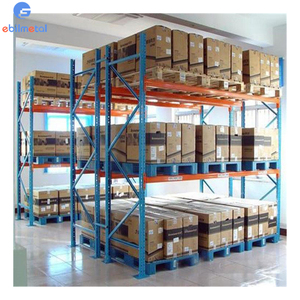
This comprehensive B2B whitepaper explores the technical specifications, structural design methodologies, material selection criteria, and future technological vectors defining heavy-duty warehouse storage rack manufacturing today. Whether deploying a high-density Selective Pallet Racking network, integrating Very Narrow Aisle (VNA) systems, or implementing dynamic Gravity Flow lanes, understanding engineering nuances ensures long-term ROI and structural integrity.
Engineering Architecture & Steel Grade Selection
The fundamental load-bearing capacity of any warehouse storage system depends directly on the mechanical properties of its cold-formed profiles and structural steel framing. Leading Chinese OEMs utilize premium-grade cold-rolled carbon steel, specifically Q235B and Q355B structural steel grades (equivalent to ASTM A36 and ASTM A572 Grade 50 respectively).
Cold-Formed Upright Profiles
Multi-bend continuous roll-formed columns featuring up to 13-fold stiffening ribs. Designed to resist torsional buckling under extreme axial and eccentric live loads up to 30,000 kg per frame.
Box Beam & Step Beam Engineering
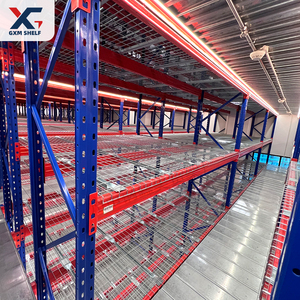
Dual C-profile interlocking beams robotically welded for zero deflection ($L/240$ max flexure limit). Includes automatic safety drop-locks preventing accidental forklift dislock.
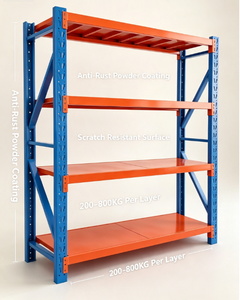
Surface Powder Coating Finish
Automated 6-stage pre-treatment wash followed by thermosetting epoxy-polyester powder coating (60–80 microns thickness) for maximum impact, scratch, and corrosion resistance.
Technical Comparison Matrix of Core Racking Technologies
Selecting the ideal industrial shelving configuration requires balancing floor space, clear height under roof trusses, SKU selectivity, and capital expenditure. Below is an engineering evaluation matrix comparing primary warehouse racking configurations manufactured by top Chinese industrial producers.
| Storage Racking System | Floor Utilization | SKU Selectivity | Max Load / Level | Forklift Type Required | Ideal Industry Application |
|---|---|---|---|---|---|
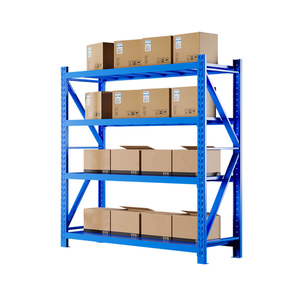
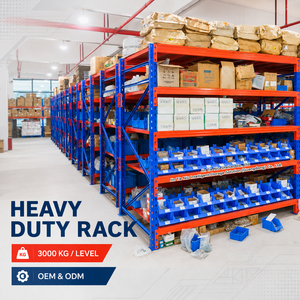
| Selective Pallet Racking | 40% - 50% | 100% (Direct) | Up to 4,500 kg | Standard Counterbalance / Reach | 3PL Warehouses, FMCG, Retail Fulfillment |
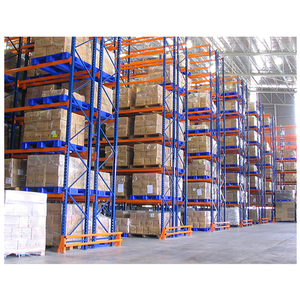
| Very Narrow Aisle (VNA) | 65% - 75% | 100% (Direct) | Up to 3,500 kg | Specialized VNA / Turret Trucks | High-Bay Distribution, Pharmaceutical DCs |
| Drive-In / Drive-Thru | 75% - 85% | Low (LIFO / FIFO) | Up to 1,500 kg/pallet | Standard Counterbalance | Cold Storage, Beverage, Seasonal Batches |
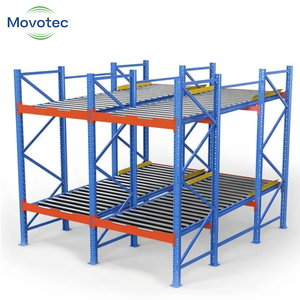
| Gravity Roller Flow (Movotec) | 80% - 90% | Medium (FIFO) | Up to 1,200 kg/lane | Standard Loading Forklifts | Perishables, High-Throughput Food Production |
| Push-Back Cart Systems | 70% - 80% | Medium (LIFO) | Up to 1,500 kg/cart | Standard Reach Truck | Cold Storage, Bulk Goods, Medium SKU Counts |
| Multi-Tier Steel Mezzanines | 150% - 200% (Cube) | 100% Manual Pick | 300 - 1,000 kg/m² | Manual / Order Pickers / Conveyors | E-commerce Piece Picking, Auto Spare Parts |
Future Procurement Trends in Industrial Storage (2025–2030)
The global warehouse storage equipment market is experiencing a profound paradigm shift driven by automation, labor constraints, and ESG (Environmental, Social, and Governance) mandates. Procurement directors and supply chain engineers sourcing from China must align their technical requisitions with these emerging global industry vectors:
1. Integration with AS/RS & Autonomous Mobile Robots (AMRs)
Traditional static storage is rapidly integrating with Automated Storage and Retrieval Systems (AS/RS) and pallet-shuttle robots. Structural tolerances for automated racking require extreme manufacturing precision ($\pm 1.0 \text{ mm}$ beam length deflection limits) and specialized sensor bracketry to facilitate seamless robotic navigation.
2. Carbon Neutrality & Green Steel Manufacturing
Top Chinese racking suppliers are adopting electric arc furnace (EAF) recycled steel and solvent-free zero-VOC powder coatings. Enterprise buyers are demanding verified Product Carbon Footprint (PCF) reports and Environmental Product Declarations (EPD) to satisfy corporate sustainability audits.
3. High-Seismic Zone Structural Adaptability
As logistics hubs expand into seismic-prone geographical regions (such as the Pacific Ring of Fire and South American fault lines), Chinese structural engineers utilize Finite Element Analysis (FEA) software to model dynamic seismic response under INPRES-CIRSOC 103, US IBC, and European EC8 codes.
Enterprise Advantage & Manufacturing Mastery
Partnering with an established Chinese original equipment manufacturer offers unmatched economies of scale, bespoke engineering capabilities, and rigorous quality assurance. By controlling the entire manufacturing chain—from steel strip coil slitting to automated roll-forming, robotic welding, surface passivation, and export packing—our facilities deliver robust racking systems that withstand decades of abusive forklift environments.
- Bespoke Engineering & CAD/3D Layout Design: Custom structural calculation reports tailored to your floor concrete slab compressive strength, building clear height, and sprinkler clearing requirements.
- Strict Quality Control (QC) Protocols: Ultrasonic weld testing, zinc-phosphate coating salt spray testing (>500 hours), and tensile strength coupon testing on every batch of raw coil steel.
- Optimized Containerized Export Logistics: Heavy-duty bundled strapping, protective corner guards, and customized wooden pallet skids designed for rapid fork unloading at destination sea ports.
- Global Turnkey Support: Detailed assembly blueprints, video installation guides, and certified supervisor dispatch for overseas field mounting.
Frequently Asked Questions (FAQ) for B2B Buyers
Q: What structural steel standards do your racking systems conform to?
Our heavy-duty racking systems are engineered in accordance with international structural codes including RMI (Rack Manufacturers Institute ANSI MH16.1), European FEM 10.2.02 / EN 15512, and Australian AS4084-2012 standards. Mill test certificates (MTC) for Q235B and Q355B steel are provided with every shipment.
Q: How do you determine the safe load capacity for custom upright frames and beams?
Load capacities are calculated using Finite Element Analysis (FEA) dynamic simulation models verified by physical destructive crush testing. Frame capacities account for unbraced length, beam elevation spacing, floor anchor shear values, and a minimum structural safety factor of 1.65 to 1.95.
Q: What information is required to receive a formal technical CAD layout and quote?
We require: (1) Warehouse floor plan drawing with column grid, dock locations, and overhead clearance; (2) Pallet dimensions including load overhang ($W \times D \times H$); (3) Maximum weight per loaded pallet; (4) Forklift truck operational specs (minimum aisle width and max reach height); and (5) Operational temperature range (e.g., ambient vs. cold freezer store).
Q: Can damaged racking components be repaired or individually replaced?
Yes. We supply standardized drop-in replacement components, column protectors, frame leg reinforcement boots, and engineered repair kits. Pitch spacing (e.g., 50mm, 75mm, or 76.2mm pitch) is precision-matched to ensure total compatibility with existing installed bases.
Q: What is the typical production lead time and ocean container loading capacity?
Standard production lead time is 14 to 21 days for up to 500 metric tons. A standard 40ft High Cube (40HQ) container typically holds between 20 to 23 metric tons of knocked-down racking components, optimized via custom loading software to maximize container volume utilization.
Optimize Your Warehouse Storage Footprint Today
Speak directly with our senior structural engineers to request a free CAD warehouse floor layout, structural load calculation report, and wholesale factory-direct pricing.
Contact Us