Engineering Recommended Push Back & Warehouse Racking Products
Direct OEM/ODM solutions engineered by leading Chinese racking manufacturers for heavy-duty supply chain logistics
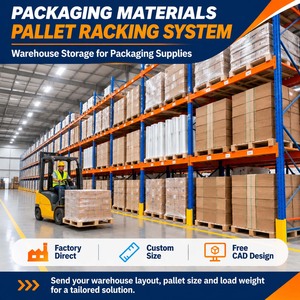
Warehouse Pallet Racking System for Packaging Materials Storage
Optimized for fast-moving consumer packaging materials. Features reinforced beam connections and high frame stiffness for bulk store management.
View Technical Specs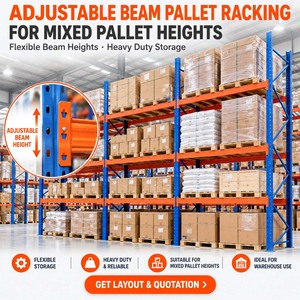
Adjustable Beam Pallet Racking System for Mixed Heights
Flexible vertical pitch adjustments at 50mm/75mm increments. Engineered to adapt seamlessly to variable pallet loads and changing SKU profiles.
View Technical Specs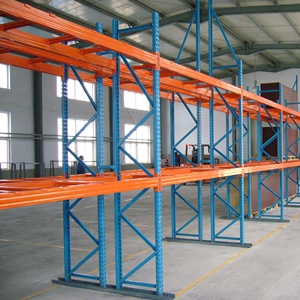
Heavy Duty Two-Level Industrial Pallet Racking System
High load-capacity framing engineered for extreme payload requirements up to 4500kg per beam level with integrated safety locking mechanisms.
View Technical Specs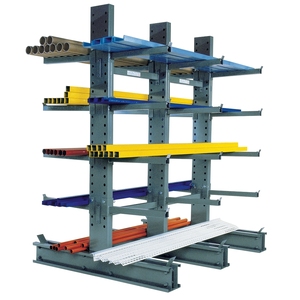
CE / ISO Certified Customized Heavy Duty Cantilever Rack
Heavy-duty structural arm support for un-palletized long loads, tubing, timber, and sheet metal storage with customizable column heights.
View Technical Specs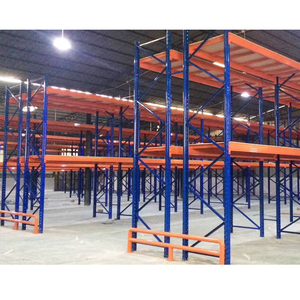
Chinese Manufacture Heavy Duty Metal & Wood Pallet Racks
Hybrid timber and structural steel deck solutions designed for versatile commercial warehousing, tool distribution, and parts logistics.
View Technical Specs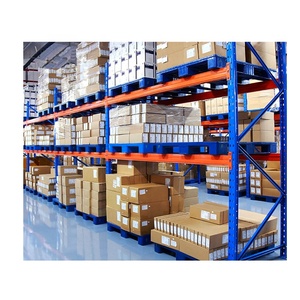
Single Deep Industrial Steel Warehouse Metal Van & Storage Rack
Precision roll-formed cold-rolled steel storage system with high torsion resistance, ideal for automotive parts and dense warehouse stock.
View Technical Specs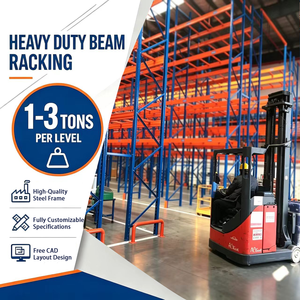
Custom Heavy Duty Steel Pallet Rack Industrial Storage System
Bespoke structural warehouse design offering seismic resistance, thermosetting epoxy powder coatings, and maximum space efficiency.
View Technical Specs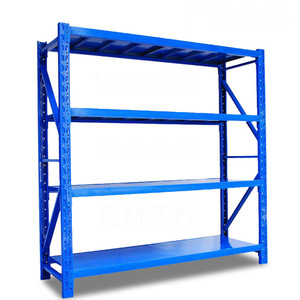
5-Tier Corrosion Protection Chrome Storage Shelving Unit
Light/Medium duty display and archive shelving featuring industrial-grade chrome plating for humidity resistance and quick boltless assembly.
View Technical Specs1. Technical Deep-Dive: Mechanical Physics & Structural Architecture of Push Back Racking
In modern industrial logistics, maximizing storage cube utilization while maintaining high throughput speed represents the ultimate operational balance. Push back pallet racking—a dynamic high-density storage matrix utilizing nested telescoping carts riding on inclined structural steel rails—delivers up to 90% higher storage density compared to standard selective pallet racking systems. As tier-one manufacturing hubs in China evolve from standard roll-formed fabricators to advanced structural engineering centers, global procurement directors must evaluate push back rack systems not merely as static steel frames, but as precision mechanical assemblies.
The core operating principle of a push back racking system relies on dynamic force accumulation during loading and gravitational discharge during unloading. Pallets are loaded from a single aisle onto a series of nested, wheel-mounted carts. When the first pallet is deposited on the top cart by a forklift operator, the second pallet is used to physically push the first pallet back, exposing the underlying second cart. This process repeats for up to 6 pallet positions deep (2, 3, 4, 5, and 6-deep configurations). When picking, the forklift driver lifts the front pallet, and gravity gently advances the remaining rear pallets forward to the pick face at a controlled speed along an inclined pitch (typically engineered between 1.5° and 3.0° gradient).
Engineering Gain Insight: Selecting top-tier Chinese manufacturers requires verifying dynamic cart alignment tolerances. Precision factories utilize CNC laser-cut cart frames with heavy-duty sealed steel bearings, preventing cart binding or derailment under uneven pallet weight distributions up to 1,500 kg per position.
Dynamic Mechanics & Cart System Components
Top-tier Push Back Pallet Racking factories in China engineer systems with critical dynamic structural features:
Telescoping Nested Cart Matrix
Low-profile nested steel carts designed to minimize loss of vertical rack height, allowing maximum vertical clear height for active pallet positions.
Anti-Derailment & Lift-Out Locks
Integrated mechanical safety stops preventing dynamic cart dislodgement during aggressive forklift push-back or severe seismic vibrations.
Precision Flanged Steel Wheels
High-tensile steel wheels housing permanently lubricated, double-shielded ball bearings engineered for operational temperatures down to -30°C in cold storage.
2. Structural Systems Comparison: Push Back vs. Alternative High-Density Systems
When evaluating structural warehouse systems engineered by top Chinese factories, procurement managers must analyze operational throughput vs. capital expenditure. The table below illustrates structural and performance metrics across high-density storage technologies:
| Storage System Type | Selectivity & Access | Storage Density | Forklift Aisle Interaction | Inventory Flow | Risk of Forklift Damage |
|---|---|---|---|---|---|
| Push Back Cart Rack | Last-In, First-Out (LIFO) per Lane | Very High (Up to 90% Gain) | Operates exclusively in main aisle | High Throughput Rotation | Very Low (Forklifts never enter rack) |
| Drive-In / Drive-Thru | LIFO / Strict Batch Access | Maximum Density | Forklifts drive inside structural bays | Slow to Medium Rotation | High (Frequent upright frame impacts) |
| Gravity Pallet Flow | First-In, First-Out (FIFO) | Maximum Density | Dedicated loading & picking aisles | High Volume / Expiry Control | Low (Separate entry/exit points) |
| Selective Pallet Rack | 100% Direct Access | Baseline (Standard) | Aisle required for every rack row | Maximum Flexibility | Medium (Requires column protectors) |
3. Global Procurement Trends in Industrial Push Back Racking Manufacturing
The global material handling equipment sector is experiencing significant shifts driven by automation, cold-chain expansion, structural safety standardization, and steel decarbonization. B2B buyers sourcing push back pallet racking systems from leading Chinese factories must account for four dominant industry procurement trends:
A. Shift from Pure Roll-Formed Profiles to Hybrid Structural Steel Configurations
Historically, light-duty push back systems relied heavily on standard roll-formed gauge steel. However, modern distribution centers operating double-deep and four-deep lanes demand hybrid structural solutions. Leading Chinese factories now combine structural hot-rolled C-channels for bottom guide rails with high-tensile Q355B cold-rolled profiles for uprights. This hybrid architecture drastically improves horizontal shear strength, preventing system rack sway under heavy push-back impact loads.
B. Integration with Cold Storage and Controlled-Atmosphere Warehousing
With the global surge in frozen food logistics and pharmaceutical cold chains, push back systems are rapidly replacing traditional drive-in racks in sub-zero environments (-25°C to -30°C). Procurement trends favor Chinese factories offering hot-dip galvanizing (HDG) and specialized low-temperature polyurethane dynamic wheel dampeners that do not crack or experience bearing grease crystallization under thermal shock.
C. Seismic Mitigation & Advanced Finite Element Analysis (FEA) Verification
Global warehouse operators situated in active seismic zones (e.g., US West Coast, South America, Japan, and Southeast Asia) require rigorous engineering validation. Advanced factories in China now deliver full 3D Finite Element Analysis (FEA) dynamic simulations compliant with RMI (Rack Manufacturers Institute ANSI MH16.1), FEM 10.2.02, and EN 15512 international standards, verifying structural ductility and baseplate anchor shear limits prior to manufacturing.
D. Direct Factory Engineering Collaboration & BIM Compatibility
Procurement teams are bypassing third-party intermediaries in favor of direct factory engineering integration. Leading Chinese OEM racking exporters provide native Building Information Modeling (BIM) files (REVIT, AutoCAD 3D), allowing general contractors and warehouse automation integrators to simulate forklift turning radiuses, sprinkler head clearances, and floor slab point-load stresses in real time.
4. Technology & Manufacturing Development Trends in Push Back Racking
Product innovation among premier Chinese Push Back Racking manufacturers is driven by precise mechanical engineering, automated powder coat metallurgy, and dynamic safety mechanisms. Key technical developments include:
Ultra-Low Profile Cart Geometry
Engineered cart frames cut from 6mm structural plate steel via 10,000W fiber lasers reduce vertical height losses by up to 35mm per lane, effectively saving an entire beam level in high-bay facilities.
Magnetic Velocity Flow Dampeners
Eddy-current contactless magnetic braking systems mounted on inclination tracks limit gravity acceleration during forward pallet movement, eliminating kinetic impact shock against front push-back stops.
Thermosetting Epoxy-Polyester Powder Lines
Automated 12-stage pre-treatment wash and electrostatic powder lines ensure 100–120 micron dry film coating thickness, exceeding 1,000 hours of salt-spray corrosion resistance tests.
5. Enterprise Advantages & Sourcing Capabilities of Top Chinese Racking Factories
When sourcing industrial warehouse systems from China, evaluating factory manufacturing credentials is essential to mitigating project risks. World-class racking manufacturers in China possess deep structural engineering capabilities and rigorous quality assurance protocols:
E-E-A-T Quality Commitment: Enterprise Chinese factories operate under strict ISO 9001:2015 Quality Management Systems and ISO 14001 Environmental Compliance. Steel coil feeds undergo raw material spectral testing to guarantee yield strengths (Q235B ≥ 235 MPa, Q355B ≥ 355 MPa) prior to cold profiling.
Core Manufacturing Capabilities
- Continuous Automated CNC Profiling: Over 20 automated continuous roll-forming lines producing upright columns with high precision pattern punching for drop-in beam locks.
- Robotic Beam Welding Cells: Fully automated Panasonic multi-axis welding robots ensuring 100% full-penetration structural welds between beam profiles and heavy-duty 3/4-hook end connectors.
- In-House Full-Scale Load Testing Rig: Physical destructive load testing frames allowing real-time measurement of beam deflection, column buckling limits, and dynamic cart impact fatigue.
- Turnkey Global Project Management: End-to-end engineering support ranging from preliminary CAD site layout studies to export container packaging optimization and certified site installation supervision.
6. B2B Procurement Technical FAQ: Push Back Pallet Racking
Below are critical technical questions asked by logistics engineers and global procurement officers when specifying Push Back Racking systems:
What is the maximum practical depth for a Push Back Pallet Rack system?
While push back systems can be engineered up to 6 pallets deep per lane, 3 to 5-deep configurations represent the industry sweet spot for forklift driver push force and operating efficiency. Standard counterbalanced or reach trucks easily handle up to 5-deep configurations; 6-deep lanes require forklifts with higher hydraulic pushing capability and heavy-duty structural steel cart frames.
How do Chinese factories calculate inclination angles for push back rails?
Pitch angles typically range between 1.5 degrees and 3.0 degrees (approx. 3/8" to 1/2" slope per foot). Chinese structural engineers determine the exact gradient based on pallet weight distribution (minimum vs. maximum pallet payload), bottom runner board material (plastic vs. wood vs. metal), and ambient operating temperature (room temperature vs. cold storage).
What prevents pallets from jamming or carts binding during dynamic operation?
Cart binding is prevented through three engineering controls: precision CNC cart frame squaring, flanged wheel tracking along guided channel rails, and side anti-friction guide nylon rollers. Top Chinese manufacturers design nested carts with generous tolerances that account for standard wooden pallet runner deflection under load.
What warehouse slab specifications are required for heavy-duty push back installations?
Push back racking generates concentrated point loads at upright baseplates due to high storage density. Concrete floor slabs typically require a minimum thickness of 150mm to 200mm with a concrete compressive strength of C25/C30 (minimum 3,000–4,000 PSI) and proper rebar mesh reinforcement. Concrete anchor selection (expansion anchors vs. chemical adhesive bolts) is calculated based on site seismic zone requirements.
Can standard selective pallet racking frames be retrofitted into a push back system?
In many cases, existing standard selective upright frames can be converted into push back racks provided the upright column profiles possess adequate load-bearing capacity for the concentrated depth payload. Special heavy-duty step beams or structural support brackets are installed to support the push back track and cart assembly.
How do top Chinese factories ensure coating durability and surface protection?
Leading factories utilize fully automated, multi-stage chemical cleaning, iron-phosphate dipping, and thermosetting epoxy-polyester powder coating cured at 200°C. For aggressive industrial environments or outdoor application, hot-dip galvanizing (HDG) conforming to ISO 1461 standards is applied to deliver 25+ years of corrosion resistance.