Featured Industrial Racking & Storage Systems
Select from our premier engineering catalogue of heavy-duty pallet racks, cantilever frameworks, dynamic flow channels, and high-density warehouse structures.
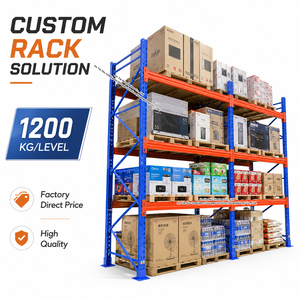
1200KG Steel Heavy Duty Rack Warehouse Pallet Storage Shelving System
Engineered for 1200kg unit loads per level. Features cold-rolled structural steel profiles, high-visibility epoxy coating, and safety lock pins.
Get Catalog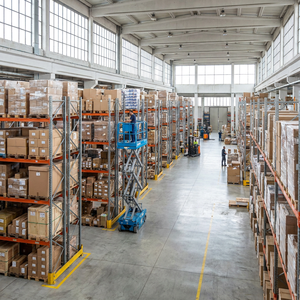
Professional Heavy Duty Pallet Rack Supplier Warehouse Storage System Manufacturer
Customizable selective racking architecture featuring modular frame heights up to 15 meters and ISO 9001 certified continuous seam welding.
Get Catalog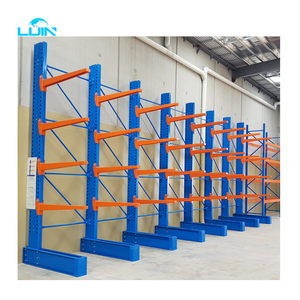
Factory Price Cantilever Rack Heavy Duty Industrial Cantilever Racking Steel Storage
Designed for oversized long loads, timber, tubing, and steel sheets. Modular adjustable arm connectors prevent load deflection.
Get Catalog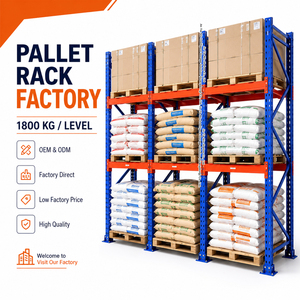
1800KG Heavy Duty Beam Pallet Rack Steel Warehouse Industrial Shelving 3-level Heavy Duty Rack
Heavy-duty 3-level beam arrangement tested to withstand up to 1800kg uniformly distributed load (UDL) per pallet beam tier.
Get Catalog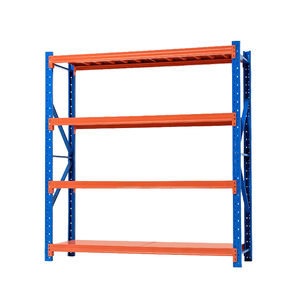
Industrial 4Layer Metal Shelving Stack Rack Light Duty Steel Shelving Boltless Racking Carton Storage Warehouse Rack
Versatile boltless structure for fast manual assembly. Ideal for e-commerce order fulfillment, carton picking, and light/medium goods.
Get Catalog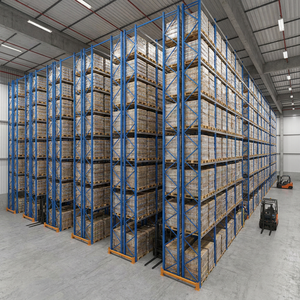
Industrial Selective Pallet Racking Warehouse Storage Equipment Steel Rack Supplier
100% direct pallet accessibility. Fully adjustable beam levels at 75mm or 50mm pitch for optimized vertical cubic storage.
Get Catalog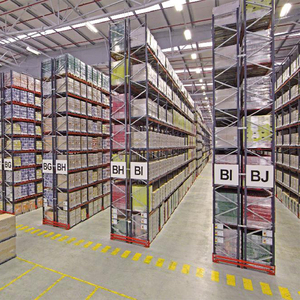
Guangzhou Rack Adjustable Pallet Racking System 2000KG-2500KG Class
Ultra-high payload capacity systems spanning 2.0 to 2.5 tons. Built with Q355B high-tensile structural steel for rigorous industrial use.
Get Catalog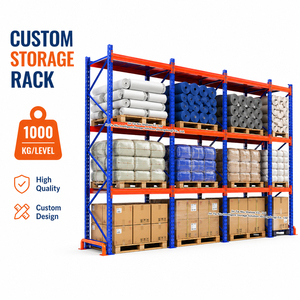
1000KG Warehouse Heavy Duty Pallet Rack Adjustable Storage Racking System Factory Direct
Direct-from-factory adjustable racking engineered for rapid deployment, standardized pallet storage, and maximum structural durability.
Get CatalogExecutive Engineering Overview: Next-Generation Racking & Structural Mechanics
In modern industrial logistics, floor area represents one of the most substantial operating capital expenditures. Optimizing volumetric utilization—moving from square meters to cubic meters—requires advanced structural racking frameworks engineered to resist dynamic impact, seismic accelerations, and heavy fatigue loading. As China’s premier industrial racking systems manufacturer and exporter, our facility leverages high-tensile cold-rolled steel (Q235B and Q355B grades) alongside precision continuous roll-forming technology to produce rack structures compliant with global standards including FEM 10.2.02 (European Design Code), ANSI MH16.1 (Rack Manufacturers Institute / RMI), and AS4084-2012 (Australian Standard).
Industrial pallet racking is no longer viewed merely as passive steel shelving; it is a load-bearing, safety-critical structural network. Our engineering department utilizes Finite Element Analysis (FEA) software to simulate local buckling, torsional-flexural buckling, and global frame stability under extreme load cases. By engineering specialized beam-to-upright locking connectors with multi-claw hooks, we minimize moment rotation at the beam column joint, maximizing overall frame rigidity and seismic resilience.
Information Gain Insight: Standard commercial racking often relies on basic yield-strength assumptions. Our factory implements full-scale laboratory destruction testing on upright profiles and beam connectors to empirical failure points. This produces actual physical capacity matrices rather than theoretical estimations, ensuring a minimum safety factor of 1.65 for steel yield stress and 1.5 for beam deflection limits ($\text{Span} / 200$).
Future Procurement Trends: Modernizing Global Storage Infrastructure
Key macro shifts shaping global procurement decisions for supply chain managers, 3PL providers, and industrial real estate developers.
1. Convergence with Automated Systems (AS/RS & AGV/AMR)
Global procurement is pivoting away from purely manual forklift selective racking toward automated storage and retrieval systems (AS/RS). High-bay clad-rack structures reaching heights over 30 to 45 meters require structural steel manufacturing tolerances under $\pm 1.5\text{ mm}$. Racking must serve as both the inventory rack and the building’s primary load-bearing skeleton capable of handling wind, snow, and stacker crane dynamic forces.
2. High-Density Gravity & Drive-In Optimization
Warehouse real estate inflation is driving the adoption of high-density storage modalities such as Push-Back Cart Systems, Pallet Flow Gravity Lanes, and Automated Radio Pallet Shuttles. By eliminating multiple forklift operating aisles, procurement officers are achieving up to 80% increases in storage density while enforcing strict First-In, First-Out (FIFO) or Last-In, First-Out (LIFO) inventory control.
3. Cold-Chain & Harsh Environment Corrosion Protection
The rapid expansion of fresh food logistics and pharmaceutical cold chains requires specialized metallurgical anti-corrosion treatments. Traditional liquid paints fail under sub-zero temperatures (down to -30°C). Future-proof procurement favors thermosetting epoxy-polyester powder coatings baked at 200°C or hot-dip galvanizing (HDG) to prevent micro-cracking and zinc flaking under high condensation and freeze-thaw cycles.
Industrial Racking Technological Evolution & Manufacturing Standards
The transition from lightweight commercial angle-iron shelving to engineered heavy-duty cold-formed steel racking systems represents a major leap in structural safety. Understanding key technical specifications enables international buyers to make authoritative procurement decisions.
Advanced Cold-Roll Forming Technology
Our manufacturing facility utilizes fully automated multi-pass continuous roll-forming production lines. Profile geometry is critical; an upright frame with 11-13 distinct bending folds across its cross-section provides significantly greater resistance against local torsional buckling than basic 5-fold profiles. The automatic punching systems ensure hole pitch accuracy within fractions of a millimeter, allowing seamless height adjustment of beam levels in 50mm, 75mm, or 76.2mm increments.
High-Tensile Steel Grades: Q235B vs. Q355B
Selection of steel chemistry impacts both ultimate load capacity and total freight weight:
- Q235B Steel (Yield Strength $f_y \ge 235 \text{ MPa}$): Excellent ductility and weldability; ideal for standard selective pallet racking, light-duty stack racks, and carton flow framework.
- Q355B High-Strength Alloy (Yield Strength $f_y \ge 355 \text{ MPa}$): Provides a 51% higher yield threshold. Crucial for heavy-duty drive-in uprights, tall narrow-aisle (VNA) posts, and high-load cantilever arms subjected to high bending moments.
Engineering Comparison Matrix of Primary Industrial Racking Systems
| Racking System Type | Direct Selectivity | Floor Space Utilization | Maximum Load / Level | Seismic Resistance | Primary Industrial Application |
|---|---|---|---|---|---|
| Selective Pallet Racking | 100% (Immediate) | 40% – 50% | Up to 4,500 kg | High (Adjustable bracing) | General Warehousing, 3PL, FMCG Distribution |
| Drive-In / Drive-Thru | 20% – 30% (Filtered) | 65% – 80% | Up to 1,800 kg/pallet | Medium (Requires top-ties) | Cold Storage, Seasonal Stock, High-Volume Homogeneous Goods |
| Push-Back Cart System | 30% – 50% (Per lane) | 60% – 70% | Up to 1,500 kg/cart | High (Nested cart design) | Food & Beverage, Chemical, Multi-Pallet SKU Batches |
| Heavy-Duty Cantilever | 100% (For long stock) | 50% – 60% | Up to 6,000 kg/arm | High (Rigid spine towers) | Steel Pipe Yards, Lumber, Tubing, Heavy Extrusions |
| Automated AS/RS Structure | 100% (Automated) | 85% – 95% | Up to 3,000 kg | Ultra-High (FEA Engineered) | Smart Logistics Hubs, High-Bay Automated Facilities |
Why Source From Us: Factory Competencies & Enterprise Advantages
We combine decades of structural engineering expertise with direct factory manufacturing scale to deliver unbeatable enterprise value.
1. Fully Automated Precision Manufacturing
Our state-of-the-art production plant features robotic welding workstations, CNC laser cutting machinery, and continuous high-speed roll-forming mills. Automated production guarantees that every beam connector, frame brace, and base plate adheres strictly to engineering tolerances, eliminating installation delays at your project site.
2. In-House CAD & 3D Structural Layout Engineering
We offer comprehensive layout design support. Our dedicated engineering team delivers customized CAD floor plans, 3D BIM models, and structural load calculations tailored to your forklift turning radius, building clear heights, concrete slab load capacities, and local seismic zone coefficients.
3. Rigorous Quality Assurance & ISO Certification
From raw material receipt (checking steel chemical composition and tensile strength via Mill Test Certificates) to final powder-coat thickness (guaranteed $60\mu\text{m} - 80\mu\text{m}$) and salt-spray corrosion resistance tests (ISO 9227 / ASTM B117), our QC team enforces zero-defect quality control across every production batch.
4. End-to-End Global Logistics & Export Expertise
Exporting to over 110 countries, our packaging engineers optimize container loading (40ft HQ) using specialized steel bundling, protective plastic wrapping, and wooden block bracing. This prevents transit damage, maximizes volume utilization, and minimizes international ocean freight costs per unit.
Industrial Racking Procurement FAQ
Technical answers to critical procurement, engineering, and international sourcing questions.
How do you calculate the maximum frame loading capacity for pallet racking?
Maximum upright frame load capacity is calculated based on the maximum unsupported beam tier height (beam pitch) and the total sum of all load levels supported above that point. Lower tier spacing creates higher unbraced lengths, which reduces total vertical capacity due to column Euler buckling mechanics. Our engineering team provides detailed capacity charts mapped against your specific beam height adjustments, following FEM 10.2.02 and ANSI MH16.1 specifications.
What international structural standards do your racking products comply with?
Our heavy-duty racking systems are engineered, tested, and manufactured in full compliance with international engineering standards:
• European Union: FEM 10.2.02, EN 15512, EN 15620, EN 15635
• United States: RMI (Rack Manufacturers Institute) / ANSI MH16.1
• Australia: AS4084-2012
• Quality Management: ISO 9001:2015, ISO 14001:2015, and CE Safety Certification.
What information is required to receive a customized CAD warehouse rack layout and quote?
To prepare an optimized CAD drawing and engineering quotation, please supply:
1. Building architectural plan showing clear height under trusses, column grids, dock door locations, and obstruction obstacles.
2. Pallet dimensions including load overhang: Width $\times$ Depth $\times$ Height ($W \times D \times H$).
3. Maximum gross weight per loaded pallet (e.g., 1000kg, 1500kg, 2000kg).
4. Forklift specifications: Minimum aisle turning radius, maximum lift height, and mast clearance height.
5. Operating temperature profile (Ambient, Chilled, or Freezer store) and local seismic requirements.
What surface treatment options are available for cold-room or outdoor applications?
For standard ambient warehouses, we apply an automated 9-stage pre-treatment wash (degreasing and iron phosphate coating) followed by electrostatic epoxy-polyester powder coating (cured at 200°C). For cold storage facilities (-30°C) or highly humid environments, we recommend either high-durability low-temperature epoxy powder formulations or Hot-Dip Galvanizing (HDG) per ISO 1461, providing a zinc coating thickness of $60-80\mu\text{m}$ for long-term corrosion prevention.
What is your typical production lead time and ocean container shipping capability?
Standard manufacturing lead time is 15 to 25 calendar days upon deposit confirmation and engineering drawing approval. Our logistics team handles global CIF, FOB, or DDP shipments. Bundles are custom-palletized with steel strapping, corner edge guards, and heavy plastic shrink wrap to facilitate smooth forklift offloading at destination ports.
Can your racking systems be installed in high seismic risk zones?
Yes. For seismic locations (such as South American Pacific coast, New Zealand, Japan, or US West Coast), we perform dynamic spectrum seismic analysis. We engineer enlarged structural base plates, heavy-duty wedge or chemical anchor bolts, custom diagonal frame bracing patterns, and high-moment beam connectors to ensure full structural stability under dynamic earthquake accelerations.
Transform Your Warehouse Space into an Engineered High-Density Asset
Connect directly with our structural engineering department for complimentary layout planning, seismic load analysis, and direct factory pricing.