Featured Industrial Racking Systems
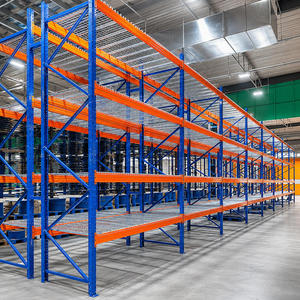
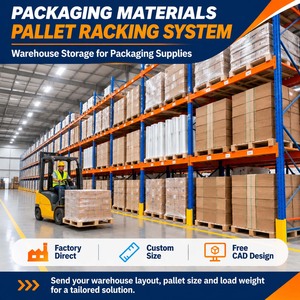
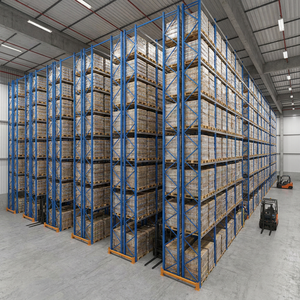
Direct from China's leading manufacturing hub: High-yield steel selective pallet racks, heavy-duty distribution systems, and customizable warehouse storage engineered for maximum volumetric efficiency.
Factory Advantages & Engineering Excellence
Why leading global 3PL operators, automotive factories, and distribution centers choose our China storage rack manufacturing ecosystem.
High-Grade Steel Metallurgy
We source prime cold-rolled steel coils exclusively from premier state-owned mills (such as Baosteel and Shougang). Utilizing high-tensile Q235B and Q355B structural grades guarantees superior yield strength, elastic deformation resilience, and resistance to fatigue under full design load limits.
Automated CNC Manufacturing
Our facility houses over 26 continuous high-precision roll-forming lines, robotic welding stations, and automatic punching systems. Pitch accuracies are maintained within sub-millimeter tolerances (±0.1mm), assuring flawless field assembly and structural alignment across multi-tier bays.
Global Code Compliance
All structural load calculations strictly adhere to international codes including ANSI MH16.1 (RMI), European FEM 10.2.02, and Australian AS4084-2012. We provide complete finite element analysis (FEA) reports and certified structural safety factors (1.65 to 2.0).
Seismic Engineering Dynamics
Custom structural upright frames designed for earthquake-prone geographic zones. We perform advanced finite element dynamic response evaluations and configure extended baseplates, heavy anchor bolts, and specialized K-bracing or X-bracing geometries.
Advanced Powder Coating Line
Components undergo an automated 9-stage pre-treatment wash (degreasing, phosphating, deionized water rinsing) prior to thermo-setting electrostatic epoxy powder coating. The resulting surface finish exceeds 1,000 hours of salt-spray testing, resisting impact and corrosion.
Turnkey Export & Project Support
From 3D CAD layout planning and OEM component manufacturing to container-optimized bundle packing and global logistics coordination, our senior engineering team acts as your dedicated technical partner from conception to installation sign-off.
Technical Deep-Dive: Structural Engineering Principles of Selective Pallet Racking
Selective pallet racking remains the universal benchmark for industrial material handling, delivering 100% direct item accessibility, rapid SKU throughput, and exceptional floor layout flexibility. However, optimal storage performance depends on strict engineering design choices across material selection, beam profile dynamics, and connection safety.
1. Beam-to-Column Interlocking Mechanics
The stability of a selective racking bay under heavy load rests upon the structural integrity of the beam-end connector. Our proprietary 1.5mm Interlocking Box Beam design incorporates multi-claw connector brackets engineered with tapered engagement lugs. When a loaded pallet depresses the beam, the connector locks tighter into the column upright teardrop or diamond perforations. This mechanical friction engagement minimizes connection rotation (semi-rigid joint behavior), significantly boosting the overall lateral frame stability against sway.
2. Structural Profile Selection: Roll-Formed vs. Heavy Structural Channel
Choosing between cold-roll-formed steel profiles and hot-rolled structural steel channels depends on operational intensity and risk exposure:
- Roll-Formed Steel (C-Section & Omega Profiles): High strength-to-weight ratio, cost-effective for general warehousing, easily reconfigurable on 50mm, 75mm, or 76.2mm (3-inch) pitch increments. Ideal for standard logistics, packaging materials, and FMCG storage.
- Structural Steel Channels (Hot-Rolled Structural C-Channels): Superior impact tolerance, essential for abusive forklift environments, high-traffic cold storage facilities, and heavy-duty manufacturing plants storing auto parts or metal coils exceeding 3,000kg per level.
3. Concrete Floor Slab Dynamics and Anchoring Requirements
A frequently overlooked aspect of warehouse safety is the transmission of concentrated point loads from upright baseplates to the concrete floor slab. Our structural engineers calculate upright baseplate surface areas and thickness based on concrete compressive strength (typically 25 to 30 MPa minimum). Each frame baseplate is secured using high-tensile wedge expansion anchors or chemical epoxy bolts to resist dynamic uplift forces generated during loading or seismic events.
Heavy-Duty Racking Technical Specifications Matrix
Reference parameters for structural design engineering and load capacity planning.
| Racking Category | Primary Material | Load Capacity / Tier | Max Height Options | Upright Profile (mm) | Interlocking Beam Profile | Standard Surface Coating |
|---|---|---|---|---|---|---|
| Selective Pallet Rack | Q235B / Q355B Steel | 1,000 kg – 4,500 kg | Up to 15.5 Meters | 80×60, 90×70, 100×70, 120×95 | Box Beam (80-160mm height) | Electrostatic Powder Coated |
| Drive-In / Drive-Thru | Q355B Cold Rolled | 1,000 kg – 2,000 kg | Up to 12.0 Meters | 90×70, 100×70, 120×95 | Continuous Top Beam + Rail | Powder Coated / Galvanized |
| Push Back Cart System | Heavy Gauge Structural | 1,500 kg / Cart Tier | Up to 9.0 Meters | 100×70, 120×95 | Nested Steel Flow Carts | Heavy Duty Powder Coating |
| Automated AS/RS Rack | Q355B Precision Structural | 500 kg – 3,000 kg | Up to 40.0 Meters | Custom Structural Channels | High-Toleranced Guide Beams | Epoxy Powder / Hot-Dip Galv |
| Cantilever Rack | Structural H-Beam / C-Channel | 500 kg – 5,000 kg/Arm | Up to 10.0 Meters | 200×100 to 350×150 H-Beam | Tapered Structural Arm Profile | Outdoor Galvanized / Powder Coated |
Future Procurement Trends in Warehouse Racking
Modern global logistics is shifting from basic dynamic storage to intelligent, automation-ready infrastructure. Key procurement trends shaping 2025–2030 include:
- Hybrid Storage Integration: Designing selective rack footprints that seamlessly integrate Autonomous Mobile Robots (AMRs) and Automated Guided Vehicles (AGVs) at floor level.
- Sustainable Steel Procurement: Sourcing low-carbon steel produced via Electric Arc Furnace (EAF) technology with certified environmental product declarations (EPD).
- Modular Reconfigurability: Demand for standardized beam and upright connectors that permit rapid height adjustments without structural downtime.
Technological Developments in Racking Manufacture
Our China factory continues to invest in cutting-edge metallurgical and manufacturing innovations:
- High-Yield Micro-Alloy Steels: Transitioning to ultra-high-strength Q355B/Q460 grades, reducing rack weight while expanding payload capacity.
- Laser-Cut Upright Perforations: Replacing conventional mechanical die punching with high-speed fiber lasers to eliminate micro-fractures along perforation edges.
- IoT Structural Strain Monitoring: Integration of embedded load sensors within high-bay uprights to monitor real-time rack deflections and impact stress.
Frequently Asked Questions (FAQ)
Technical guidance and answers for enterprise warehouse buyers, logistics directors, and structural project managers.
How do your warehouse racking systems ensure structural safety in high seismic hazard zones?
Every racking system engineered for seismic regions undergoes rigorous dynamic structural calculation adhering to RMI ANSI MH16.1 and local seismic codes (such as US IBC or Latin American INPRES-CIRSOC 103). We utilize enlarged baseplates with increased anchor bolt quantities, thick-wall cold-formed or structural channel upright profiles, and specialized horizontal/diagonal back-bracing trusses. Detailed Finite Element Analysis (FEA) dynamic simulation reports are provided prior to manufacturing approval.
What are the main advantages of 1.5mm interlocking box beams compared to standard step beams?
1.5mm interlocking box beams are formed by joining two C-shaped roll-formed steel profiles under intense continuous seam pressure. This closed tubular box section provides exceptional torsional resistance, eliminating beam twist under heavy eccentric pallet loads. Box beams offer higher load-bearing capacity per structural weight ratio than standard step beams and are compatible with drop-in wire mesh decking or bar supports.
Can your enterprise export racking systems customized to non-standard pallet dimensions?
Yes. While we regularly manufacture standard frame depths (800mm, 1000mm, 1100mm, 1200mm) and beam lengths (1800mm, 2300mm, 2700mm, 3300mm, 3900mm) for EURO (800x1200mm), ISO (1000x1200mm), and North American (40x48 in) pallets, our automated CNC machinery allows fully customized beam spans and frame depth profiling to accommodate non-standard industrial skids, heavy machinery containers, or specialized automotive racks.
What surface treatment is recommended for sub-zero cold storage facilities?
For sub-zero cold rooms and freezer storage down to -30°C, we recommend hot-dip galvanization (HDG) compliant with ISO 1461. Hot-dip galvanizing creates a thick, metallurgically bonded zinc-iron alloy coating (minimum 65–85 microns) that prevents rust formation caused by condensation cycles. Alternatively, our premium multi-stage electrostatic powder coating is suitable for temperature-controlled cold environments with stable low humidity.
How do you verify structural load capacity ratings for enterprise projects?
Load capacity ratings are verified through rigorous mechanical testing and finite element analysis (FEA). We conduct physical destructive strain testing on beam-connector assemblies, upright compression testing, and frame connection stiffness analysis. Each project includes official load plaque documentation specifying maximum uniform distributed load (UDL) per beam level and maximum permissible bay load capacity.
What is the typical manufacturing lead time and global shipping arrangement?
Standard lead times for standard enterprise orders (1–5 40ft High Cube containers) range from 15 to 25 business days. We provide comprehensive export packaging including steel bundling, corner edge protection, and vapor-wrapper wrapping to ensure zero sea-freight transport damage. Cargo can be shipped FOB, CIF, or DDP to any major seaport worldwide.
Ready to Optimize Your Warehouse Capacity?
Contact our senior structural engineers today for free 3D layout design, customized payload engineering calculations, and competitive direct-factory quotation pricing.
Inquire Now