Heavy-Duty Pallet Racking Systems Portfolio
Manufactured under ISO9001, FEM 10.2.02, and RMI ANSI MH16.1 structural standards for maximum load efficiency.
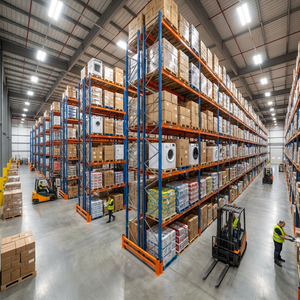
Engineered Pallet Rack Systems: The Backbone of Modern Global Logistics
In high-throughput distribution centers, cold-storage facilities, and industrial manufacturing plants, the selection of heavy-duty pallet racking is no longer a simple static equipment purchase. It is a critical engineering decision that dictates spatial efficiency, structural integrity, seismic safety, and operational throughput. As China’s premier pallet rack systems factory and global exporter, our engineering standard integrates cold-rolled profile forming, structural finite element analysis (FEA), and continuous quality auditing to deliver industrial racking systems capable of withstanding the most demanding warehouse environments.
Whether configuring high-bay automated storage and retrieval systems (AS/RS), multi-tier pick modules, or heavy-duty selective racking for automotive components, our structural solutions prioritize load-bearing stiffness, floor slab moment transfer, and energy-absorbing beam-column connections.
Factory Expertise & Manufacturing Capabilities
Our manufacturing footprint features automated continuous roll-forming production lines, robotic multi-axis welding stations, and an advanced automated powder coating finishing line. By controlling every stage of production—from raw coil slitting to automated shot blasting—we guarantee structural performance and surface durability.
Structural Engineering & FEA
3D Finite Element Analysis evaluates dynamic buckling, frame deflection (L/240), beam torsion, and joint stiffness under severe static and seismic loadings.
Automated Finishing Lines
Multi-stage pre-treatment and electrostatic powder coating ensure robust adhesion, chemical resistance, and salt spray resistance exceeding 1,000 hours (ASTM B117).
Seismic Zone Certification
Customized base plate design, heavy-duty wedge anchoring, and cross-bracing structural systems tailored for high-hazard seismic zones under CIRSOC 103 and ASCE 7-16.
Technical System Comparison for Industrial Buyers
Selecting the optimal warehouse racking system requires balancing storage density, pallet accessibility, inventory rotation speed, and capital expenditure (CAPEX). Review our structural engineering comparison matrix below:
| Racking System Type | Storage Density | Pallet Selectivity | Stock Rotation (FIFO/LIFO) | Load Capacity (per level) | Ideal Application |
|---|---|---|---|---|---|
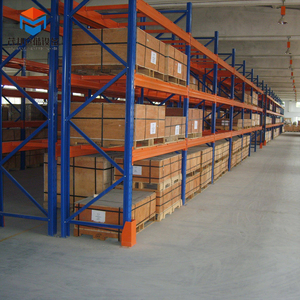
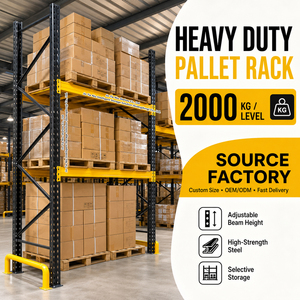
| Selective Pallet Rack | Medium | 100% Direct Access | FIFO / LIFO | 1,000 kg – 4,500 kg | High SKU counts, 3PL logistics, auto parts distribution |
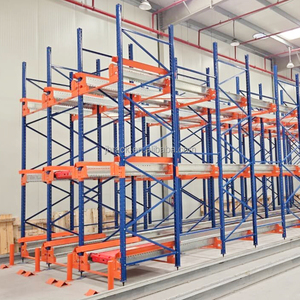
| Radio Shuttle System | Ultra-High | Filial / Lane Selective | FIFO or LIFO | 500 kg – 2,000 kg | Cold storage, food & beverage, high-volume fast-moving consumer goods |
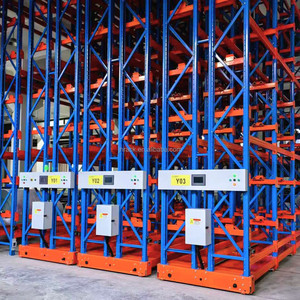
| Electric Mobile Racking | Maximum (80%+ floor usage) | 100% Selectivity (on demand) | FIFO / LIFO | Up to 24,000 kg per bay | Cold rooms, pharmaceutical cleanrooms, high land-cost facilities |
| Drive-In / Drive-Thru | High | Low (Bulk SKU) | LIFO (Drive-In) / FIFO (Drive-Thru) | 1,000 kg – 1,500 kg | Seasonal products, bulk uniform goods, agricultural export |
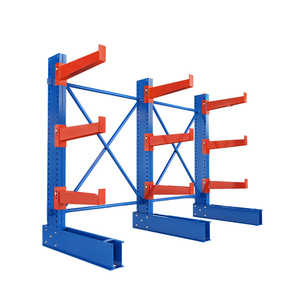
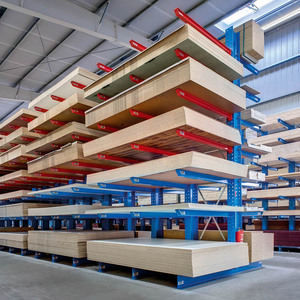
| Cantilever Rack | Variable | 100% Linear Access | Free Access | 500 kg – 5,000 kg per arm | Timber, steel pipes, rebar, aluminum extrusions, long profiles |
Product Development & Technological Trends
The global material handling sector is experiencing rapid technological evolution. As a forward-thinking OEM/ODM factory in China, our R&D roadmap focuses on three main vectors:
1. Automation & AMR Integration
Traditional static racking is increasingly interfacing with Autonomous Mobile Robots (AMRs), Automated Guided Vehicles (AGVs), and Pallet Shuttle runners. Frame tolerances are engineered to tight millimetric limits (+/- 1.0mm) to allow seamless optical sensor reading and robotic arm positioning.
2. Structural Weight Optimization (High-Yield Steel)
By transitioning from conventional Q235 steel to micro-alloyed Q355B and Q460 steel grades, upright frame profiles achieve greater load capacity with reduced material mass. This reduces freight costs for international buyers while improving seismic response.
3. Smart Structural Health Monitoring
Incorporating IoT strain sensors and impact indicator clips into upright frames allows real-time detection of forklift collisions, monitoring stress concentration, and enabling preventive rack maintenance before catastrophic structural failure.
Future Procurement Trends for Global Importers (2025–2030)
Global supply chain executives and procurement directors are adapting to shifting economic and environmental metrics when sourcing storage racks from China:
1. Containerized Modular Design: International shipping freight efficiency is now factored into initial product design. Beams and upright frames are engineered in modular lengths that maximize cube utilization inside 40ft High Cube (40HC) shipping containers, drastically reducing ocean transport cost per pallet position.
2. Green Steel & Decarbonization Compliance: Global buyers are requiring transparency in carbon footprints. China factories utilizing recycled electric arc furnace (EAF) steel and zero-VOC waterborne or powder coatings are taking lead positions in enterprise supply chain tenders.
3. Turnkey Engineering & Third-Party Oversight: Enterprise clients increasingly demand complete engineering packages—including floor slab anchoring calculations, stamped structural drawings, mill test certificates (MTC), and third-party inspection (SGS, TUV, BV) sign-offs before shipping.
Frequently Asked Questions (Industrial Procurement FAQ)
Answers to critical questions asked by international buyers, warehouse managers, and EPC contractors sourcing pallet racking systems from China.
Ready to Optimize Your Warehouse Storage Capacity?
Contact our structural engineering team today for a free layout design consultation, load calculation review, and competitive factory-direct quote.