Featured Industrial Pallet Racking Systems
Engineered for high-density storage, structural integrity, and seamless integration with forklift and automated handling infrastructure. Explore our core OEM product configurations below:
Executive Overview: Engineering Rigor & Manufacturing Excellence
In modern supply chain architecture, structural stability, spatial volumetric efficiency, and long-term asset security are non-negotiable requirements. As China's leading pallet rack storage system factory and global wholesaler, our manufacturing matrix bridges advanced material engineering with high-capacity continuous production lines. We supply tier-1 logistics operators, 3PL distributors, cold-chain operators, and industrial enterprises across North America, Europe, South America, and Asia-Pacific.
“Information Gain Insight: Beyond basic static capacity, a racking system's lifetime Total Cost of Ownership (TCO) is governed by cold-formed profile yield strength, seismic energy dissipation geometry, and thermal-cured electrostatic powder adhesion thickness (min. 80–100μm).”
Structural Taxonomy of Industrial Storage Systems
Selecting the optimal pallet storage configuration requires an engineering evaluation of SKU turnover dynamics, pallet payload parameters, floor slab load distribution, and material handling equipment (MHE) integration. Below is an authoritative technical breakdown of primary storage architectures engineered in our factory:
Selective Pallet Racking
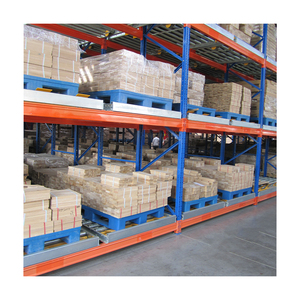
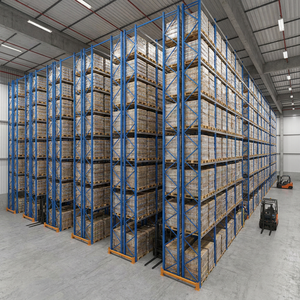
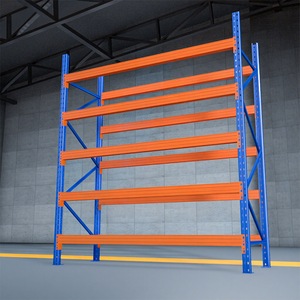
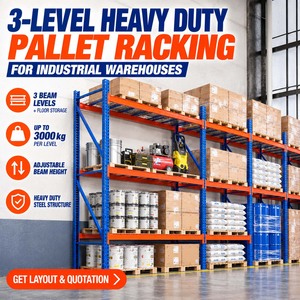
The most versatile industrial storage configuration providing 100% direct access to every pallet position. Engineered with roll-formed teardrop or structural beam-to-frame slotting, selective systems accommodate varied pallet dimensions (ARLOG 1000x1200mm, Euro 1200x800mm, ISO/GMA 48x40") with adjustable beam levels at 50mm or 75mm pitches.
Radio Shuttle & Semi-Automated Systems
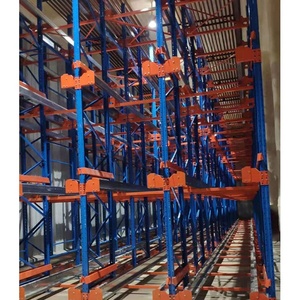
Utilizing self-powered shuttle cars operating on internal guide rails inside storage channels, Radio Shuttle racking drastically reduces forklift entry travel. Achieving up to 85% cubic space utilization, this LIFO/FIFO hybrid system excels in cold-chain logistics, food & beverage staging, and high-volume homogeneous SKU buffer zones.
Heavy-Duty Cantilever Racking
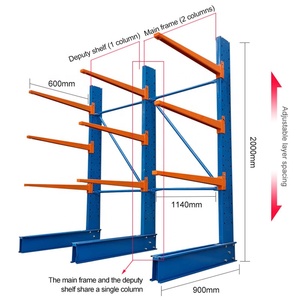
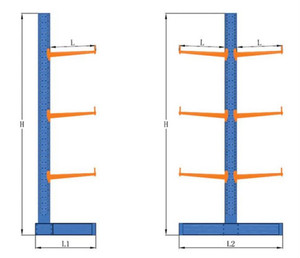
Specifically engineered without front vertical columns to store linear, non-standard, or continuous loads such as steel tubing, extrusions, structural timber, and heavy coils. Freestanding columns feature tapered arms with safety retainers, available in both roll-formed and heavy hot-rolled structural steel profiles.
Engineering Comparison Matrix: Selecting Storage Technologies
The table below provides quantitative metrics to guide procurement managers and logistics consultants in evaluating structural and operational tradeoffs:
| Storage System Type | Volumetric Density | Direct Selectivity | Optimal MHE Integration | Seismic Resistance | Relative Cost / Pallet |
|---|---|---|---|---|---|
| Selective Pallet Rack | Medium (40% - 50%) | 100% Immediate | Standard Counterbalance, Reach Truck | High (RMI ANSI MH16.1) | Baseline ($) |
| Pallet Shuttle System | Very High (80% - 85%) | Channel Level Only | Standard Forklift + Shuttle Car | Exceptional (Braced Frames) | Moderate-High ($$$) |
| Drive-In / Drive-Thru | High (65% - 75%) | Low (LIFO / FIFO) | Specialized Narrow-Aisle Forklift | Requires Top & Back Bracing | Economic-Moderate ($$) |
| Heavy Duty Cantilever | Medium (Variable) | 100% Linear Access | Side Loader, Multi-Directional Truck | High Structural Anchoring | Moderate ($$) |
| Multi-Tier Mezzanine | Max Floor Area (200%+) | High Manual Access | Conveyors, Vertical Reciprocating Lifts | Structural Engineering Review | Investment Grade ($$$$) |
Future Procurement Trends in Warehouse Storage Systems (2025–2030)
Global logistics networks are undergoing dynamic transformations driven by automation, sustainability mandates, and stringent structural safety codes. Sourcing managers must look beyond unit piece price and align procurement strategies with four key macro trends shaping the industrial racking sector:
1. Integration with AS/RS & Autonomous Mobile Robots (AMR)
Modern warehouse builds are rapidly shifting toward high-bay Automated Storage and Retrieval Systems (AS/RS) exceeding 30 to 40 meters in height. Structural racking components now act as the primary load-bearing skeleton for building cladding (Rack-Supported Warehouses). Manufacturing tolerances have tightened from millimeters to fractional millimeters to accommodate robotic crane travel and vision-guided AGV placement.
2. Advanced Seismic Resilience Standards (INPRES-CIRSOC & RMI)
With extreme climate events and seismic hazard re-zoning worldwide (such as INPRES-CIRSOC 103 standards in South America and updated IBC codes in North America), racking procurement requires rigorous Finite Element Analysis (FEA). OEM factories must provide customized baseplate anchoring designs, oversized seismic footings, and structural heavy-duty bracing for active seismic regions.
3. Decarbonized Steel Sourcing & Eco-Powder Coatings
ESG compliance is now a mandatory vendor qualification metric for multinational enterprises. Leading Chinese manufacturing plants are replacing traditional solvent-based painting with 100% heavy-metal-free, zero-VOC electrostatic epoxy powder coating lines. Sourcing cold-rolled steel coils from certified green mills ensures reduced carbon footprints across the supply chain.
4. Modular Rack Health Monitoring & Engineered Repair Kits
Rather than replacing entire upright frames after MHE collision impacts, facility managers are implementing pre-engineered rack protection and targeted upright repair kits. Real-time strain-gauge sensors embedded within main structural columns allow proactive maintenance alert triggers before cataclysmic structural deflection occurs.
Why Global Buyers Partner with Our Factory: Enterprise Advantages
Navigating international procurement requires a manufacturing partner that combines low-cost structural mill sourcing with world-class quality assurance protocols. Our production facility in China is built upon strict engineering controls and vertically integrated processes:
High-Grade Metallurgy
We utilize prime cold-rolled steel (SS400, Q235B, Q355B) sourced directly from premier steel producers (such as Baosteel and Shougang). Raw coils undergo mechanical tension tests, chemical composition analysis, and thickness tolerance verifications prior to roll-forming.
Precision Automated Roll-Forming
Our automated multi-stage continuous cold roll-forming mills guarantee uniform profile dimensions, exact hole slotting pitches, and zero stress-fracturing along column bend radii. Upright post profiles feature up to 12 distinct bending folds for maximum moment of inertia.
Robotic Welding & Surface Finish
Beam end-connectors and structural baseplates are joined using multi-axis Panasonic robotic MIG welding arms, eliminating human error and weld porosity. Finished parts pass through a 6-stage pre-treatment wash and automated powder coating line cured at 200°C.
Frequently Asked Procurement & Engineering Questions (FAQ)
Addressing critical technical, regulatory, and commercial queries for international procurement directors and project engineers:
Q235B is an industry-standard carbon structural steel equivalent to ASTM A36 or European S235JR, offering a minimum yield strength of 235 MPa. It is widely specified for standard selective beam profiles and light-to-medium uprights. Q355B is a high-strength low-alloy (HSLA) steel equivalent to ASTM A572 Grade 50 or European S355JR, with a yield strength of 355 MPa. Q355B is engineered for heavy-duty, high-bay upright frames, deep cantilever columns, and heavy-load beam configurations, permitting thinner wall profiles without compromising safety factors.
Our structural engineering department performs full load and deflection calculations in compliance with regional international design standards: RMI (Rack Manufacturers Institute ANSI MH16.1) for North America; FEM 10.2.02 and EN 15512 for European Union destinations; AS4084-2012 for Australia and New Zealand; and INPRES-CIRSOC 103 seismic design requirements for Latin America. Project-specific calculation reports stamped by certified structural engineers are available upon contract finalization.
Yes. As a primary OEM/ODM manufacturer, we operate an in-house tooling and die-making division. We regularly fabricate proprietary connector hooks, custom pitch upright punching (e.g., 50mm, 75mm, 76.2mm / 3-inch pitch), non-standard beam box dimensions, and specialized heavy-duty structural channel (C-channel) designs to interface perfectly with legacy racking installations worldwide.
Standard manufacturing lead time for full container load (FCL) orders (ranging from 1 to 10 40ft High Cube containers) is 20 to 25 calendar days following engineering drawing sign-off and deposit receipt. For mega-projects exceeding 500 metric tons, we implement phased production schedules, dispatching rolling container shipments every 7 to 10 days to align with your jobsite installation schedule.
Export packaging is engineered for rough ocean logistics and port handling. Upright frames and beams are bundled in custom steel-strapped master packs with heavy corrugated corner protectors, timber skids for forklift unloading, and full waterproof plastic stretch-wrap encasement. Small hardware items, row spacers, baseplates, and safety pins are packed in heavy-duty wooden crates or reinforced metal drums.
Every shipment is accompanied by a comprehensive Factory Acceptance Test (FAT) dossier, including Mill Test Certificates (MTC) according to EN 10204 3.1 verifying chemical and mechanical steel properties, coating thickness inspection reports (ISO 2178), non-destructive weld testing logs, dimensional audit sheets, and official safe-load capacity plaques for installation display.
During the layout proposal stage, our engineering team reviews your site's geotechnical slab details (concrete compressive strength f'c, slab depth, reinforcement rebar grid) and local seismic acceleration parameters (Ss and S1 factors). We calculate baseplate surface area, anchor bolt embedment depths (wedge or chemical mechanical anchors), and add horizontal/vertical frame bracing to prevent overturning moments during seismic activity.