Choosing a pallet racking system is not just a matter of fitting more pallets into a building. The right design must suit your inventory, handling equipment, available floor space, and daily workflow. A narrow aisle may add storage positions, but it can also slow a forklift route. A heavy pallet needs more than a convenient shelf height. Small mismatches become costly over time.
Warehouse-storage consultant Alex Morgan puts it this way: “A rack works best when it fits the load, the lift truck, and the work around it.” Use that as a practical guide, not a substitute for a site assessment. Measure pallet dimensions and weights. Note the clear height, column locations, doorways, and sprinkler clearance. Watch how operators move through the space during a busy shift. Details matter.
This guide compares common options, including selective, double-deep, drive-in, and pallet flow racking. It explains how access needs, stock turnover, and storage density affect the choice. It also covers rack layout, load capacity, safety features, and future expansion. No single system wins every time. A high-density layout can look efficient on paper and still create awkward picking or replenishment. That trade-off deserves a closer look. Before choosing, confirm your assumptions with a qualified racking professional and the system manufacturer. Start with the work your warehouse must do, not just the number of pallet positions you hope to gain.
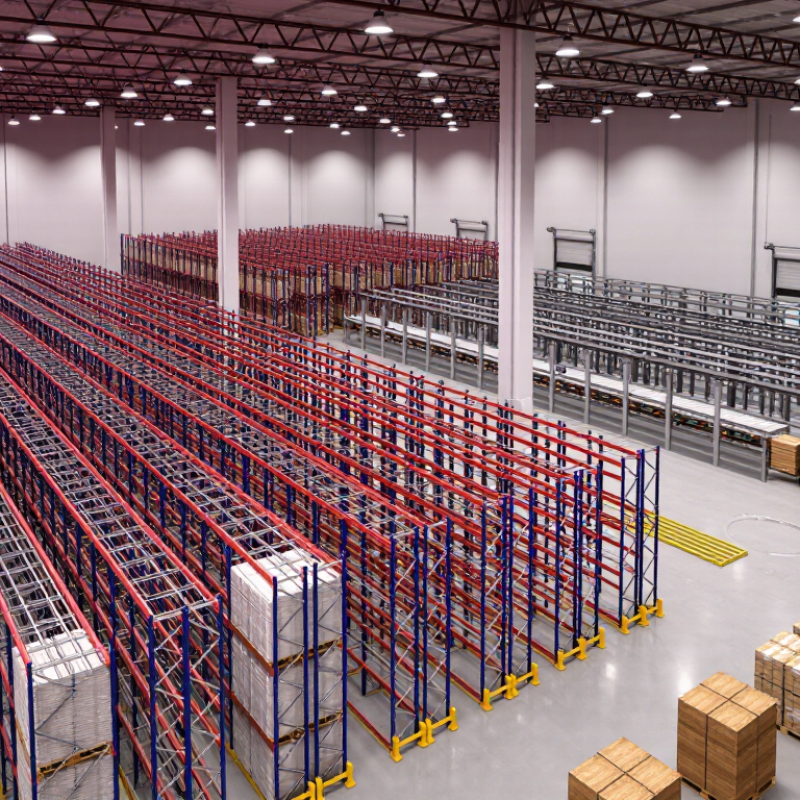
Choosing a pallet racking system starts with the inventory, not the aisle layout. Count your active SKUs, measure pallet dimensions, and record the heaviest load. Then separate fast movers from slow stock. A facility with many SKUs and frequent individual pallet access may need selective racking. Fewer SKUs stored in deep quantities may suit higher-density options. Know the mix. The U.S. Census Bureau reported that e-commerce represented 15.4% of U.S. retail sales in 2023. That changing sales channel can mean more small, frequent orders and a different access pattern. Your own order history matters more than a national average.
Look at turnover, seasonality, and rotation requirements. Track how often each pallet is retrieved, not just how many pallets you own. For example, a fast-moving beverage pallet near dispatch has different needs from reserve stock stored for weeks. FIFO-sensitive goods may benefit from flow-through layouts, while selective access can simplify handling across varied SKUs. Check aisle widths, lift-truck reach, clear height, and floor capacity before choosing. A tidy inventory spreadsheet can still miss peak-season pressure; test the design against your busiest week.
Tips: Build a simple SKU profile with pallet size, weight, retrieval frequency, and seasonal volume. Ask operators to verify it. They often spot the awkward pallet or blocked travel path that the data misses.
Identify your storage needs and inventory profile
Typical aisle requirements vary by handling equipment: counterbalance forklifts generally need wider aisles than reach or turret trucks. Narrower aisles can increase storage density, but the right choice also depends on SKU variety, inventory turnover, pallet access, and equipment specifications. Treat these ranges as planning benchmarks and confirm requirements with your truck and rack suppliers.
Pallet racking choices balance access against storage density. Selective racking gives forklifts direct access to every pallet, making it practical for many SKUs and frequent picking. The trade-off is wider aisles and more floor space devoted to travel. For a warehouse handling mixed cartons and changing orders, that flexibility can matter more than maximizing pallet positions.
Double-deep racking stores pallets two deep, increasing density but requiring equipment that can reach the rear position. Drive-in racking uses shared lanes and can hold many pallets of the same product. It usually follows last-in, first-out access, so older stock may remain behind newer loads. Pallet-flow systems use gravity rollers for first-in, first-out movement, but roller upkeep and consistent pallet quality deserve attention. Small differences matter.
Compare the actual aisle width, pallet dimensions, load weights, and daily pick frequency before choosing. A dense layout may look impressive on a drawing, yet slow down forklift movement during a busy shift. Count how often workers need the rear pallet, not just how many positions fit. I would also test a sample layout with real equipment and operators; paper plans miss awkward turns. The best fit depends on your inventory mix, rotation needs, and handling workflow.
How to Choose the Right Pallet Racking System?
Check Load Capacities and Warehouse Constraints
Start with the real load, not an estimate from an old spreadsheet. Weigh a fully loaded pallet and record its dimensions, including any overhang. Check the required capacity for each beam level and the total bay, since these limits are not interchangeable. Loads should sit evenly and securely on the beams. Uneven pallets can change how weight is distributed. Measure twice.
Racking must also fit the building and the way people work in it. Note ceiling height, floor condition, columns, doors, sprinkler clearance, and the turning space needed by forklifts. A layout that looks efficient on paper may leave narrow aisles or block access to frequently moved stock. Small details matter. I would revisit the plan after a trial layout; early measurements can miss awkward pallet sizes or traffic patterns. Confirm that the floor can support the loaded rack, and have a qualified professional verify capacities, anchoring, and layout before installation. Leave room for safe loading and inspection, not just maximum storage.
How to Choose the Right Pallet Racking System?
Evaluate Safety, Handling Equipment, and Operating Requirements
Start with the loads and the equipment that will move them. Record pallet dimensions, maximum weight, load overhang, and daily picks. Then compare those details with the reach truck’s turning radius, lift height, and aisle needs. OSHA estimates that forklift incidents cause about 85 deaths and 34,900 serious injuries each year. That figure, published in OSHA’s Powered Industrial Trucks guidance, makes clearances and sightlines more than layout details. Keep rack capacity labels visible, protect exposed uprights, and have a qualified professional assess any damaged components. A layout can look efficient on paper and still feel cramped once trucks and people share the aisles.
Tips: Measure twice. Test turning paths with the actual truck and a loaded pallet. Small gaps matter.
Match the rack type to operating needs, not just storage density. Selective racking supports direct access to each pallet, while denser drive-in layouts may suit fewer product types and larger batches. Check whether inventory rotates quickly, whether loads vary, and how often replenishment interrupts picking. Plan for sprinkler coverage, inspection access, and clear pedestrian routes before installation. The trade-off is easy to underestimate: more storage positions can mean slower access or tighter maneuvering. Revisit the plan after a trial layout; real traffic may expose assumptions the drawing missed.
| Racking System | Typical Storage and Operating Fit | Common Handling Equipment | Access and Stock Rotation | Key Safety and Planning Considerations |
|---|---|---|---|---|
| Selective pallet racking | Warehouses with many different SKUs, varied pallet quantities, and frequent order picking. | Counterbalance, reach, or other forklifts selected to suit aisle width, lift height, and load. | Direct access to each pallet location; generally supports FIFO or LIFO according to inventory procedures. | Confirm rack capacity, pallet dimensions, beam elevations, forklift turning space, and clearances. Use suitable column protection where impact risk exists. |
| Double-deep racking | Higher storage density for operations that hold multiple pallets per SKU and can manage reduced access. | Reach truck with a suitable double-deep attachment or another compatible deep-reach truck. | Two pallet positions deep; access to rear pallets depends on moving the front pallet, so selectivity is lower than selective racking. | Check equipment reach and load capacity at the required lift height. Plan for pallet consistency, aisle dimensions, and safe retrieval of rear loads. |
| Drive-in racking | High-density storage for large quantities of the same or similar product, with relatively few SKU changes. | Forklift designed to enter the storage lane and operate within the rack structure. | Typically LIFO: pallets are loaded and retrieved from the same end. Access to individual pallets within a lane is limited. | Allow for truck and load clearances inside lanes. Protect lane entrances and uprights, keep rails and guides in good condition, and train operators for controlled entry and exit. |
| Drive-through racking | Dense storage where access from both ends is practical and product flow can be organized through the lanes. | Forklift compatible with the lane dimensions and the facility’s loading and unloading arrangement. | Can support FIFO when pallets are loaded at one end and retrieved at the other; actual rotation depends on operating discipline. | Separate or coordinate traffic at both ends. Verify lane geometry, floor condition, load stability, and protection against forklift impact. |
| Push-back racking | Medium- to high-density storage for multiple pallets per SKU where access from one aisle is preferred. | Forklift that can safely place and retrieve pallets at the system’s beam levels. | Typically LIFO: placing a pallet pushes earlier pallets farther back; retrieval brings the next pallet forward. | Use compatible, dimensionally consistent pallets and follow the system’s loading sequence. Inspect carts, rails, stops, and rack components regularly. |
| Pallet flow racking | High-volume operations with predictable product flow and several pallets per SKU, such as forward-pick or dispatch areas. | Forklift for replenishment and retrieval; gravity roller lanes move pallets through the rack. | Usually FIFO: pallets enter one end and advance toward retrieval at the opposite end. | Confirm pallet quality and load suitability for the rollers. Keep lanes clean, control replenishment, and check flow controls, brakes, and end stops. |
| Cantilever racking | Long, bulky, or irregular items such as pipe, timber, or sheet goods that do not fit standard pallet locations. | Forklift or other lifting equipment suited to the load length, weight, and handling method. | Open-front storage provides access to individual arms; rotation depends on the layout and handling process. | Design arms and columns for the actual load distribution and length. Prevent overhang hazards and keep long loads stable during lifting and storage. |
| Planning note: Racking capacity and layout must be verified for the actual building, floor, pallet loads, equipment, and operating conditions. Follow applicable local codes and manufacturer instructions; train staff and inspect racks regularly for damage or changes. | ||||
Choosing a pallet racking system is only part of the planning. Start with a measured layout of the warehouse, including aisle widths, doorways, columns, and sprinkler clearance. Record the size, weight, and turnover rate of the pallets you store. A fast-moving product near a packing station may need a different location from reserve stock. Small details matter.
Check that the floor can support the planned loads, and have a qualified professional review rack specifications and anchoring requirements. Match aisle space to the actual forklifts in use, not just the dimensions on a brochure. During installation, mark rack positions on the floor and keep delivery routes clear. Leave room for safe access and inspection. It can feel like wasted space.
Plan for change, too. Choose a layout that allows compatible bays to be added or adjusted as inventory grows, while preserving clear travel paths. Keep a record of load limits and the final layout so future changes do not rely on memory. Forecasts are rarely perfect. Review the plan when pallet sizes, equipment, or order patterns change; even a useful system may need revisions sooner than expected.
Forklifts can reach every pallet directly. This suits warehouses with many product types and frequent picking, but needs wider aisles.
It stores pallets two deep and can increase storage density. Use equipment that can reach rear pallets, and check how often staff need them.
Shared lanes can hold many pallets of the same product. Access often follows last-in, first-out, so older stock may remain behind newer loads.
It supports first-in, first-out movement using gravity rollers. Check roller upkeep and pallet consistency. Small differences matter.
Weigh a fully loaded pallet and measure its dimensions, including overhang. Check both beam-level capacity and total bay capacity; they are different limits.
Record ceiling height, aisle width, columns, doors, floor condition, and sprinkler clearance. Measure actual forklift turning space, too. Measure twice.
A trial with real equipment and operators can reveal awkward turns or tight aisles. Paper plans miss things. That is worth remembering.
Keep a record of load limits and the final layout. Allow compatible bays to be adjusted, and review the plan when pallet sizes or order patterns change. Forecasts are rarely perfect.
Choosing the right Pallet Racking system starts with understanding what you store, how much inventory you hold, and how quickly products need to move. Consider the size, weight, and variety of your goods, along with how often items are accessed. Compare racking options by accessibility and storage density to find a balance between efficient picking and making the best use of available space.
Before deciding, check that the system’s load capacities match your inventory and that its dimensions suit your warehouse layout, ceiling height, and operating conditions. Account for the handling equipment your team uses, required clearance, and day-to-day safety practices. Once you have identified the best fit, plan installation carefully and consider how the layout could adapt to future changes in inventory or business needs.